
Ramadan Street Confrontation Sparks Fresh Debate Over Cultural Boundaries in Britain
A brief street exchange captured on video has ignited a wider national conversation in Britain about cultural expectations, personal freedom, and the challenges of coexistence in an increasingly diverse society. The moment, filmed on a public street during the Islamic holy month of Ramadan, shows a man confronting another passerby for eating during daylight hours—only to discover that the individual he confronted was not Muslim at all.
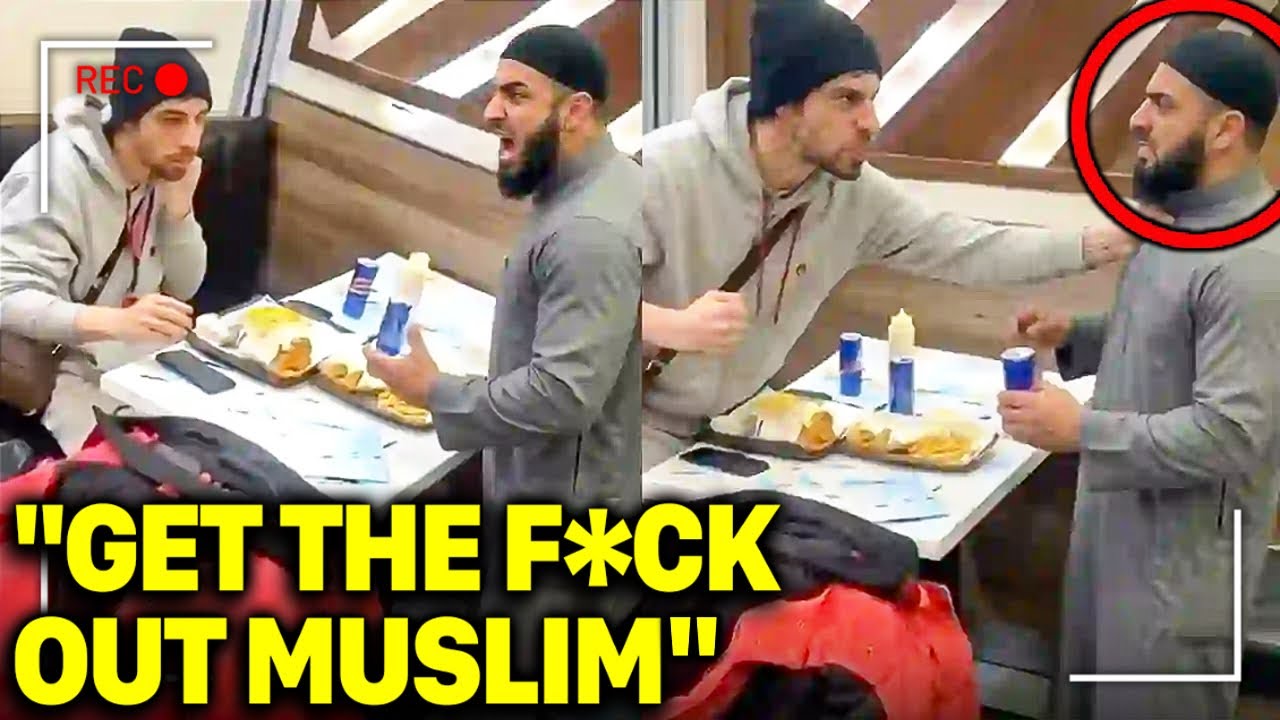
The video begins with a man questioning another for eating food in public, reminding him that it is Ramadan—a period when many Muslims fast from dawn to sunset. The tone is initially firm but not overtly hostile. The man repeatedly insists that eating during the holy month is “very bad” and warns that it could lead to “big trouble.” But the exchange quickly takes an unexpected turn when the person being confronted calmly explains that he is not Muslim and therefore not bound by the religious observance. He clarifies that he is from Romania, not part of the faith community observing the fast.\
The brief interaction ends without escalation, but the clip has spread rapidly across social media, where it has been interpreted in sharply different ways. Some viewers see it as an example of cultural misunderstanding, while others argue it reflects a growing tension around expectations in multicultural societies.
Ramadan, one of the most sacred periods in Islam, is observed by millions of Muslims worldwide. During the month, believers fast during daylight hours as a spiritual discipline meant to encourage reflection, charity, and self-control. In predominantly Muslim countries, public eating during daylight hours can sometimes be discouraged or even restricted. In Britain, however, fasting remains a voluntary religious practice rather than a public rule.
Critics of the confrontation argue that religious customs should remain a personal choice and not be imposed on others in shared public spaces. They point out that Britain’s legal and cultural framework protects individual freedoms, including the freedom not to participate in religious practices.
Supporters of the man who raised the concern in the video, however, say the interaction may simply reflect confusion or an attempt to encourage respect for religious traditions. They note that Ramadan is an important part of life for many communities in the United Kingdom and that misunderstandings can occur in diverse urban settings.
The viral clip did not appear in isolation. Commentators discussing the video often connected it to broader anxieties surrounding immigration, integration, and cultural identity in Britain. Over the past two decades, demographic changes in several major cities have reshaped local communities and sparked ongoing debates about what integration should look like in practice.
The conversation has been further amplified by footage circulating online from several protests in English cities. In some of those demonstrations, groups described as “patriots” have clashed verbally and sometimes physically with counter-protesters. Video clips show police attempting to separate opposing groups, with officers wearing different colored vests coordinating crowd control and preventing confrontations from escalating.
Local authorities have repeatedly emphasized that most demonstrations pass peacefully and that police intervention is intended to keep all participants safe regardless of political or cultural affiliation. Officers from the Metropolitan Police have also highlighted recent arrests connected to public-safety incidents, underscoring their focus on maintaining order amid rising tensions.
Beyond individual incidents, the debate touches on a deeper question about national identity and the pace of social change. Britain’s cities, particularly London, Manchester, and Birmingham, have experienced dramatic demographic shifts in recent decades as immigration has increased and communities from around the world have settled across the country.
For some residents, these changes are seen as a source of cultural vitality and economic growth. For others, they create a sense that familiar social norms are being transformed too quickly.
Political leaders have often framed the issue in terms of building an inclusive society—one where people of different backgrounds can live side by side while respecting shared laws and civic values. Critics argue that achieving that balance remains a complex and ongoing challenge.
In the case of the Ramadan street confrontation, the incident itself lasted less than a minute. Yet its online impact has been far greater, fueling debates about religion, public space, and cultural expectations.
As with many viral moments, the clip has become a symbol onto which different groups project their own interpretations. For some, it is evidence of cultural friction. For others, it is simply an awkward misunderstanding between strangers.
What is clear is that the conversation surrounding it is far from over. Across social media platforms and comment sections, people continue to argue about what respect, tolerance, and coexistence should look like in modern Britain—an argument that shows no sign of fading anytime soon.
Leave a Reply
You must be logged in to post a comment.