
Brussels, 31 March 2026 — Incidents involving clashes over cultural practices and public behaviour have gained visibility in parts of Europe, prompting renewed discussion about integration policies and societal cohesion. Reports from multiple cities describe situations where differences in norms regarding expression, gender roles and public conduct have led to verbal and occasionally physical confrontations between segments of the local population and migrant communities, many of which originate from Muslim-majority countries.
The episodes, amplified by videos circulating on social media, are portrayed by some observers as evidence of a broader “breaking point” in attitudes toward rapid demographic and cultural change. Others view them as isolated expressions of frustration exacerbated by economic pressures, housing shortages and strains on public services. Official data and independent reports indicate that challenges related to integration have persisted for years, with varying outcomes across member states.
Several European governments have responded by tightening regulations on religious practices perceived as incompatible with secular principles. Measures include expanded restrictions on full-face coverings such as the burqa and niqab in public spaces, increased scrutiny of foreign funding for mosques and religious organisations, and stronger enforcement of laws against extremism. France, which pioneered nationwide bans on face-covering garments, has been joined by countries including Austria, Belgium, Denmark and others in limiting such practices in schools, public transport and government buildings. In February 2026, Germany’s Christian Democratic Union reiterated calls for a comprehensive burqa ban.
These policy shifts occur amid documented concerns over parallel societies in certain urban districts, where language barriers, differing attitudes toward secular law and reports of gender-based restrictions have been noted in official inquiries. Security services in France, Germany, the United Kingdom and Sweden continue to monitor radicalisation risks, with authorities linking some incidents of violence or public disorder to Islamist extremism. At the same time, organisations tracking discrimination report a rise in anti-Muslim incidents, including vandalism of mosques and verbal harassment, particularly following high-profile events in the Middle East.
The European Union has sought to balance security imperatives with commitments to religious freedom and non-discrimination. The European Parliament has held discussions on the influence of groups such as the Muslim Brotherhood, examining funding channels and ideological networks. Several member states have introduced or strengthened vetting procedures for imams and religious instructors, requiring alignment with national values on democracy, gender equality and free speech. Proposals for faster deportation of individuals involved in extremism or serious criminality have gained traction, alongside efforts to improve border controls and returns through Frontex.
Public opinion surveys across the continent consistently show majority support for stricter immigration controls and clearer expectations of cultural assimilation. In countries with significant Muslim populations — estimated at over 5 per cent EU-wide and higher in urban centres such as Brussels, Marseille and parts of Sweden and the Netherlands — debates focus on issues including street prayers, demands for Sharia-compliant accommodations and attitudes toward blasphemy or criticism of religion. High-profile cases, such as attacks on teachers or artists for perceived insults to Islam, have reinforced perceptions among segments of the public that tolerance has limits.
Governments in Italy, Hungary, the Netherlands and Denmark have adopted more assertive stances, emphasising national identity and the primacy of secular law. Italian Prime Minister Giorgia Meloni has repeatedly stated that Europe must defend its cultural heritage and that mass migration without integration poses risks. Similar rhetoric appears in electoral campaigns in Germany and France, where mainstream parties have moved toward tougher positions previously associated with populist groups.
Critics of these measures, including human rights organisations and representatives of Muslim communities, argue that blanket policies risk stigmatising law-abiding citizens and could fuel resentment. They point to successful integration stories among many Muslim Europeans who contribute to society in medicine, business and public service. Reports from the EU Fundamental Rights Agency and the OSCE highlight persistent discrimination and hate crimes against Muslims, warning that inflammatory discourse can undermine social peace.
The current wave of attention follows years of cumulative developments: large-scale arrivals since 2015, subsequent terrorist attacks, grooming scandals in the UK, no-go area debates in Sweden and France, and demographic projections showing continued growth of Muslim populations through migration and higher birth rates. Academic and policy studies document gaps in integration metrics such as employment, language proficiency and acceptance of core European values on equality and secularism in certain subgroups.
European institutions face the challenge of reconciling the free movement of people within the Schengen area, humanitarian obligations and the right of member states to protect social cohesion. Recent EU-level agreements aim to accelerate returns of rejected asylum seekers and to establish external processing centres, though implementation varies. The bloc is also examining ways to counter foreign interference in religious affairs, particularly funding from states with conservative interpretations of Islam.
For many citizens, the debate transcends statistics and touches on questions of identity: can liberal democracies accommodate large-scale cultural difference without compromising foundational principles such as gender equality, freedom of expression and the separation of religion and state? Experiences differ sharply between countries with longer histories of Muslim immigration, such as the UK and France, and those with more recent inflows.
Local authorities in affected cities report increased community policing efforts and dialogue initiatives, yet trust deficits remain. In some neighbourhoods, residents describe feeling that authorities have prioritised minority sensitivities over majority concerns, leading to a sense of cultural displacement. Conversely, Muslim organisations cite under-policing of hate incidents and economic marginalisation as drivers of alienation.
As videos of street confrontations continue to spread online, political leaders face pressure to articulate clear boundaries. The European Commission has reiterated that integration requires mutual adaptation, with migrants expected to respect host-society laws and norms. At the same time, it cautions against generalisations that could exacerbate divisions.
The situation remains fluid. Further policy responses may include expanded language and civic education requirements, limits on family reunification, and enhanced monitoring of religious institutions. Electoral outcomes in coming national votes could accelerate these trends or prompt recalibration.
Ultimately, the incidents and the reactions they provoke illustrate the complexity of managing pluralism in societies built on secular, liberal foundations. European states must navigate between safeguarding individual rights, maintaining public order and preserving the cultural continuity that underpins social trust. How this balance is struck will shape the continent’s social landscape for decades.







Related Posts
ROLLS-ROYCE OFFERS CANADA GRIPEN ENGINE DEAL, CHALLENGING F-35 DOMINANCE – xhs7
ROLLS-ROYCE OFFERS CANADA GRIPEN ENGINE DEAL, CHALLENGING F-35 DOMINANCE OTTAWA — On a frozen Arctic runway where temperatures plunged to 50 degrees below zero, a sleek Swedish Gripen…
NATO Faces Deepening Strains as Trump Criticizes Allies Over Iran Conflict. xamxam
NATO Faces Deepening Strains as Trump Criticizes Allies Over Iran Conflict European Reluctance to Join U.S. Military Action Highlights Alliance Tensions BRUSSELS — The North Atlantic Treaty…
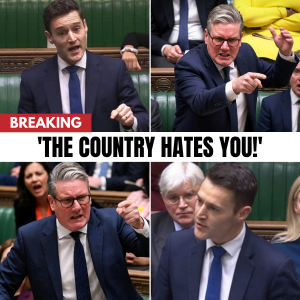
Starmer Cracks Under Pressure During Explosive PMQs Clash – mikaymaidinh
A tense Prime Minister’s Questions erupted today as Sir Keir Starmer delivered a furious, table-thumping rebuttal to a Conservative MP’s accusation that he is a “high-tax” leader…
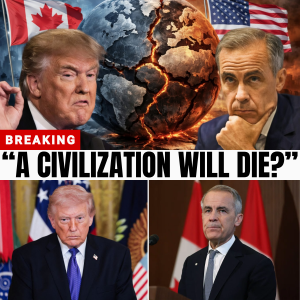
Rhetoric and Responsibility: Canada Draws a Firm Line After Trump’s Escalatory Warning – minhee
OTTAWA — A new wave of global concern has emerged following remarks by Donald Trump suggesting catastrophic destruction on a civilizational scale, language that has sparked immediate…
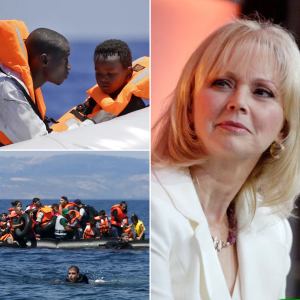
Joanna Lumley’s Controversial Warning: “Our Small Nation Cannot Feed Millions. – liplip
Joanna Lumley Sparks Firestorm With Stark Warning On Migration Pressures Facing Britain Today As Debate Reaches Boiling Point Across Media And Parliament Chambers Nationwide Over National Capacity…
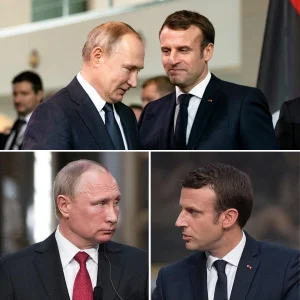
Vladimir Poutine vient de briser le silence et pointe du doigt ce qu’il appelle “la plus grande erreur” d’Emmanuel Macron. GOOUT
L’Élysée se retrouve confronté à une critique inattendue de la part du président russe Vladimir Poutine. Dans une déclaration récente, Poutine a identifié ce qu’il considère comme…