
When Frezja did not arrive as expected, concern slowly crept in. At first, relatives assumed delays, traffic, or a drained phone battery. As the hours passed, concern hardened into fear. Calls went unanswered. Messages remained unread. By nightfall, those closest to her knew something was wrong. Frezja was reliable, attentive, and deeply devoted to her child. Vanishing without explanation was completely out of character.
Days passed with no word from her. Family members contacted authorities, launching a missing person investigation that would soon take a devastating turn. Detectives began retracing her last known movements, piecing together her final hours through phone records, witness statements, and surveillance footage. What emerged painted a troubling picture—one marked by tension, conflict, and a relationship investigators would later describe as volatile.
On December 11, exactly one week after Frezja was last heard from, police made a grim discovery. Her gray-blue 2004 Honda Accord, identifiable by temporary South Carolina license tags, was located on the property of an abandoned church along Sanders Avenue in Charlotte. The church, long unused and largely forgotten, sat isolated from busy streets—a place few people passed and fewer lingered.
Inside the vehicle, officers found Frezja unresponsive. Emergency responders were called, but it quickly became clear that she was no longer alive. The car became a sealed crime scene, surrounded by investigators documenting every detail. For Frezja’s family, the discovery shattered any remaining hope that she would be found safe.
The Charlotte-Mecklenburg Police Department officially classified her death as a homicide, triggering a full-scale criminal investigation. Detectives worked around the clock, knowing that the answers her family desperately needed were now tied to uncovering who had been with her in her final hours—and why she never made it home.
Attention soon turned to 38-year-old Lorenza Thomas Inman Jr., a man known to Frezja and someone investigators believed had been with her shortly before she disappeared. As detectives examined their relationship, troubling patterns began to surface. Court records and witness accounts suggested a history of conflict, arguments, and fear—elements often present in cases that end in violence.
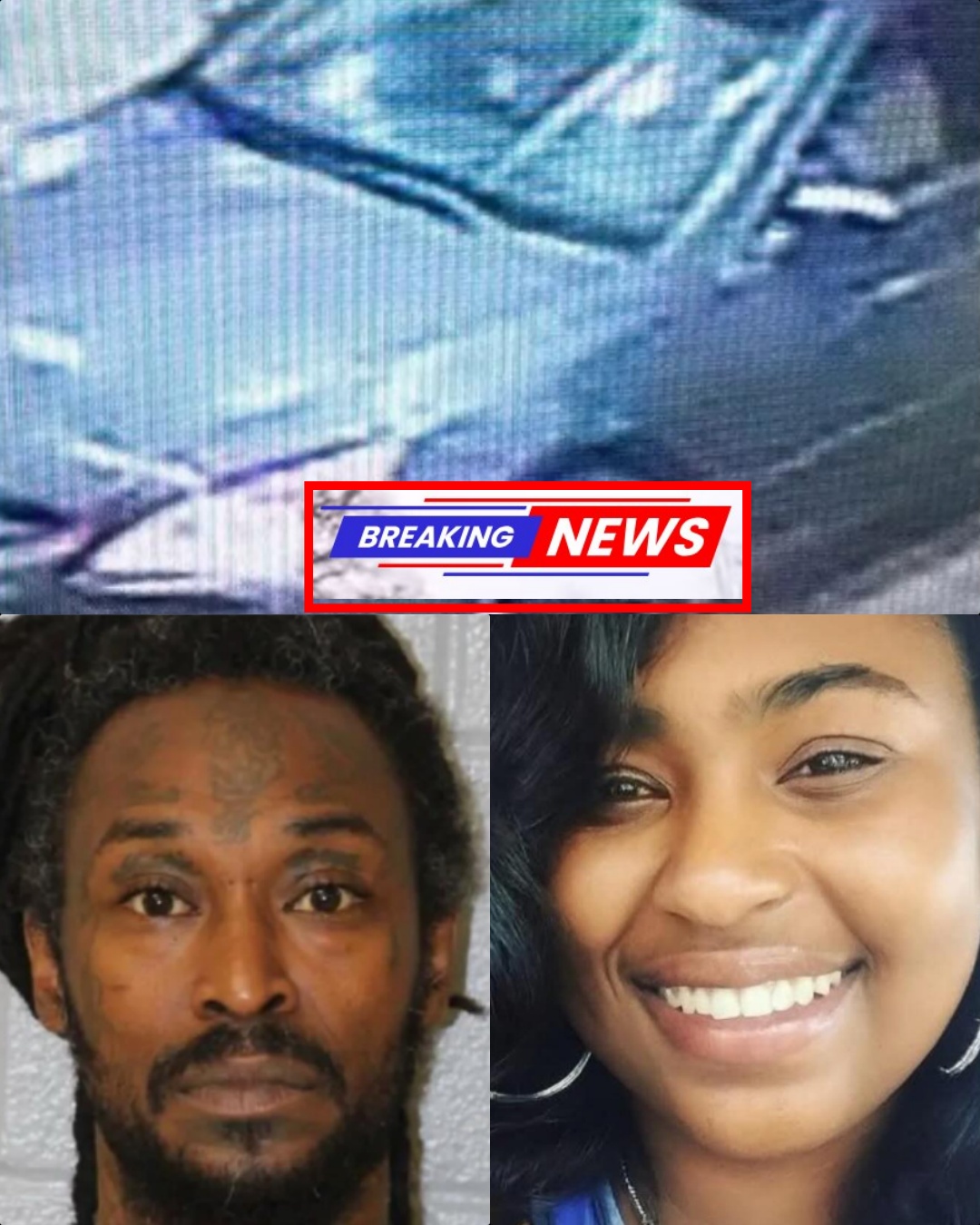
Surveillance footage from a gas station became a critical piece of evidence. According to court documents, the video appears to show Inman assaulting Frezja just hours before she vanished. Investigators say the footage captures him pushing her and grabbing her around the neck during an altercation. The images, silent but deeply unsettling, offered a chilling glimpse into the escalating tension between them.
Detectives also interviewed witnesses who had interacted with both individuals around the time Frezja disappeared. One witness provided particularly disturbing information, telling police that Inman had later admitted the argument between him and Frezja ended with a gunshot to her head. That statement would become central to the case, intensifying the urgency to locate and arrest him.
As the investigation narrowed in on Inman, authorities discovered he was no longer in Charlotte. A multi-agency effort was launched to track him down. He was eventually located and arrested in Maxton, North Carolina, a town several hours away. The arrest brought a measure of relief to investigators—but for Frezja’s family, it marked only the beginning of a long and painful legal journey.
Inman was transported back to Mecklenburg County, where he was formally charged with murder, assault on a female, and a domestic violence–related offense. A judge ordered him held without bond, citing the severity of the charges and the potential risk to the community. He now faces the most serious accusation under North Carolina law.
For prosecutors, the case represents a tragic but all-too-familiar narrative. A young mother, attempting to balance love, trust, and responsibility, became entangled in a relationship that authorities say turned deadly. In court filings, they describe a pattern of behavior that escalated from argument to violence, culminating in Frezja’s death.
Frezja’s family, meanwhile, has been left grappling with a loss that defies comprehension. They describe her as a loving mother whose world revolved around her son. Friends recall her warmth, her creativity, and her determination to build a stable life for her child. She was not defined by how her life ended—but by how she lived.
Her son, now without his mother, stands at the center of the tragedy. Loved ones have rallied around him, determined to preserve Frezja’s memory while providing the care and stability she would have wanted. Yet no amount of support can fully fill the void left behind by her absence.
The abandoned church where Frezja was found has since become a symbol of sorrow for those who knew her story. What was once an overlooked property is now remembered as the place where answers were found—but far too late. Investigators believe the location was chosen deliberately, a secluded spot meant to conceal what had happened.
As the legal process unfolds, prosecutors are expected to rely heavily on surveillance footage, witness testimony, forensic evidence, and Inman’s alleged admissions. Defense attorneys have not yet detailed their strategy, but the case is likely to hinge on timelines, credibility, and physical evidence recovered from the vehicle and surrounding area.
Domestic violence advocates in Charlotte say the case underscores the dangers many women face behind closed doors. They point to it as a reminder that warning signs—arguments, controlling behavior, physical confrontations—should never be ignored. Too often, they say, violence escalates when victims attempt to leave or assert independence.
Law enforcement officials echoed those concerns, urging anyone experiencing abuse to seek help and emphasizing the importance of early intervention. While no message can undo what happened to Frezja, authorities hope her story may prevent future tragedies by encouraging awareness and action.
In the courtroom, Frezja’s name will be spoken repeatedly—attached to motions, evidence lists, and legal arguments. But for her family, she is more than a case file. She is a daughter, a sister, a friend, and above all, a mother whose life was taken far too soon.
As Charlotte continues to process the loss, memorials and messages of remembrance have appeared online and in the community. Photos of Frezja smiling beside her son serve as a painful contrast to the headlines describing her death. Each image is a reminder of the life that was stolen and the future that will never unfold.
The investigation remains active as detectives continue to piece together every detail of Frezja’s final day. Prosecutors say they are committed to pursuing justice fully and holding the accused accountable. For them, the goal is not only a conviction, but a measure of closure for a family living with unimaginable grief.
Ultimately, the story of Frezja Matisse Baker is one of love, loss, and unanswered questions that will linger long after the courtroom doors close. It is a stark reminder of how quickly ordinary moments can turn tragic—and how the echoes of violence extend far beyond a single life, shaping families and communities forever.