
For years, the English Channel has become one of the most visible symbols of Britain’s migration crisis. Small boats packed with desperate people continue to make the dangerous journey from France, while organised criminal gangs operate behind the scenes, turning human desperation into a lucrative business.
But the most disturbing part of this story is not simply the number of people attempting the crossing. It is the possibility that the smugglers are becoming increasingly organised, increasingly ruthless and increasingly capable of adapting to every attempt made by governments to stop them.
I previously revealed how smuggling networks were discussing plans to put even more people into dangerously overcrowded boats. The warning was clear: the gangs were not preparing to disappear. They were looking for new ways to defeat border controls and increase their profits.
And that is why the worst may still be ahead.
The Channel is not an ordinary migration route. It is one of the world’s busiest stretches of water, used by commercial shipping, ferries and fishing vessels. A small inflatable boat carrying dozens of people has little protection against changing weather, powerful currents or large ships.
Yet the criminal organisations behind these journeys continue to persuade vulnerable people that the crossing is possible.
Their business model is brutally simple.
A migrant pays a smuggler. The smuggler provides transport, often a dangerously overcrowded inflatable boat. Once the boat is launched, the passengers may be left largely to their own devices. In many cases, the people who collected thousands of pounds from them are nowhere near the sea when the journey actually takes place.
The risks are transferred almost entirely to the passengers and to the emergency services that may later have to rescue them.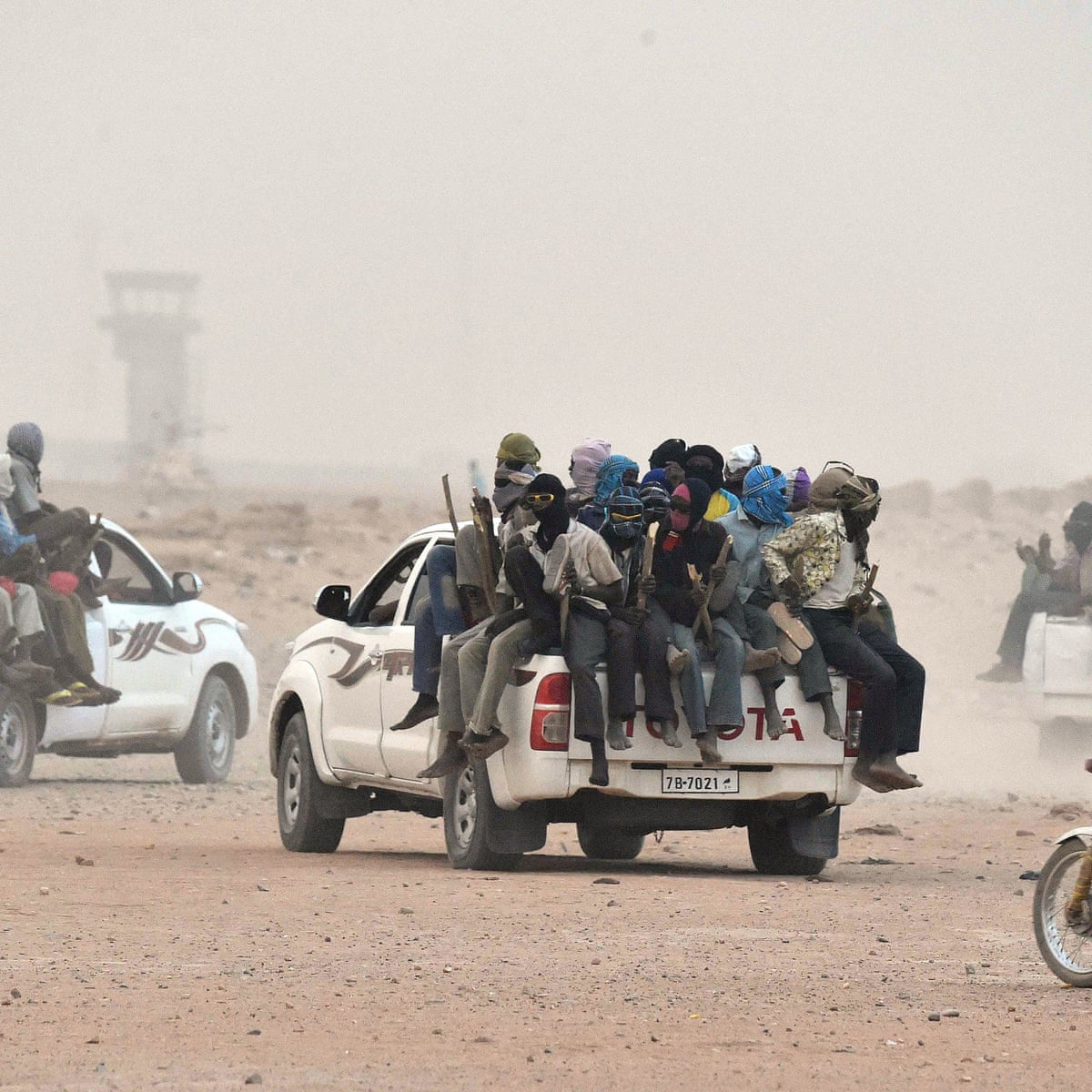
This is why simply describing the crisis as a question of immigration numbers misses the central issue.
It is also a problem of organised crime.
Smuggling networks are businesses. They respond to demand, monitor enforcement measures and change their methods when governments close one route or disrupt one operation. If authorities make crossings more difficult, the gangs have an incentive to develop different boats, different launch points and different methods of communication.
That makes the problem extremely difficult to solve.
There is another danger that deserves much greater attention.
The more successful these networks become, the more money they can generate. And enormous profits create incentives for criminal organisations to expand into other activities.
A gang that has developed the ability to move people across borders may also possess contacts, money and logistical networks that can be used for other forms of organised crime.
That does not mean every migrant is connected to criminal activity. The overwhelming majority of people crossing the Channel are individuals seeking a new life, fleeing poverty, conflict or instability.
The distinction between migrants and smugglers is therefore crucial.
The people inside the boats are often the customers of the criminal gangs, not their partners.
The real targets should be the organisers, financiers, recruiters, boat suppliers and facilitators who profit from the trade.
Yet bringing those people to justice is much harder than intercepting a boat.
The organisers can operate from different countries. They can communicate through encrypted messaging services. Payments can move through complicated financial networks. Recruiters can operate online while the people organising the crossing remain physically distant from the launch site.
This creates a fundamental problem for law enforcement.
Stopping a boat may prevent one crossing.
It does not necessarily destroy the organisation responsible for it.
That is why the next stage of the crisis could be more complicated than the last.
Smugglers are likely to continue experimenting. They may attempt to increase the number of passengers transported in each boat, use different vessels, alter launch times or exploit weaknesses in surveillance. Every successful crossing provides information that can be used to improve the next operation.
And every failed crossing can also teach criminals something.
This creates an uncomfortable arms race between enforcement agencies and organised crime.
Governments invest in surveillance, policing and international cooperation. Smuggling gangs respond by changing tactics. Governments close loopholes. Criminals search for new ones.
Meanwhile, people continue to pay.
That is the human tragedy at the centre of the entire issue.
Behind every statistic is a person who has made a decision involving enormous risk. Some may have sold possessions or borrowed money to pay smugglers. Others may have been promised that Britain offers an easy route to employment and a secure future.
The smugglers have every incentive to exaggerate those promises.
Their business depends on customers believing that the journey is worth the risk.
That is why disrupting the smugglers’ propaganda may be just as important as disrupting their boats.
If potential migrants believe that the Channel crossing is easy, safe or guaranteed to result in permanent settlement, demand remains strong. If demand remains strong, criminal gangs have a ready-made market.
The government therefore faces a problem that cannot be solved by one policy announcement.
It requires cooperation with France and other European countries, intelligence sharing, financial investigations, stronger action against organised crime and a credible system for dealing with asylum claims.
It also requires honesty.
Politicians should not pretend that there is a simple solution.
Nor should they allow the legitimate concerns of voters to become an excuse for treating migrants as though they are themselves criminals.
The distinction matters because public confidence depends on fairness.
Britain can have firm border controls while still treating people humanely.
It can pursue smugglers aggressively while protecting genuine refugees.
It can demand that people do not make dangerous Channel crossings while also recognising why some are prepared to risk their lives in the first place.
The question is whether the government can do all three effectively.
That is where the real test lies.
If smugglers continue to believe that Britain is a profitable destination and that the chances of identifying the people running their operations remain relatively low, they will continue.
The boats may change.
The routes may change.
The technology may change.
But the business will continue.
And that is the nightmare scenario.
Imagine a situation in which the number of crossings falls temporarily, leading politicians to declare victory, only for organised gangs to return months later with a new strategy. The public could be told that the crisis has been solved when, in reality, the criminal infrastructure remains intact.
That would be a dangerous illusion.
The smugglers do not need to win every battle.
They only need their business to remain profitable.
This is why the most important question is not how many boats arrive on a particular day.
It is whether the criminal networks behind those boats are being dismantled.
Are their money flows being traced?
Are their recruiters being identified?
Are the people supplying boats and engines being investigated?
Are international criminal networks sharing intelligence?
Are the organisers being prosecuted rather than merely the people caught at the bottom of the operation?
Those are the questions that will determine whether Britain can genuinely reduce the influence of the smugglers.
There is also a wider lesson.
Border security is no longer simply about physical borders. In the digital age, criminal networks can recruit customers, advertise services, distribute instructions and arrange payments across international boundaries without ever meeting face to face.
That means the response must be equally modern.
Police forces need intelligence capabilities capable of following networks rather than merely individual suspects. Financial investigators need to identify the profits. Technology companies and governments need to understand how online recruitment is being used. International agencies need to cooperate rather than operate in isolation.
Otherwise, the criminals will remain one step ahead.
The Channel crisis has already demonstrated how quickly an apparently temporary phenomenon can become a permanent challenge.
What began as relatively small numbers of crossings has developed into a major political and security issue.
And there is no guarantee that the next phase will look like the last.
The smugglers are watching.
They are watching government announcements. They are watching police operations. They are watching changes in French enforcement. They are watching political arguments in Westminster.
Most importantly, they are watching for weaknesses.
Every weakness is an opportunity.
That is why the warning should not be dismissed simply because the latest figures appear encouraging. A reduction in crossings on one particular day, week or month does not necessarily mean that the criminal networks have been defeated.
The real victory will come when the people organising the trade realise that it is no longer profitable.
Until then, the danger remains.
The people sitting in the boats are visible.
The people making money from them are often not.
And perhaps that is the most worrying part of all.
Britain’s migration debate has become dominated by arguments about numbers, politics and headlines. But behind the headlines is a criminal economy that survives because vulnerable people are willing to pay enormous sums for the promise of a better future.
If that economy is not dismantled, the smugglers will adapt.
They will find new customers.
They will find new routes.
They will find new methods.
And they will wait for the next opportunity.
The warning has already been given.
The question now is whether governments act before the next chapter is written—or whether Britain is forced to discover just how much more dangerous the smugglers’ next move could be.
:::{“fallbackMarkdown”:””,”reference”:{“matched_text”:” “,”prefix”:null,”start_idx”:10647,”end_idx”:10647,”safe_urls”:[],”refs”:[],”alt”:””,”prompt_text”:null,”type”:”sources_footnote”,”sources”:[],”has_images”:false},”showLoginRequiredCard”:false}