

Reform UK Is “Way Bigger” Than Nigel Farage: Former Chairman Delivers Stark Warning to Party Leader
Nigel Farage has spent years building Reform UK into a political force almost synonymous with his own name.
But now a former chairman of the party has delivered a striking message that could have profound consequences for its future.
Dr David Bull, who served as Reform UK’s chairman until May, has insisted that the party is “way bigger than Nigel”, in a pointed intervention that raises a fundamental question about the movement’s future.
Can Reform UK become a serious governing party without depending so heavily on the personality of Nigel Farage?
Bull clearly believes it can.
And his intervention comes at an awkward moment for Farage, with the Reform leader facing renewed scrutiny and the party experiencing some difficult political moments after a period in which its fortunes had appeared to be rising rapidly.
The former chairman’s comments are therefore more than a passing criticism.
They go to the heart of one of the biggest challenges facing Reform UK.
If the party genuinely wants to become a permanent force in British politics, it must eventually prove that it is bigger than one man.
Farage Has Been the Face of Reform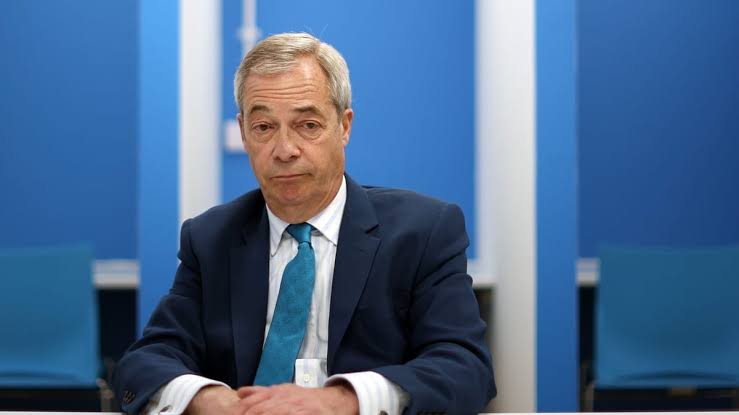
There is no question that Nigel Farage remains the dominant figure associated with Reform UK.
For many voters, the party and Farage are almost inseparable.
His political career stretches back decades.
He became one of the most recognisable figures behind Britain’s Eurosceptic movement, played a prominent role in the Brexit campaign and eventually returned to frontline politics with Reform UK.
His ability to attract media attention is extraordinary.
A single speech can dominate political coverage.
A television interview can generate headlines across the country.
A social media post can trigger an immediate political debate.
That visibility has been invaluable to Reform.
But it also creates a vulnerability.
When one politician becomes the overwhelming public face of a political party, voters can begin to associate every success and every failure with that individual.
If Farage performs strongly, Reform benefits.
If Farage becomes embroiled in controversy, Reform suffers.
That is precisely the problem Bull’s intervention highlights.
“The Party Is Way Bigger Than Nigel”
Bull’s message could hardly be clearer.
Reform UK, he argues, should not be treated as a vehicle belonging to one individual.
The party has supporters, councillors, activists and elected representatives across the country.
It has developed an identity that goes beyond Farage personally.
That argument is important because Reform is attempting to make a transition.
It is no longer simply a protest movement seeking to influence the Conservatives.
It wants to become a serious alternative government.
And governments cannot be built around one personality alone.
They require ministers.
They require experienced politicians.
They require policy experts.
They require local organisations.
They require candidates capable of winning elections.
And, perhaps most importantly, they require voters to believe that the party can continue even if its leader eventually leaves.
That is a much bigger challenge than winning headlines.
Bull’s Warning Comes at a Difficult Time
Bull’s intervention comes after a particularly difficult period for Farage.
The Reform leader has faced questions surrounding a significant financial gift and scrutiny over whether the money was properly declared.
Farage has rejected the criticism surrounding the donation and has defended his position.
The parliamentary standards watchdog is examining the matter, meaning the issue remains politically sensitive.
At the same time, Reform has experienced setbacks at the ballot box.
The party’s defeat in the Makerfield by-election was particularly significant because it demonstrated that strong national attention does not automatically translate into victory in every constituency.
That matters.
Political momentum can disappear quickly.
A party that appears unstoppable one month can suddenly find itself under pressure the next.
For Reform, the challenge is to show that its support is deeper than the popularity of its leader.
Bull Wants Farage to Take a Break
Perhaps the most extraordinary part of Bull’s intervention was his suggestion that Farage should take some time away from politics.
Speaking as a friend and former colleague, Bull suggested that Farage should “have a bit of a break”.
That is an extraordinary message coming from someone who until recently occupied a senior position within the same party.
It suggests that Bull’s concerns are not simply about policy.
They are also about the pressure surrounding Farage personally.
Politics is an unforgiving business.
Farage has spent decades in the spotlight.
Every statement is analysed.
Every financial decision is scrutinised.
Every political setback is amplified.
Every internal disagreement becomes a national story.
Bull himself described his time as chairman as extraordinarily demanding, saying the role had left him physically unwell.
His decision to step away therefore provides important context.
He understands just how difficult it is to build and maintain a political organisation.
Reform’s Biggest Test: Can It Institutionalise?
The real challenge for Reform UK is institutionalisation.
That sounds like an obscure political term, but the concept is simple.
Can the party build structures that survive individual leaders?
The Conservative Party has existed for generations.
Labour has existed for generations.
Liberal Democrats have built local political organisations across Britain.
Reform is much younger.
Its political identity remains closely linked to the personalities who created and shaped it.
That is both its strength and its weakness.
Farage provides enormous energy and visibility.
But if Reform is to become a permanent governing force, it needs to develop a broader political identity.
It needs voters to think:
“I support Reform because I believe in what Reform stands for.”
Not simply:
“I support Reform because I support Nigel Farage.”
That difference could determine whether the party becomes a permanent feature of British politics or remains heavily dependent on one charismatic leader.
The Farage Factor Cannot Simply Be Ignored
Yet there is an obvious counterargument.
Without Farage, would Reform UK have achieved anything close to its current prominence?
That question cannot be dismissed.
Farage is the politician who gives Reform its national profile.
He understands how to communicate with voters who feel ignored by mainstream politics.
He knows how to dominate political news.
He can turn complex political debates into simple messages.
And he has spent decades building personal credibility among a section of the electorate.
Replacing that presence would be extremely difficult.
This creates a fascinating contradiction.
Reform needs Farage.
But Reform also needs to prove that it is bigger than Farage.
Both statements can be true at the same time.
The party can benefit enormously from his leadership while simultaneously building structures that reduce its dependence on him.
A Future Without Farage?
At some point, every political party must consider succession.
Farage cannot lead forever.
Whether he remains leader for another election, another decade or much longer is impossible to know.
Eventually, however, Reform will have to confront the question.
Who comes next?
That is where Bull’s argument becomes particularly important.
If Reform has developed a strong enough organisation, the transition could be relatively straightforward.
If not, Farage’s departure could create a major political crisis.
The party could split.
Different factions could fight for control.
Supporters could move to another political movement.
The Conservatives could attempt to win back former voters.
And the entire Reform project could potentially weaken.
That is exactly what Reform must avoid.
Rupert Lowe Adds Another Complication
The existence of Restore Britain makes the situation even more complicated.
Rupert Lowe, another former Reform figure, has established his own political movement and is attempting to compete for voters further to the right.
That means Reform is no longer simply fighting Labour and the Conservatives.
It is also facing competition from politicians who understand its internal culture because they were once part of it.
This creates a potentially dangerous situation.
The more Reform becomes divided internally, the harder it becomes to present itself as a stable alternative government.
Bull’s comments therefore arrive at a crucial moment.
The party needs unity.
It needs organisation.
And it needs a clear message about where it is heading.
Farage’s Leadership Is Both Asset and Liability
The political reality is that Farage remains Reform’s greatest asset.
He is also potentially its greatest liability.
His supporters see him as authentic.
His critics see him as divisive.
His ability to generate headlines is extraordinary.
But controversy follows him just as quickly.
For Reform, that creates a constant balancing act.
The party needs Farage’s profile to attract attention.
But it must also demonstrate that it has serious politicians capable of governing.
That means Reform needs to put forward a team.
Not just a leader.
A team of credible figures who can take responsibility for the economy, health, education, defence, housing, transport and foreign affairs.
That is how a protest movement becomes a government-in-waiting.
The Next Election Will Be Crucial
The next major electoral test will tell us a great deal about whether Reform has successfully moved beyond Farage’s personal brand.
If the party performs strongly across different regions and among different groups of voters, it will strengthen Bull’s argument.
It will demonstrate that Reform has developed a broad political coalition.
But if support falls sharply whenever Farage is absent from the campaign trail, critics will argue that the party remains fundamentally personality-driven.
That could become an uncomfortable issue for Reform strategists.
They will need to find ways to give other politicians the same political visibility.
The public must begin recognising Reform candidates beyond Farage.
Otherwise, the party will struggle to convince voters that it is ready to govern a country of millions of people.
Farage Has an Opportunity
Despite the criticism, Bull’s comments could actually provide Farage with an opportunity.
He could embrace the argument.
He could say that he is proud of what Reform has become and that the next stage is about building a much broader team.
He could elevate other senior figures.
He could give candidates greater responsibility.
He could demonstrate that the party has a clear succession plan.
That would transform the criticism into evidence of political maturity.
Instead of treating the “bigger than Nigel” argument as an attack, Reform could make it part of its strategy.
The message would be simple.
Farage built the platform.
Now the movement is bigger than the man who built it.
That could be an extremely powerful political narrative.
But There Is a Risk
There is also another possibility.
If the internal debate becomes personal, Reform could face further division.
Farage loyalists could see Bull’s intervention as an attempt to weaken the leader.
Others could argue that Bull is simply saying what needs to be said.
That tension could grow.
And political parties rarely benefit when internal arguments become public.
The Conservatives have experienced this problem repeatedly.
Labour has experienced it too.
Reform would be making a serious mistake if it assumed it was immune.
The party’s supporters may tolerate internal disagreements.
But they are unlikely to tolerate endless infighting.
They want results.
What Does “Bigger Than Nigel” Really Mean?
Ultimately, Bull’s phrase carries a much deeper meaning.
He is not necessarily saying Farage is irrelevant.
Quite the opposite.
He is acknowledging Farage’s importance while insisting that the party’s future cannot depend entirely upon him.
That distinction matters.
A strong political leader should build a movement capable of surviving beyond their own career.
If Reform can achieve that, it will have taken an enormous step towards becoming a permanent part of British politics.
If it cannot, critics will continue to describe it as a personality-driven political vehicle.
The choice is now in Reform’s hands.
Conclusion
David Bull’s declaration that Reform UK is “way bigger than Nigel” has opened a debate that the party can no longer avoid.
Nigel Farage remains its most recognisable figure and one of the most influential politicians in Britain.
But Reform’s future cannot ultimately depend on one man.
The party wants to challenge Labour.
It wants to replace the Conservatives as the dominant force on the political right.
It wants to become a governing party.
Those ambitions require something much bigger than a charismatic leader.
They require an organisation.
They require a team.
They require credible candidates.
And they require a political identity capable of surviving leadership changes.
Bull’s intervention may therefore be uncomfortable for Farage, but it could also contain an important lesson.
The strongest political movements are not those that depend forever on one personality.
They are those that can turn one leader’s popularity into a lasting political institution.
Farage built the platform.
Now comes the harder question.
Can he build a movement that eventually no longer needs him?
That may be the ultimate test of Reform UK.
Because if the party really is “way bigger than Nigel”, the next few years will have to prove it.
:::{“fallbackMarkdown”:””,”reference”:{“matched_text”:” “,”prefix”:null,”start_idx”:14318,”end_idx”:14318,”safe_urls”:[],”refs”:[],”alt”:””,”prompt_text”:null,”type”:”sources_footnote”,”sources”:[{“title”:”Nigel Farage urged to take ‘break’ from politics by former …”,”url”:”https://www.independent.co.uk/bulletin/news/nigel-farage-reform-uk-david-bull-b3003817.html?utm_source=chatgpt.com”,”attribution”:”The Independent”}],”has_images”:false},”showLoginRequiredCard”:false}