


Andy Burnham campaigning in the Makerfield by-election (Image: Getty)
On October 20, 2022, Conservative prime minister Liz Truss stood outside Downing Street to announce her resignation. But we still had a Tory government. Her decision to quit simply meant the Conservatives would choose a new leader, who would take over as prime minister.
Some people, however, felt the British public should be given a say – including one Andy Burnham, who posted a simple demand on social media: “#GeneralElectionNow.”
He wasn’t alone. Angela Rayner, now a Burnham supporter, took to her soapbox once Rishi Sunak had been appointed as the new prime minister to complain on October 24, 2022: “Rishi Sunak has been crowned by Tory MPs. It’s a coronation, not an election.” She added: “He has no mandate and the British people have had no say. #GeneralElectionNow.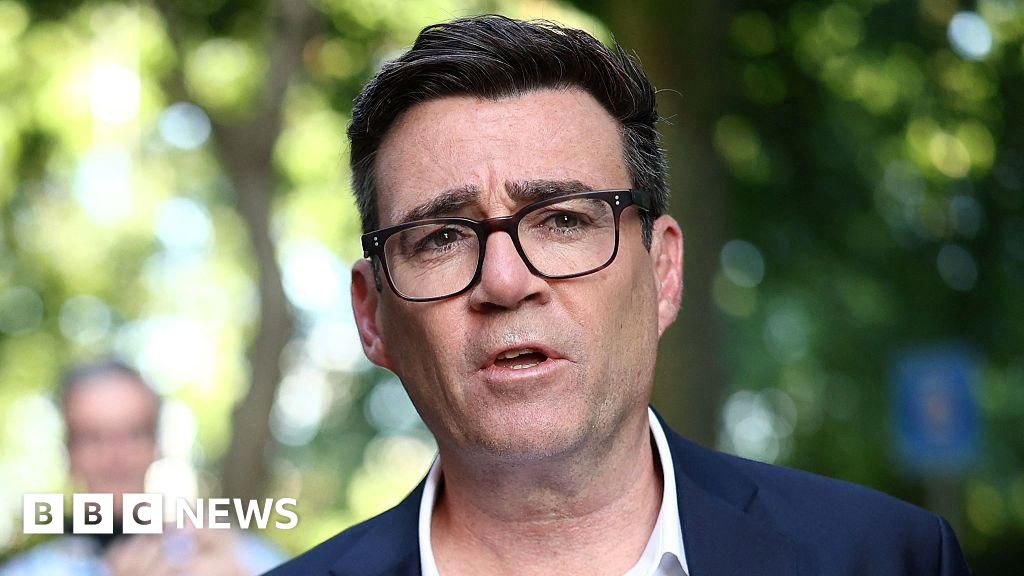
Now the shoe is on the other foot, and Mr Burnham is set to become prime minister without consulting the British public. It even looks, although we still don’t know for sure, that he will do it with a coronation rather than a contest.
But this time, neither Mr Burnham nor Ms Rayner is demanding a general election. It seems the rules are different when a Labour government changes prime minister.
There is no need, to be fair, for Andy Burnham to go to the country. We elect a Parliament, not a prime minister.
If we’re going to call out Mr Burnham and Mr Rayner for their inconsistency, then we have to be consistent ourselves – and that means acknowledging that they were wrong in 2022 but right today if they believe, as they clearly do, that there’s nothing to stop Mr Burnham walking into No 10.
Despite this, our future prime minister may find himself under pressure to hold an election soon.
Labour MP Mike Tapp stuck his neck out and said, shortly before Keir Starmer resigned, that there should be a general election if a new prime minister takes over.
Polling shows voters agree. An Ipsos survey found just over half of voters, 55%, would support a law that requires a general election to be called automatically if the party in power switches its leader during a parliamentary term. That would apply to any party, but given that the survey took place between Monday, June 22 (when Starmer resigned) and June 24, it’s safe to assume voters had Sir Keir and Andy Burnham on their minds.
10p a day! Join Express Premium with our special Brexit anniversary offer
Ten years on from the vote to leave the EU, support us now in our campaign for a proper Brexit.
10p per day for a year, £36.50 for the year.
Offer available for ten days only.
Click HERE to subscribe to enjoy unlimited access to exclusive interviews, opinion and analysis, special offers and an ad-lite experience.
There is growing speculation that Mr Burnham could actually give the public what they want and hold an early ballot – if not immediately, then at least much sooner than mid-2029, when the next election is required.
The Conservatives, meanwhile, could – maybe – become a bigger threat to Labour as time goes by. Polling suggests party leader Kemi Badenoch is impressing voters, but that hasn’t translated into a surge of support for her party. The public still associates the Tories with the chaos of their final years in office.
But Mrs Badenoch is playing the long game. She has always known it would take time to revive the Tory brand. Mr Burnham might decide his best bet is to refuse to give her that time, and go to the nation now.
There’s one snag. Many Labour MPs would hate it.
Right now, Labour holds 403 of the 650 seats in the Commons. If a general election were held, Labour might win it – but there would undoubtedly be fewer Labour MPs afterwards. From Mr Burnham’s point of view, a smaller minority might be a price well worth paying in return for a personal mandate to enact his policies. But Labour colleagues who face being booted out of Parliament will feel very differently.
Andy Burnham Could Be About to Call a General Election – And There’s One Huge Reason Why
Andy Burnham could face growing pressure to call a general election sooner than expected, as Britain’s new prime minister confronts a difficult political and economic dilemma that could define his premiership.
The possibility of an early election has returned to the centre of Westminster speculation after reports suggested that some Labour figures believe Burnham may eventually need to seek a fresh mandate from voters.
The argument is not simply about political popularity. It is about whether Burnham can make major changes to Britain’s economic and social policy while relying on a parliamentary mandate inherited from the 2024 general election.
One of the biggest reasons being discussed is the scale of the decisions facing the government on taxation, welfare, defence and social care.
If Burnham decides that those decisions require a new mandate, an early general election could become a serious option.
However, there is an important caveat. Burnham has previously said that he does not intend to call an early election. His position was clear when he was campaigning in Makerfield, before becoming prime minister. Reuters reported in June that his spokesperson said he had no plans to call an immediate election and that the next general election was due in 2029.
So why has the question returned?
The huge reason: difficult decisions on tax and spending
The strongest argument for an early election is that Burnham may eventually want voters to endorse a substantially different political programme.
Britain’s finances are under considerable pressure. Recent reporting has highlighted rising borrowing costs, increased debt-interest payments, higher defence spending and the growing cost of welfare and pensions.
The Financial Times reported in September that Burnham and Chancellor John Healey were facing difficult fiscal choices, with the government under pressure to consider further tax increases despite already high tax revenues. The newspaper also reported that an early election was being discussed as one possible way of obtaining a new mandate for difficult decisions.
That is potentially significant.
A government can implement major changes during a parliamentary term without holding another election. But politically, a prime minister may decide that asking voters directly for approval provides stronger backing for controversial measures.
This is particularly relevant if the government wants to increase taxes, reform welfare or make major changes to social care.
The mandate question
Burnham inherited a Labour parliamentary majority rather than winning a general election as prime minister.
Under Britain’s parliamentary system, there is no constitutional requirement for a newly appointed prime minister to immediately call an election.
The Institute for Government has explained that a prime minister who takes office during a parliamentary term has a constitutional mandate as long as they command the confidence of the House of Commons.
But constitutional legitimacy and political legitimacy are not necessarily the same thing.
Opposition parties can argue that a new prime minister should seek direct approval from voters, particularly if the new administration intends to pursue policies that differ substantially from those presented at the previous election.
That is where Burnham’s situation becomes politically complicated.
He has his own political agenda, including major proposals on social care and the economy. If he wants to make substantial changes, the question becomes whether the existing Labour mandate is sufficient.
Social care could become a major test
One of Burnham’s long-standing priorities is reform of social care.
Before becoming prime minister, he said he would be prepared to tackle the difficult questions surrounding social care funding, inheritance tax and care charges.
In an interview with The Guardian, Burnham said he wanted to bring forward the Casey review on social care and focus on reforms that could be implemented quickly. He also said he would not shy away from difficult decisions involving inheritance tax and care costs.
That matters because social care reform could require substantial additional public spending or significant changes to taxation.
The issue has challenged successive governments for decades.
A comprehensive reform programme could therefore become one of the defining policies of the Burnham administration.
If such a programme required unpopular tax increases or major changes to benefits, Burnham could eventually face pressure to obtain a fresh electoral mandate.
The welfare bill
Welfare is another major issue.
The cost of Britain’s welfare system has been rising, while the government is simultaneously under pressure to protect public services and increase defence spending.
This creates a difficult balancing act.
If Burnham wants to reduce welfare spending, he could face opposition from sections of Labour and from campaign groups.
If he chooses to protect benefits while increasing spending elsewhere, the Treasury could face further pressure.
That is why some Labour figures may see an election as a way of putting the government’s wider economic programme directly before voters.
An election would not automatically solve the fiscal problem, of course. But a successful mandate could provide political authority for measures that might otherwise be difficult to introduce.
Defence creates another pressure point
Defence spending has become increasingly important in Britain’s political debate.
The international security environment has changed significantly, placing pressure on European governments to spend more on defence.
For Burnham, this creates a particularly difficult calculation.
More defence spending means less room for other spending commitments unless the government raises additional revenue or borrows more money.
That could mean difficult choices involving taxation, pensions, welfare and public services.
The Financial Times reported that Britain was spending more on debt interest than on defence, while the government was simultaneously considering how to respond to growing security demands.
Those pressures could eventually make the next Budget politically decisive.
Why the Budget matters
Burnham’s government faces a major test when Chancellor John Healey delivers the Budget on October 28.
The decisions made in that Budget could shape the political environment for months.
If taxes rise significantly, opposition parties will have an opportunity to campaign against the government.
If spending cuts are announced, Labour could face criticism from within its own ranks.
If the government borrows more heavily, financial markets could become an additional source of pressure.
And if ministers avoid the most difficult decisions, the same problems could return in the following year.
This is why some observers believe the government may eventually consider whether it is better to seek a fresh mandate rather than spend years managing increasingly difficult political compromises.
Reform UK is another factor
Reform UK adds another layer of uncertainty.
The party has become a major force in British politics and has challenged both Labour and the Conservatives in different parts of the country.
The Independent reported in June that one argument for an early election was the possibility that Labour could take advantage of a period when Reform was still developing its organisation and campaigning operation.
However, that argument also carries considerable uncertainty.
An early election could expose Labour to significant losses if Reform performed strongly.
Labour currently has a large Commons majority, and an election would put that majority at risk.
That is one of the strongest reasons for Burnham to avoid calling one.
The Gordon Brown comparison
Burnham’s political history makes the question particularly interesting.
He served as a cabinet minister under Gordon Brown, who famously considered calling an early election in 2007.
Brown had enjoyed a substantial political bounce after replacing Tony Blair but eventually decided against an election.
The episode became one of the most discussed examples of a prime minister hesitating over whether to trade a secure parliamentary position for an uncertain electoral contest.
Burnham was close enough to the Brown government to have witnessed that episode first-hand.
Recent commentary has therefore drawn comparisons between the two situations.
Prospect magazine noted that several postwar prime ministers who called elections relatively early in their terms subsequently won them, while other leaders who inherited large majorities and waited until later experienced mixed results.
The historical evidence, however, does not provide a simple formula for deciding when an election should be held.
Burnham has not committed to an early election
Despite all the speculation, there is currently no confirmed announcement that Burnham is preparing to call a general election.
In fact, his public statements have generally pointed towards continuing with the existing parliamentary timetable.
In June, Burnham indicated that he did not expect to call a snap election if he became prime minister.
That position remains important when assessing claims that an election is imminent.
Political speculation is not the same as a government decision.
At the same time, some recent analysis has argued that Burnham’s language leaves open the possibility that circumstances could change.
One July analysis noted that Burnham said there was “no early election” rather than making a permanent commitment that there would never be one. That interpretation is contested and should not be treated as evidence that an election has been decided.
What could trigger a change?
Several developments could potentially alter the calculation.
The first would be the government’s economic position.
If the October Budget produces significant tax increases or spending reductions, Burnham could face pressure to seek a mandate for the next stage of his programme.
The second would be public opinion.
A sustained improvement in Labour’s polling position could make an election more politically attractive, while poor polling could make it extremely risky.
The third would be opposition strength.
If Reform UK, the Conservatives, Liberal Democrats and Greens remain divided, Labour’s calculation could be different from a situation in which opposition support consolidates.
The fourth would be internal Labour politics.
Burnham would need to maintain support among Labour MPs while pursuing potentially controversial reforms.
A gamble with major consequences
Calling an early election would therefore represent a major political gamble.
It could give Burnham a fresh mandate for difficult reforms.
But it could also put Labour’s existing parliamentary majority at risk.
The Institute for Government has stressed that a mid-term change of prime minister does not itself create a constitutional requirement for a new election. The decision is ultimately political rather than automatic.
That leaves Burnham with a choice between stability and renewal.
He can continue governing with the existing parliamentary majority and attempt to implement his programme over the remaining parliamentary term.
Or, if circumstances change sufficiently, he could decide that voters should be asked to endorse a new political direction.
The one big reason to watch
For now, the biggest reason to watch the general-election question is Britain’s increasingly difficult fiscal position.
Taxation, welfare, pensions, defence and social care are all competing for limited public resources.
Burnham may ultimately need to make choices that affect millions of households.
If he concludes that those choices amount to a fundamentally new political programme, pressure for a fresh mandate could increase.
But that remains a possibility rather than an announced plan.
For the moment, Burnham has a parliamentary mandate inherited from Labour’s 2024 victory and a large Commons majority with which to govern.
The next major test will be whether his government can make the difficult economic decisions ahead without seeking another vote.
If the political and fiscal pressures intensify, the question of an early general election is unlikely to disappear.
And that is why the months following the October Budget could prove crucial for Burnham’s premiership.
It’s thought that Reform would struggle with a snap election. Party leader Nigel Farage is still building a party machine. The experience in the recent Makerfield by-election, where candidate Rob Kenyon was appointed only for it to emerge he had made controversial comments on social media, suggests Reform’s candidate recruitment and vetting system needs further work. Mr Farage has also not yet figured out how to see off the threat from Rupert Lowe’s Restore Britain.