

Andy Burnham Creates Brand New Government Role as UK Devastated by Wildfires
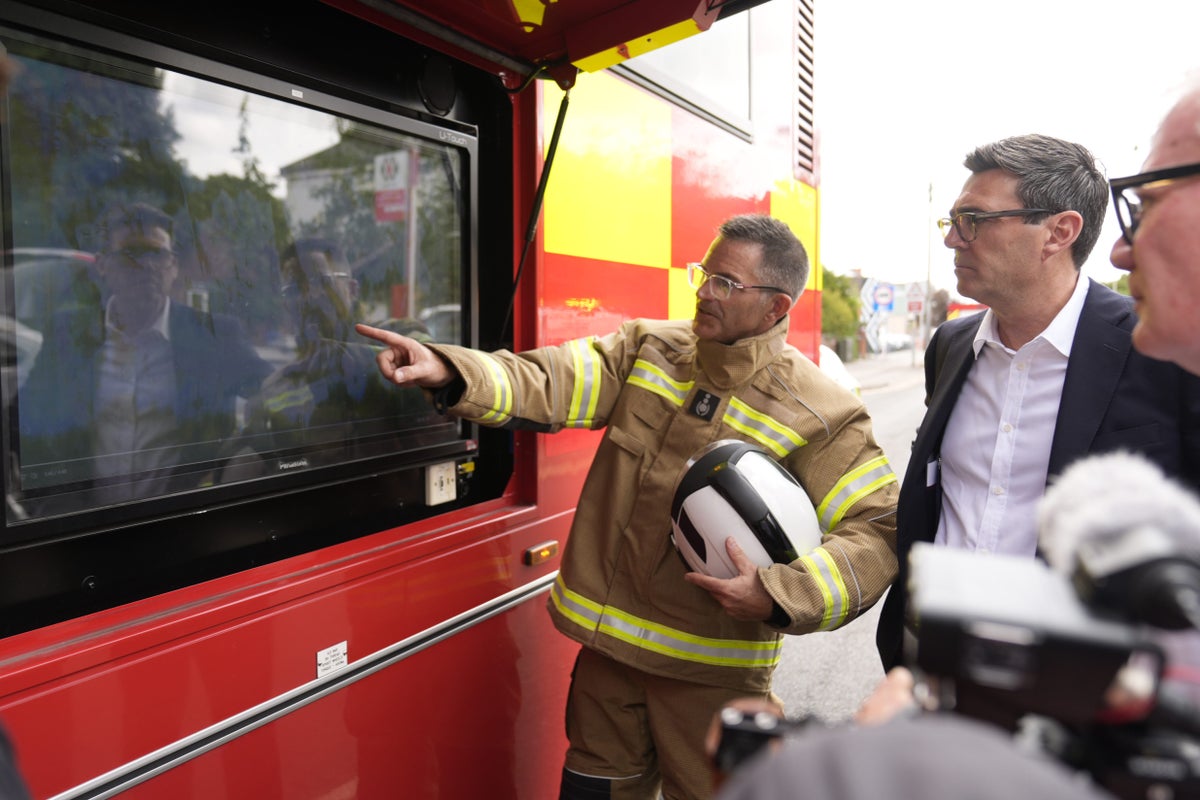
Prime Minister Andy Burnham has created a brand new government role as Britain battles a devastating wave of wildfires, with the country facing an unprecedented combination of extreme heat, drought and increasingly dangerous conditions for communities and emergency services.
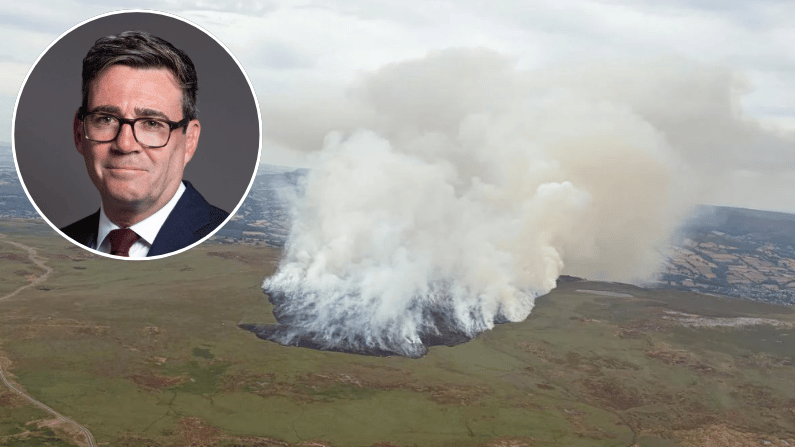
The appointment of a dedicated fire minister comes as the scale of the crisis continues to grow. More than 1,000 wildfires have been recorded across the UK this year, while firefighters have been forced to respond to multiple major incidents during an intense period of hot and exceptionally dry weather. The government has also turned to the military for assistance, announced restrictions on disposable barbecues and revealed plans to commission specialist firefighting aircraft.
The new role has been given to Baroness Blake of Leeds, who will serve as fire minister within the Ministry of Housing, Communities and Local Government. The appointment represents a significant change in the government’s response to the growing threat posed by wildfires and extreme weather.
For years, wildfires in Britain were often regarded as relatively isolated rural incidents, particularly affecting moorland, heathland and woodland during unusually dry summers. The events of 2026, however, have challenged that assumption. Fires have threatened homes, businesses and critical infrastructure, while emergency services have faced an extraordinary level of pressure.
The appointment comes after some of the most frightening scenes witnessed in Britain this summer.
In Stourbridge in the West Midlands, a major wildfire destroyed 19 homes and forced residents to flee. More than 500 acres were affected by the blaze, while firefighters dealt with hundreds of incidents in the surrounding area. Several people, including firefighters, required hospital treatment.
The situation has been made worse by exceptional temperatures. On Thursday, temperatures reached a provisional 38.1°C at Kew Gardens in London, making it the hottest day of the year so far and one of the hottest days ever recorded in Britain. At the same time, much of England and Wales was suffering from drought, creating extraordinarily dry vegetation that could ignite and spread fire rapidly.
Against this backdrop, Burnham has warned that Britain is effectively a “tinderbox”.
The prime minister’s message to the public has been blunt: seemingly harmless outdoor activities can become extremely dangerous when vegetation is dry and temperatures are exceptionally high. The government has therefore moved to restrict disposable barbecues and urged people to avoid activities that could accidentally start fires.
An emergency alert was sent to millions of people across England and Wales, warning of the very high wildfire risk and asking people not to use barbecues, garden incinerators or firepits. It represented one of the most extensive uses of Britain’s mobile phone emergency alert system.
The government has also asked people to take particular care with cigarettes and other potential sources of ignition. In ordinary circumstances, a discarded cigarette or small outdoor fire might appear insignificant. During a drought, however, such an incident can rapidly develop into a major emergency.
For firefighters, the challenge is not simply the number of fires. Extreme heat makes the work itself more dangerous.
Crews working for hours in temperatures approaching 40°C can suffer heat exhaustion and dehydration while wearing heavy protective equipment. At the same time, rapidly changing winds can cause fires to move unpredictably, making conditions particularly hazardous for emergency personnel.
This is one reason why the government has decided that Britain’s approach to wildfire preparedness must change.
Burnham has acknowledged that fire services have not received all the resources they need to deal with the changing nature of the climate. He has promised to hold a summit with fire services to discuss funding, equipment and long-term preparedness. The government is also considering permanent aerial firefighting capability, rather than relying solely on conventional fire engines and helicopters during major emergencies.
The proposal to commission firefighting aircraft is particularly significant.
Countries across southern Europe and other parts of the world have used specialist aircraft to tackle large wildfires for years. Such aircraft can deliver huge quantities of water or fire retardant to areas that may be difficult or dangerous for ground crews to reach.
Britain has historically had less need for this kind of national capability. But the events of 2026 have raised serious questions about whether that assumption remains appropriate.
If extreme heatwaves become more frequent and drought conditions last longer, Britain could face a future in which large wildfires are no longer exceptional events. Having aircraft ready to deploy could therefore become an essential part of national emergency planning.
The new fire minister will face the difficult task of helping coordinate that response.
The role is also likely to involve a much broader question: how Britain should prepare for climate-related emergencies.
Wildfires are only one part of the problem. The same extreme weather that creates ideal conditions for fires can also damage agriculture, put pressure on water supplies and increase health risks. Nearly three-quarters of England and the whole of Wales are currently experiencing drought conditions, according to reports surrounding the government’s emergency response.
Farmers are already struggling with dry fields and reduced crop yields. Rivers and reservoirs have fallen to dangerously low levels in some areas, while water companies have introduced restrictions affecting millions of households.
The government has therefore been confronted with a crisis that crosses traditional departmental boundaries. Fire services, farmers, water companies, the NHS, transport operators and local authorities are all dealing with different consequences of the same extreme weather.
That makes the appointment of a fire minister potentially more important than the title itself suggests.
A dedicated minister can provide political focus at a time when emergency services are being asked to deal with increasingly complex incidents. The role could also help establish a clearer national strategy for wildfire prevention, training, equipment and cooperation between different emergency agencies.
However, the appointment has also raised questions about whether the government is acting quickly enough.
Environmental organisations and climate campaigners have criticised Burnham for previously failing to place climate change at the centre of his response to the crisis. More than 50 environmental groups reportedly urged the prime minister to speak more openly about the connection between climate change and the extreme weather affecting Britain.
Burnham has now been much more direct.
During his visit to Stourbridge, he acknowledged that Britain must “face up” to a changing climate and argued that the country needs to accelerate its transition towards clean energy. He also said the current situation could not simply be accepted as the new normal.
That change in language is politically significant.
For much of the crisis, the government’s response had focused on immediate practical measures such as emergency meetings, public warnings and restrictions on activities that could start fires. But the increasing scale of the disaster has forced a wider conversation about whether Britain is adequately prepared for climate change.
The question is particularly important because extreme weather does not necessarily end when the flames disappear.
Burnham has warned that Britain could face a wet autumn and winter following the current period of heat and drought. If that happens, the country could move rapidly from one type of emergency to another, with flooding potentially following months of drought and wildfires.
That possibility illustrates the complexity of climate adaptation.
The infrastructure required to deal with drought is not always the same as that required for flooding. Fire services need different equipment from water companies, while farmers need support to protect crops and livestock. Roads, railways, hospitals and schools also have to become more resilient to extreme temperatures.
Britain’s rail network has already experienced serious disruption during the heatwave, including two train derailments within a short period. Investigations are continuing, but the incidents have highlighted the vulnerability of infrastructure to extreme temperatures.
This means that the new fire minister will be entering government at a moment when the definition of an emergency is changing.
The old model was largely reactive: a fire would begin, firefighters would be called, and the emergency would eventually be brought under control.
The new reality may require a much more proactive approach.
That could include expanding wildfire monitoring, improving early-warning systems, increasing access to specialist equipment, developing stronger evacuation plans and ensuring that local fire services have sufficient staffing and funding. It could also involve greater cooperation between neighbouring fire authorities, police forces, local councils and national government.
Prevention will be just as important as response.
Better land management can reduce the amount of dry vegetation available to burn. Public education can reduce accidental ignition. Improved planning can help prevent new developments from being placed in areas particularly vulnerable to wildfire. Technology, including drones and satellite monitoring, could also help authorities identify fires before they become uncontrollable.
The government is therefore under pressure to ensure that the new role does not become merely symbolic.
Britain’s firefighters have already demonstrated extraordinary commitment during the crisis. They have worked through extreme temperatures, protected homes and businesses and entered dangerous environments to prevent fires from spreading.
But courage alone cannot solve a structural problem.
If the climate continues to produce more frequent heatwaves and prolonged droughts, emergency services will need additional resources to match the new level of risk.
Burnham has acknowledged as much, promising emergency financial support and a wider review of the resources available to fire services.
The appointment of Baroness Blake could therefore mark the beginning of a new phase in Britain’s approach to wildfire preparedness.
Whether it succeeds will depend on what happens next.
A minister can coordinate policy, but the government will ultimately be judged on whether fire services receive the money and equipment they need, whether aerial firefighting capability becomes available, whether communities receive adequate protection and whether Britain becomes better prepared for extreme weather.
For residents who have watched their homes burn, these questions are not theoretical.
The images from Stourbridge have provided a stark warning of what can happen when extreme heat, drought and fire combine. Families have lost homes, communities have been evacuated and firefighters have been pushed to their limits.
Britain is now facing a choice.
It can regard the wildfires of 2026 as an extraordinary summer that will eventually pass, or it can treat them as a warning about the kind of emergencies the country may increasingly experience.
Burnham’s creation of a dedicated fire minister suggests that the government is beginning to recognise the scale of the challenge.
But the new position will need to be backed by meaningful investment and long-term planning.
The flames may eventually disappear, temperatures will fall and rain will return. Yet the fundamental question will remain: is Britain prepared for the next extreme summer?
With more than 1,000 wildfires already recorded this year and emergency services facing unprecedented pressure, the answer may determine whether today’s crisis becomes a turning point — or simply a preview of even more dangerous summers to come.