
Andy Burnham Just Went Too Far – Britain Already Has One Monarch
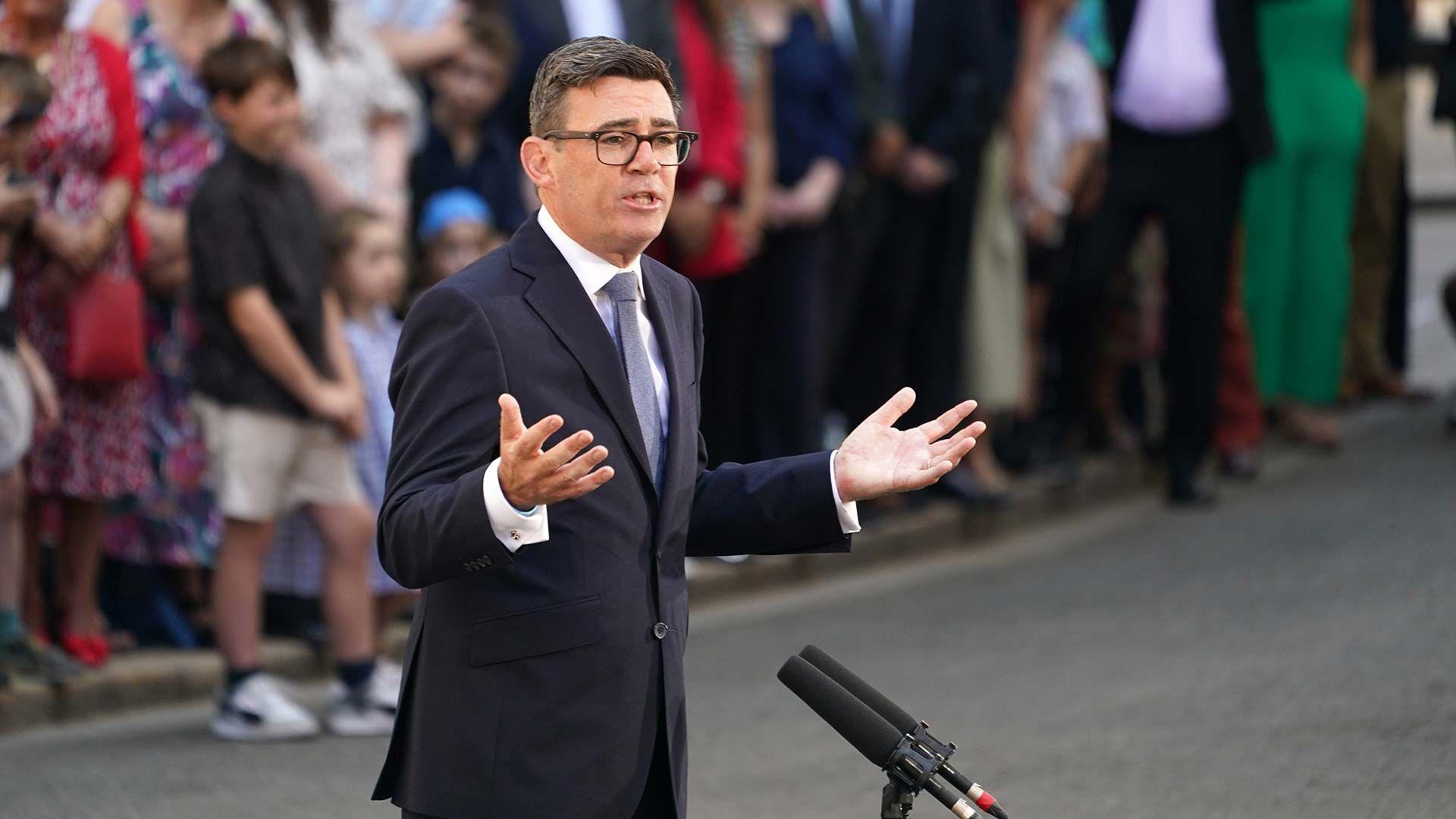
Andy Burnham has been in Downing Street for only a matter of weeks, yet the new Prime Minister is already attracting an extraordinary amount of criticism over the way he is presenting himself to the country.
His supporters see something refreshing: a leader who wants to leave Westminster, travel around Britain and listen directly to communities that have spent years complaining that politics is too concentrated in London.
His critics see something very different.
They see a politician building a powerful personal brand around the idea of being Britain’s great national saviour — a leader touring the country, speaking directly to ordinary people and promising to “rewire” the way the country is governed.
And that is where the latest criticism becomes particularly sharp.
Britain already has one monarch.
Burnham does not need to behave like another.
The “King of the North” goes nationwide
The controversy is partly driven by Burnham’s decision to embark on a nationwide “listening tour”.
The Prime Minister wants to travel around Britain, meeting communities and hearing directly from voters about their concerns. The idea fits perfectly with the political identity he developed during his years as mayor of Greater Manchester.
Burnham has long presented himself as an alternative to Westminster politics.
He is the politician from the North who wants power moved away from London.
He has repeatedly argued for stronger regions, greater devolution and an economy that gives communities outside the capital a bigger role.
That philosophy was central to his arrival in Downing Street. Reuters described Burnham as the “King of the North” and reported that he wanted to “rewire” Britain around the issues ordinary people care about, including the cost of living and struggling public services.
There is an obvious political appeal to that message.
But there is also a danger.
The more Burnham turns himself into the travelling embodiment of Britain’s regions, the easier it becomes for critics to accuse him of confusing leadership with performance.
The medieval comparison
One recent commentary went even further, comparing Burnham’s national tour with medieval monarchs travelling around their kingdoms.
The argument was not that Burnham literally believes himself to be a king.
It was a criticism of the symbolism.
The Prime Minister travels around the country.
He meets citizens.
He listens to their grievances.
He presents himself as a leader personally connected to the people rather than an isolated Westminster politician.
The comparison is striking because Britain already has an actual constitutional monarch: King Charles III.
And unlike Burnham, Charles does not have to campaign for popularity, develop a political programme or persuade voters to support his party.
Burnham does.
That distinction matters.
Burnham’s biggest strength could become his biggest weakness
There is no question that Burnham’s personal political style is different from that of many Westminster politicians.
As mayor of Greater Manchester, he built a reputation for speaking directly to voters and presenting himself as an advocate for the North.
His supporters regard this as authenticity.
They believe he understands people who feel ignored by London.
His critics, however, see a carefully cultivated political persona.
The danger for Burnham is that the persona can become bigger than the policies.
A government cannot simply tour the country and listen.
Eventually, it has to decide.
It has to build homes.
It has to repair infrastructure.
It has to improve public services.
It has to grow the economy.
It has to control public spending.
It has to deal with immigration.
And it has to explain how all of those ambitions will be paid for.
A listening tour may generate goodwill.
But goodwill is not a governing strategy.
Britain does not need another personality cult
This is where the “one monarch” criticism has some force.
British politics has increasingly become dominated by personalities.
Leaders are expected to become brands.
They are photographed constantly.
Their speeches are analysed for individual phrases.
Their clothes, holidays, social-media posts and personal relationships become political stories.
The result is that politics can start to resemble celebrity culture.
Burnham has enormous personal recognition compared with many politicians.
He spent years as a senior Westminster figure before becoming mayor of Greater Manchester.
He has appeared repeatedly on television.
He has contested Labour leadership contests.
And his mayoral career made him one of Britain’s best-known regional politicians.
When he became Prime Minister, he therefore arrived in Downing Street with an unusually strong personal identity.
That can be an advantage.
But it also creates temptation.
The government should not become an extension of one man’s political image.
His appointment already raises questions about mandate
There is another uncomfortable fact that Burnham’s critics are unlikely to let him forget.
He did not become Prime Minister following a general election.
He became Labour leader after Keir Starmer resigned, with Burnham emerging as the only candidate in the leadership contest.
He subsequently became Prime Minister because Labour remained the governing party.
The Associated Press noted that Burnham became Britain’s seventh Prime Minister in a decade after replacing Starmer and that, under Britain’s parliamentary system, the governing party can change leaders without holding a general election.
Constitutionally, there is nothing unusual about that.
Politically, however, it creates an important question.
How ambitious should a Prime Minister be when he has not personally received a nationwide electoral mandate?
Burnham has spoken about a “circuit breaker” for Britain’s political system.
He wants to reshape the way the country is governed.
He wants to redistribute power.
He wants to transform the economy.
He wants to reform social care.
These are enormous ambitions.
Yet millions of voters have never actually voted for Burnham to become Prime Minister.
That does not make his government illegitimate.
But it does mean he needs to be especially careful about appearing to act as though the country has personally endorsed his entire political programme.
King Charles has a very different role
The comparison with the monarchy also highlights an important constitutional distinction.
King Charles III is Britain’s head of state.
The Prime Minister is head of government.
Those roles are deliberately different.
When Burnham became Prime Minister, he travelled to Buckingham Palace and was formally invited by the King to form a government. The monarch’s role is constitutional rather than partisan; he formally appoints the person who can command the confidence of the House of Commons.
The symbolism could hardly be clearer.
There is the Crown.
And there is the elected government.
Burnham does not need to imitate royal symbolism to establish authority.
His authority should come from Parliament, democratic accountability and the results delivered by his government.
The “travelling king” problem
This is why the criticism of Burnham’s tour matters.
A Prime Minister travelling around the country is not inherently wrong.
In fact, it could be a very good idea.
London-centric politics has been a major problem for Britain.
Too many national decisions have historically been made by people who spend most of their time inside Westminster.
Burnham’s experience in Greater Manchester gives him a genuine reason to understand the frustration of regions outside London.
His proposed approach to devolution has attracted interest because he wants more powers and fiscal responsibility to be transferred to English regions.
That is serious policy.
But the presentation matters.
If the tour is simply a listening exercise followed by concrete policy changes, Burnham can demonstrate that government genuinely works differently under his leadership.
If it becomes a sequence of photo opportunities and grand speeches, opponents will inevitably accuse him of turning government into theatre.
Britain needs policies, not just symbolism
This is particularly important because the problems facing Britain are enormous.
The economy remains weak.
Public services are under pressure.
Housing is expensive.
Social care needs reform.
Immigration remains politically explosive.
The prison system is struggling with capacity.
Energy costs continue to concern households.
And regional inequality has not disappeared simply because the Prime Minister has travelled to affected communities.
These problems require detailed solutions.
For example, Burnham has identified social care as one of the issues he wants to address during his premiership. He has said that he would not want to leave office without fixing Britain’s broken care system and has called for a national conversation about how long-term care should be funded.
That is precisely the kind of difficult policy challenge that will define his government.
It cannot be solved by symbolism.
The North wants results
There is an irony here.
Burnham’s greatest political achievement could be proving that a leader from outside London can transform the country.
But to do that, he has to deliver tangible improvements to people’s lives.
If wages rise, infrastructure improves, housing becomes more affordable and public services recover, voters will not care whether Burnham travelled around Britain like a medieval king.
They will care about results.
If nothing changes, however, the tour will become an easy target.
Critics will say that Burnham spent his time travelling around Britain listening to people while failing to solve the problems they complained about.
That is the political risk.
Reform will be watching closely
Nigel Farage and Reform UK will have particular interest in Burnham’s approach.
Reform has been trying to position itself as the party of voters who believe the traditional political establishment has failed them.
Burnham’s regional agenda is an attempt to neutralise part of that argument.
If Burnham successfully convinces voters in former industrial areas that Labour understands them again, Reform could find its appeal weakened.
But if Burnham appears to be another Westminster politician using northern symbolism without delivering major change, Farage will have a powerful response.
He can simply say:
You have seen this before.
That is why Burnham’s performance matters far beyond Labour.
The monarchy comparison may sound unfair — but the symbolism matters
It would be unfair to suggest that Burnham literally wants royal-style authority.
He does not.
Britain remains a constitutional monarchy and parliamentary democracy, and Burnham’s government operates through Parliament.
The criticism is about political presentation.
There is something inherently theatrical about a national leader touring the country, presenting himself as the politician who personally understands every region and promising to reconnect government with the people.
That can work.
But it can also backfire.
British voters are increasingly sceptical of political branding.
They have heard countless promises about change.
They have seen leaders arrive in Downing Street promising a new era.
They have watched governments announce ambitious programmes that later disappear into bureaucracy.
Burnham’s challenge is therefore not to convince people that he cares.
It is to prove that caring produces results.
One monarch is enough
There is ultimately nothing wrong with a Prime Minister being charismatic.
Britain does not need emotionless leaders.
Nor should Westminster return to the days when politicians rarely left the capital.
Burnham’s desire to reconnect national government with communities across Britain is potentially one of the most valuable parts of his agenda.
But there is a line between being a leader who travels to listen and being a politician who builds a mythology around himself.
Burnham must make sure he stays on the right side of that line.
King Charles already occupies the country’s symbolic constitutional role.
Burnham’s job is much less glamorous.
He has to govern.
He has to make difficult decisions.
He has to balance competing interests.
He has to face Parliament.
He has to answer to voters.
And, above all, he has to deliver.
So perhaps the bluntest message for Britain’s new Prime Minister is also the simplest:
Britain does not need another king.
It needs a government that works.
Burnham has been given an extraordinary opportunity to demonstrate that politics can genuinely move beyond Westminster and reconnect with communities across the country.
But that opportunity will not be judged by how many miles his bus travels.
It will be judged by what happens when the bus stops.
And when the cameras disappear, voters will still be waiting for cheaper homes, stronger public services, better jobs and a government capable of delivering the change it promised.
That is the real test of Andy Burnham.
Not whether he can look like a national leader.
But whether he can actually govern like one.