

Andy Burnham Just Went Too Far – Britain Already Has One Monarch
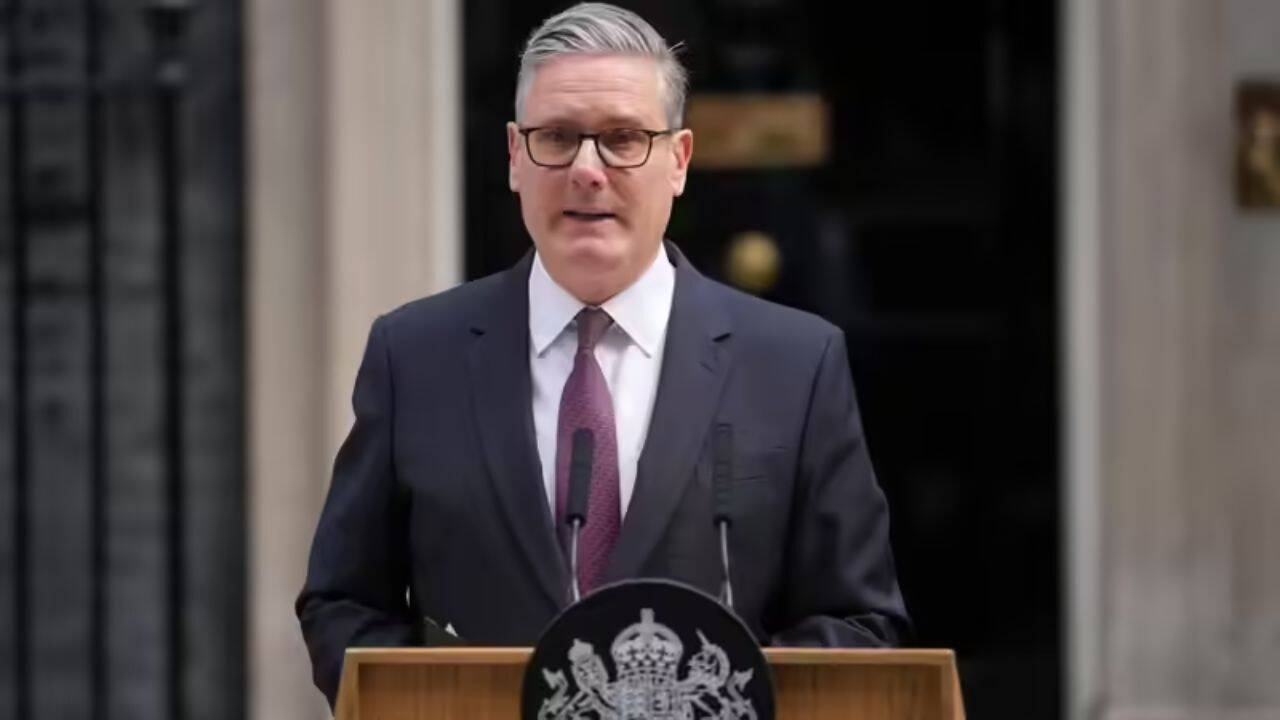
Andy Burnham has been prime minister for only a matter of weeks, yet the political drama surrounding his leadership is already beginning to raise an uncomfortable question: has the new prime minister become too interested in the symbolism of leadership and not interested enough in the hard business of governing?

That question has been sharpened by Burnham’s decision to embark on a nationwide “listening tour”, travelling around Britain to meet members of the public and hear directly about their concerns. Supporters see the idea as refreshing. After years of politicians appearing trapped inside Westminster, Burnham wants to show that he is prepared to leave Downing Street, meet people where they live and listen to their frustrations.
But critics have spotted something rather different.
They see echoes of an old-fashioned royal progress: a powerful figure travelling around the country, meeting citizens, listening to grievances and presenting himself as a leader who is personally connected to the nation. One recent Guardian opinion column went so far as to compare Burnham’s proposed tour with the medieval tradition of monarchs travelling around their territories.
And that is where the headline becomes more than a joke.
Britain already has a monarch.
His name is King Charles III.
The prime minister is supposed to be something quite different: a politician accountable to Parliament, answerable to voters and constrained by the institutions of a parliamentary democracy. His authority does not come from ceremony, personal charisma or some supposed connection between ruler and subjects. It comes from democratic legitimacy.
That distinction matters.
Burnham has cultivated an image of being different from conventional Westminster politicians. His years as mayor of Greater Manchester gave him a distinctive political identity. He developed a reputation for speaking directly, presenting himself as a champion of the regions and arguing that national government had become too remote from ordinary people.
Those qualities undoubtedly helped him rise to the premiership.
When he became prime minister on 20 July 2026, he presented his arrival as a “circuit-breaker” for Britain and promised a new political and economic model, including a ten-year plan for the country.
That is an ambitious beginning.
But there is a fine line between making government feel accessible and turning politics into a personality cult.
A listening tour can be useful. Politicians should listen. Governments need to understand what people are experiencing outside Westminster. If families are struggling with energy bills, if businesses are worried about taxation, if patients are waiting too long for treatment or if communities are anxious about immigration, ministers should know what people actually think.
But listening is not the same as governing.
And travelling around the country is not the same as solving problems.
That is the concern behind the criticism.
Britain is facing enormous challenges. The country needs stronger economic growth, functioning public services, credible immigration policy, better infrastructure and a government capable of making difficult decisions. None of those problems can be solved simply by arriving in a town on a brightly branded bus, shaking hands and listening to complaints.
The danger is that politics becomes theatre.
The modern political world is already obsessed with presentation. Politicians are judged on photographs, videos, speeches and social-media clips almost as much as on legislation. A prime minister who spends too much time demonstrating that he is “one of the people” can eventually create the impression that the performance matters more than the policy.
That would be particularly dangerous for Burnham because his political brand is built on authenticity.
He is not supposed to be another politician who simply reads speeches written by advisers. His supporters believe that he understands ordinary people because of his background and because of his long experience outside Westminster. The very qualities that make him attractive therefore create a higher expectation.
People will want results.
They will want cheaper bills.
They will want better public services.
They will want safer streets.
They will want functioning hospitals and schools.
They will want an immigration system that is both controlled and fair.
They will want government to demonstrate that it can actually deliver.
And if the government cannot deliver, no number of listening tours will save it.
There is also something constitutionally uncomfortable about the language surrounding Burnham.
Britain has a monarch precisely because the monarchy occupies a particular constitutional role. King Charles III is the country’s head of state, while the prime minister leads the government. Burnham does not need to imitate royal symbolism to establish national authority. He already possesses the political authority of the premiership.
Indeed, one of the great strengths of Britain’s constitutional system is the separation between symbolic national continuity and day-to-day political power.
The King does not need to win elections.
The prime minister does.
The King does not need to persuade voters that his economic programme works.
The government does.
The King represents continuity.
The prime minister is responsible for change.
That difference should be protected.
Burnham’s critics therefore have a point when they question the symbolism of a prime minister touring the country like a travelling national figure. The comparison with a medieval monarch may be deliberately provocative, but it highlights an important distinction between leadership and performance.
Yet there is another side to the argument.
Perhaps Britain needs precisely this kind of political theatre because people have become profoundly disconnected from Westminster.
Perhaps a prime minister who physically travels around the country is better than one who spends every day surrounded by civil servants and political advisers.
Perhaps Burnham understands something that conventional politicians have forgotten: people want to feel that someone in government actually sees them.
If that is the purpose of the tour, then it could be valuable.
The problem begins only if listening becomes a substitute for action.
There is already evidence that Burnham’s government wants to focus heavily on everyday concerns. His political approach has included what has been described as an “everyday fixes” strategy, designed to produce practical improvements that people can see and feel.
That is potentially sensible.
But there is a danger in focusing too heavily on small, highly visible interventions. Governments are judged not only by whether they can solve minor frustrations but by whether they can confront major structural problems.
Britain’s housing shortage will not be solved by a listening tour.
Weak productivity will not be solved by a listening tour.
The pressure on the NHS will not be solved by a listening tour.
The asylum system will not be fixed by a listening tour.
And the country’s long-term economic problems certainly will not disappear because the prime minister has heard another group of frustrated voters explain them.
Eventually, someone has to make difficult decisions.
That is the part of politics that cannot be turned into a photo opportunity.
Burnham’s first speech as prime minister showed that he understands the scale of the task. He spoke about restoring stability and described his arrival as a potential “circuit-breaker” for Britain.
Now comes the harder part.
A circuit-breaker is useful only if it reconnects the system and makes it work.
If nothing changes, then the symbolism becomes meaningless.
There is also a broader political lesson here. Britain has become increasingly sceptical of leaders who promise transformation. Voters have heard claims of “new eras”, “new settlements”, “new Britain” and “national renewal” from successive governments. They have also experienced the frustration that comes when these grand promises collide with economic reality.
Burnham therefore needs to be careful.
He does not need to convince Britain that he is extraordinary.
He needs to convince Britain that his government is effective.
That means fewer dramatic declarations and more measurable achievements.
It means setting clear targets and being willing to explain when they are missed.
It means accepting that some policies will be unpopular.
It means resisting the temptation to respond to every criticism with another announcement.
Most importantly, it means remembering that the prime minister is not a king.
Britain does not need two monarchs.
It needs one constitutional monarch and one effective democratic government.
Burnham’s strongest political asset may ultimately be his ability to connect with people. There is nothing wrong with a prime minister getting out of London, meeting voters and hearing directly about their lives. Indeed, after years of political detachment, it could be exactly what British politics needs.
But connection must lead somewhere.
A politician can listen to a thousand people and still accomplish nothing.
A government can hold endless consultations and still fail to build houses.
A prime minister can travel hundreds of miles and still fail to understand what voters ultimately want.
They want results.
That is why the criticism of Burnham’s royal-style tour should not simply be dismissed as another partisan attack. Beneath the jokes about medieval monarchs lies a serious warning: politics cannot survive on symbolism alone.
Burnham has been given an opportunity that few politicians receive. He has arrived in Downing Street with a powerful personal story, a reputation for authenticity and a promise to break with the political habits of the past.
Now he must prove that the promise is more than branding.
The country does not need another leader who looks impressive while problems pile up.
It needs a government that works.
So by all means, let Andy Burnham travel around Britain. Let him meet nurses, workers, pensioners, students, shopkeepers and families. Let him listen to what people have to say.
But after the cameras leave, the speeches end and the bus moves on, the real work begins.
Because Britain may enjoy the spectacle of a prime minister touring the kingdom.
It will judge him on what happens when he returns to Downing Street.