
The stakes couldn’t be higher as the PM considers whether to go to the country.

Andy Burnham has a big decision – but the opposition is split (Image: Getty)
As yet, we don’t know what he’ll do. Burnham is likely to be in two minds himself. Calling an early general election is a massive opportunity, but it’s also a mighty risk. Get it wrong, and his dream of being PM for 10 years could end almost before it’s begun. Yet some in Westminster reckon he may call an election for as soon as November 19, just two months away, and there are compelling reasons to do that.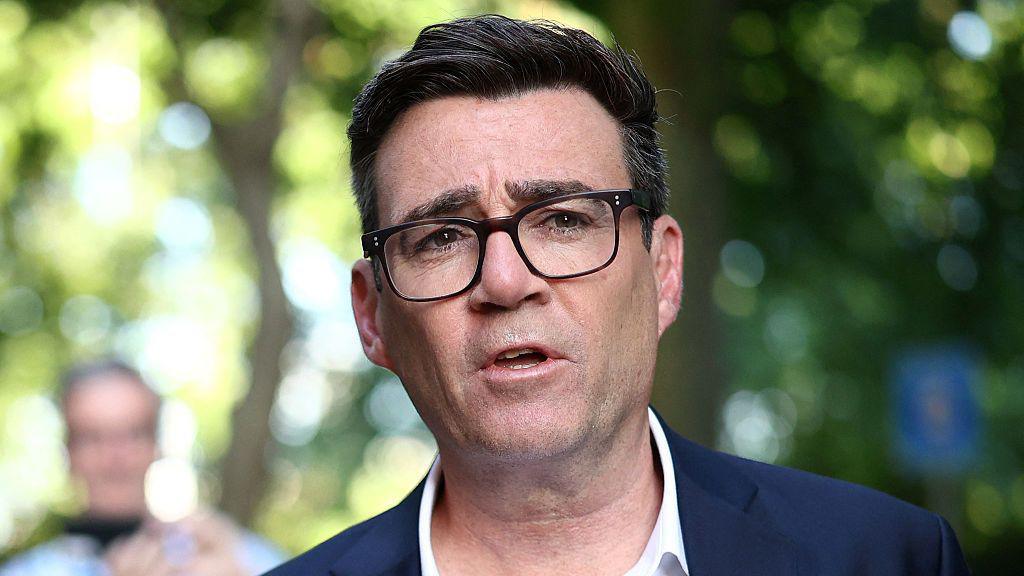
Britain is walking into a winter energy crisis, as the Iran war drives up the oil price. If Burnham has cleared an election, he has five years to win voters back. A quick win would also give him the mandate he lacks, and allow him to ditch restrictive Labour manifesto pledges not to hike income tax, National Insurance and VAT. At which point, he can unleash a “socialist tax-and-spend blitz” and wreck the UK economy for good.
One big downside is that the nation has had a taste of Labour, making it harder to emulate Sir Keir Starmer‘s 2024 ‘loveless landslide’, which was largely a protest against the hated Tories. Many of his 400 or so Labour MPs may lose their seats, and Burnham will have their careers on his conscience. Burnham may be tempted to ride his luck though, as he did when standing in the Makerfield by-election, which swept him to Number 10.
When Burnham looks at the rival parties, he must fancy his chances. Kemi Badenoch may wipe the floor with him at Prime Minister’s Questions but the Tories still won’t clean up. Reform is benefiting from the small boats shambles, but Nigel Farage is currently bogged down in the crypto crisis. Green Party leader Zack Polanski’s star has faded, although it will shine brightly if he wins the upcoming Holborn and St Pancras by-election on October 8, and takes a seat in Westminster.
One thing might deter him. A trick that worked before, for the Tories. Former Labour leader Gordon Brown knows all about this, as does Burnham, who was an adviser at the time. After ousting Tony Blair as PM in 2007, Brown was himself preparing to call an early general election.
Then Tory chancellor George Osborne came up with a killer policy: raising the inheritance tax (IHT) threshold from £300,000 to £1million. The Daily Express launched its death tax crusade, and Brown lost his nerve. He was dubbed ‘Bottler Brown’ and next year the financial crisis finished him off. But the IHT pledge was the moment that sealed his fate.
Today, Badenoch has exactly the same trick available to her. In some respects it could be even more attractive. With the £325,000 nil-rate threshold frozen since 2009, IHT is hitting more and more families. From next year, most unused pension pots could become liable to IHT thanks to Rachel Reeves, driving bills still higher.
Promising to axe IHT altogether could win support for the Tories, but I’m not totally convinced. Labour would call it a tax break for the rich. Reform already has. Robert Jenrick dismissed it as a “desperate play” that would primarily benefit the wealthiest.
Which leaves just one more option. We now have two parties of the right. Some kind of Tory-Reform coalition could see off Burnham. He may retaliate by announcing his own pact with the Greens, but I doubt it will be as powerful.
But it might be the only way of preventing Burnham from sweeping all before him. Just one problem. Both Badenoch and Farage have ruled it out. Which gives Burnham another reason to go to the country, and fast. If the right is split, there’s nothing to stop him, and five more years of misery will follow. Or if Burnham has his way, 10 years.
Andy Burnham Plots Snap Election – Only 1 Thing Can Stop Him Ruining Britain Forever
Andy Burnham’s rise to the top of British politics has triggered fresh debate over whether the new Labour prime minister could eventually seek a snap general election to secure his own mandate.
Reports earlier this year suggested that allies of Burnham had been considering the possibility of an early election if he reached Downing Street. The speculation intensified after his return to Westminster through the Makerfield by-election and amid growing political uncertainty across Britain.
However, there is an important qualification to the story. Burnham himself publicly ruled out calling an early general election if he became prime minister. His spokesperson said in June that he would not call a snap election, despite reports that some Labour figures had been discussing the possibility.
That contrast between speculation and Burnham’s stated position has become one of the most interesting questions surrounding his leadership.
From Manchester mayor to Downing Street
Burnham’s political journey has been unusually long and closely watched.
The former cabinet minister spent more than a decade as mayor of Greater Manchester before deciding to return to Westminster. His decision to contest the Makerfield by-election was widely interpreted as a significant step towards a renewed national political role.
The contest attracted considerable attention because Burnham was not simply another Labour candidate. He was already one of the country’s best-known Labour politicians and had repeatedly been discussed as a possible future party leader.
His victory in Makerfield subsequently transformed the political situation.
Burnham secured 55 per cent of the vote, according to polling and constituency reporting, while Reform UK’s candidate Robert Kenyon finished significantly behind him. The result strengthened Burnham’s position inside Labour and provided a fresh source of political momentum.
His return to Parliament also removed one of the biggest practical obstacles to a potential leadership bid.
Why was a snap election discussed?
The original speculation about an early election centred on the question of political legitimacy.
If Burnham became Labour leader and prime minister without first winning a nationwide election, he would inherit the government’s existing parliamentary majority but would not personally have led Labour into the general election that produced it.
That situation is perfectly possible under Britain’s parliamentary system. A governing party can change its leader during a Parliament, and the new leader can become prime minister without an immediate general election.
Nevertheless, it can create political pressure for a new mandate.
The Financial Times noted that Burnham’s arrival at Downing Street would make him another prime minister who entered office without having led his party at a general election. It also reported that polling showed significant public support for an immediate election, although Burnham had ruled one out.
For supporters of an early election, the argument would therefore be straightforward: a new prime minister should ask voters directly for permission to implement his political programme.
For opponents, the counterargument is equally straightforward: Britain already held a general election, and the government has a large Commons majority. Calling another election only a short time later would be an unnecessary political gamble.
The Reform UK factor
One of the biggest considerations in any discussion of an early election is Reform UK.
The party has transformed the electoral landscape since the 2024 general election, building support among voters who previously backed both Conservative and Labour candidates.
Reform’s growing influence has made traditional assumptions about Britain’s electoral map less reliable.
The Makerfield by-election was therefore closely watched because Reform mounted a serious challenge against Burnham. Although Burnham ultimately won comfortably, the campaign demonstrated that Reform could remain an important force in traditionally Labour areas.
The party’s finances have also changed dramatically.
Recent reports said Reform received £72 million in donations from cryptocurrency billionaires Ben Delo and Christopher Harborne. The scale of the funding has generated considerable political debate, with rival parties questioning how the money could affect future campaigns.
For Labour, Reform’s financial resources could make any future general election campaign substantially more competitive.
This is one reason why speculation about election timing has attracted attention.
If a government believes that political circumstances could change significantly over the course of a Parliament, the timing of an election becomes a major strategic question. But predicting the electoral consequences of such a decision remains uncertain.
The argument over legitimacy
Burnham’s political position presents an unusual constitutional situation.
If he became prime minister after replacing another Labour leader, he would inherit the existing government’s Commons majority. Yet he would not have personally appeared on a general-election ballot as the candidate for prime minister.
This has prompted broader questions about how Britain’s parliamentary system works.
Unlike presidential systems, Britain does not directly elect a prime minister. Voters elect MPs, while the monarch appoints the person most likely to command the confidence of the House of Commons.
Consequently, changing prime minister between elections is constitutionally possible.
Recent British history provides several examples. Gordon Brown became prime minister in 2007 without immediately holding a general election, while Rishi Sunak entered Downing Street in 2022 without a nationwide vote.
The question surrounding Burnham is therefore political rather than simply constitutional: would he eventually decide that a new national mandate was necessary?
His public position has so far been clear. He has said that he would not call an early election.
What could change his calculation?
Although Burnham ruled out an immediate snap election, political circumstances can change.
Economic conditions, public opinion, parliamentary pressure and developments within opposition parties could all affect the government’s calculations.
Britain is already dealing with significant economic pressures. Inflation, energy costs, public spending and government borrowing remain major issues for Westminster.
Burnham himself has acknowledged that difficult decisions lie ahead. In September, he rejected the description of himself as simply a “tax and spend socialist” and argued that the government would need to make difficult choices in response to economic pressures.
At the same time, his government faces pressure from several directions, including Labour MPs, trade unions, opposition parties and voters concerned about living costs.
These pressures make the political environment highly fluid.
The inheritance tax question
The argument about a possible snap election has also been linked by commentators to taxation.
An article published in September argued that a Conservative proposal on inheritance tax could potentially influence the political calculations surrounding an early election. The article drew a historical comparison with Gordon Brown’s decision in 2007 not to proceed with a snap election after political pressure surrounding Conservative proposals on inheritance tax.
That comparison is an interpretation by the article’s author rather than an established fact about Burnham’s current plans.
Nevertheless, taxation is likely to remain one of the central issues in British politics.
Any government considering an election would have to assess how voters might respond to changes in income tax, national insurance, VAT, inheritance tax and other forms of taxation.
The opposition question
Another factor is the condition of the opposition.
Britain currently has several parties competing for voters, including the Conservatives, Reform UK, Liberal Democrats and Greens.
This fragmentation makes electoral calculations more complicated.
A constituency that appears safe under one set of voting patterns can become highly competitive if voters move between parties.
Reform’s rise is particularly significant because it has changed the relationship between the Conservatives and right-leaning voters. At the same time, Labour must defend support among working-class voters who have become increasingly willing to consider alternatives.
Burnham’s success in Makerfield demonstrated that Labour could still perform strongly under certain circumstances, but one by-election cannot establish what would happen across the country.
Is an election actually imminent?
The available evidence does not establish that Burnham is currently preparing to call a snap general election.
In fact, the clearest public statements point in the opposite direction.
Burnham has explicitly ruled out an early election, while reports in June said he was preparing to govern rather than immediately seek a new national mandate.
This distinction matters.
Political speculation about what a prime minister could do is not the same thing as evidence that the government has decided to do it.
The original reports about a possible snap election were based on claims about discussions among Labour insiders and allies. Reuters noted at the time that it could not independently verify the reported plans.
Therefore, the question remains open rather than settled.
A crucial test for Burnham
The most immediate challenge for Burnham is not necessarily an election date.
It is whether he can translate his political profile into effective government.
He entered Downing Street with substantial expectations. Supporters expect changes to public services, regional government, the economy and Labour’s political direction.
Opponents, meanwhile, will scrutinise every decision and attempt to turn government difficulties into political liabilities.
The pressure will be especially intense because Burnham has spent years developing a reputation as a politician willing to challenge Labour’s established positions.
Now that he is in government, voters will judge the consequences of his decisions rather than simply his promises.
What happens next?
The debate over a possible snap election is therefore likely to continue, particularly whenever opinion polls, economic figures or internal Labour tensions change.
For now, however, the strongest documented position is that Burnham has ruled out an early election.
That does not prevent commentators from discussing the circumstances in which he might reconsider. Nor does it eliminate the constitutional possibility of calling an election later.
But it does mean that claims that Burnham is definitely plotting an immediate election should be treated as speculation rather than established fact.
The larger political question is whether Britain will remain on the existing parliamentary timetable or whether changing circumstances could eventually produce a different decision.
For Burnham, the calculation would involve far more than his personal ambitions. It would involve the economy, Labour’s parliamentary position, the strength of Reform UK and the Conservatives, public opinion and the government’s ability to deliver its programme.
The Makerfield victory gave Burnham a route back to Westminster and strengthened his political position. What happens next will depend on how he uses that position in government.
For the moment, one fact stands out: despite earlier reports about a possible snap election, Burnham has publicly said that he would not call one immediately. Any future change to that position would therefore represent a significant political development in its own right.