

Andy Burnham has a big decision – but the opposition is split (Image: Getty)
As yet, we don’t know what he’ll do. Burnham is likely to be in two minds himself. Calling an early general election is a massive opportunity, but it’s also a mighty risk. Get it wrong, and his dream of being PM for 10 years could end almost before it’s begun. Yet some in Westminster reckon he may call an election for as soon as November 19, just two months away, and there are compelling reasons to do that.
Britain is walking into a winter energy crisis, as the Iran war drives up the oil price. If Burnham has cleared an election, he has five years to win voters back. A quick win would also give him the mandate he lacks, and allow him to ditch restrictive Labour manifesto pledges not to hike income tax, National Insurance and VAT. At which point, he can unleash a “socialist tax-and-spend blitz” and wreck the UK economy for good.
One big downside is that the nation has had a taste of Labour, making it harder to emulate Sir Keir Starmer‘s 2024 ‘loveless landslide’, which was largely a protest against the hated Tories. Many of his 400 or so Labour MPs may lose their seats, and Burnham will have their careers on his conscience. Burnham may be tempted to ride his luck though, as he did when standing in the Makerfield by-election, which swept him to Number 10.
Get personal finance news, money saving tips and advice plus selcted offers and competitions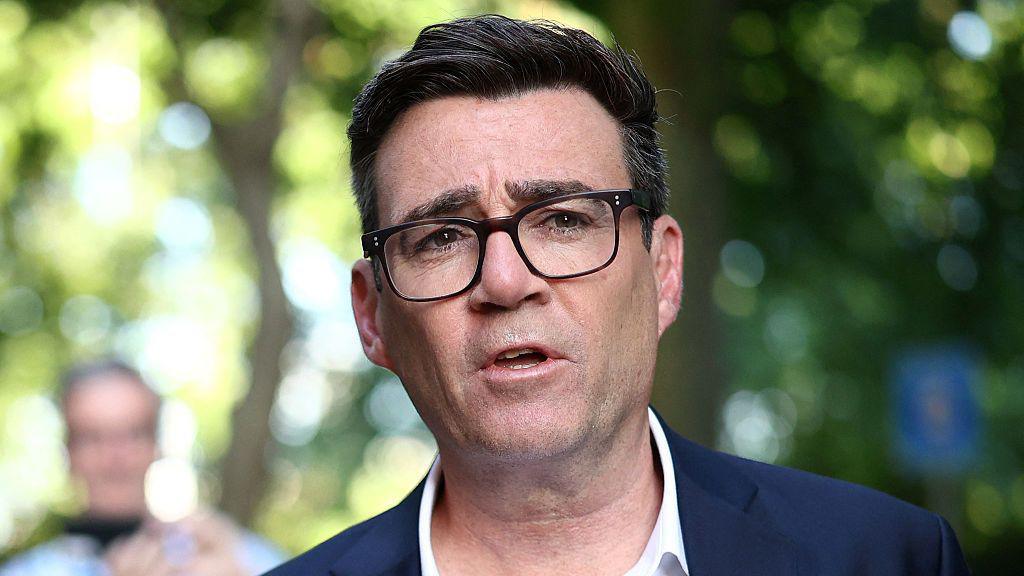
Invalid email
You agree you are 18 or over. We use your sign-up to provide content in ways you’ve consented to and to improve our understanding of you. This may include adverts from us and third parties based on our knowledge of you. You can unsubscribe at any time. More Info.
When Burnham looks at the rival parties, he must fancy his chances. Kemi Badenoch may wipe the floor with him at Prime Minister’s Questions but the Tories still won’t clean up. Reform is benefiting from the small boats shambles, but Nigel Farage is currently bogged down in the crypto crisis. Green Party leader Zack Polanski’s star has faded, although it will shine brightly if he wins the upcoming Holborn and St Pancras by-election on October 8, and takes a seat in Westminster.
One thing might deter him. A trick that worked before, for the Tories. Former Labour leader Gordon Brown knows all about this, as does Burnham, who was an adviser at the time. After ousting Tony Blair as PM in 2007, Brown was himself preparing to call an early general election.
Then Tory chancellor George Osborne came up with a killer policy: raising the inheritance tax (IHT) threshold from £300,000 to £1million. The Daily Express launched its death tax crusade, and Brown lost his nerve. He was dubbed ‘Bottler Brown’ and next year the financial crisis finished him off. But the IHT pledge was the moment that sealed his fate.
Today, Badenoch has exactly the same trick available to her. In some respects it could be even more attractive. With the £325,000 nil-rate threshold frozen since 2009, IHT is hitting more and more families. From next year, most unused pension pots could become liable to IHT thanks to Rachel Reeves, driving bills still higher.
Promising to axe IHT altogether could win support for the Tories, but I’m not totally convinced. Labour would call it a tax break for the rich. Reform already has. Robert Jenrick dismissed it as a “desperate play” that would primarily benefit the wealthiest.
Which leaves just one more option. We now have two parties of the right. Some kind of Tory-Reform coalition could see off Burnham. He may retaliate by announcing his own pact with the Greens, but I doubt it will be as powerful.
But it might be the only way of preventing Burnham from sweeping all before him. Just one problem. Both Badenoch and Farage have ruled it out. Which gives Burnham another reason to go to the country, and fast. If the right is split, there’s nothing to stop him, and five more years of misery will follow. Or if Burnham has his way, 10 years.
Andy Burnham Plots Snap Election – The One Thing That Could Stop Him
Andy Burnham is facing renewed speculation over whether he could call a snap general election, only weeks after entering Downing Street. But while political commentators have examined the circumstances in which an early vote might become attractive to the new prime minister, there is currently no confirmed plan for him to do so.
In fact, Burnham has previously said the opposite.
Before becoming prime minister, he explicitly ruled out calling an early general election if he succeeded Keir Starmer. Since taking office, the government has continued to signal that it intends to govern on the basis of Labour’s existing mandate rather than immediately seek a fresh one.
That has not stopped Westminster speculation.
The question is straightforward: if Burnham believes his political position is strong enough, would he eventually be tempted to ask voters for a new mandate?
Burnham’s unusual route to Downing Street
Burnham’s arrival at Number 10 was itself highly unusual.
He returned to Westminster by winning the Makerfield by-election in June, defeating Reform UK’s Robert Kenyon by more than 9,000 votes. The result gave him the parliamentary platform required to seek the Labour leadership.
He subsequently became Labour leader after receiving enough nominations from Labour MPs to prevent another candidate from entering the contest. ITV reported that Burnham had secured 349 nominations by July 13, meaning no rival could reach the threshold required to challenge him.
He then became prime minister.
That unusual sequence matters because Burnham did not receive a nationwide electoral mandate as prime minister. He entered Downing Street after becoming Labour leader, rather than following a general election victory.
That distinction has fuelled the argument that he could eventually seek a direct mandate from the country.
But there is an important constitutional point: under Britain’s parliamentary system, a new prime minister does not automatically have to call a general election. A change of governing-party leader can take place without voters being sent back to the polls.
Burnham himself has acknowledged that principle.
He has already ruled out an early election
In June, while campaigning in Makerfield, Burnham said he would not call a snap election if he became prime minister.
The reason he gave was that an early contest could interfere with the government’s programme for implementing Labour’s existing 2024 manifesto.
That position was reiterated after he entered Downing Street.
The Independent reported in July that Burnham had ruled out a snap election and said such a move would hinder the government’s “essential work” of implementing Labour’s manifesto.
That makes the current claim that he is “plotting” an election difficult to establish as fact.
What does exist is speculation about whether circumstances could eventually change.
Why the speculation refuses to disappear
One reason is that Burnham has moved rapidly since entering government.
His administration has sought to establish a distinctive political agenda around regional government, transport, economic growth, energy costs and public services.
His earlier political programme had already included proposals for reforming social care, changing the relationship between Westminster and local government, and tackling what he described as structural weaknesses in Britain’s economy.
Burnham has also continued to support electoral reform, with Labour MPs pressing him to consider changes to the voting system during his first months in office. The Guardian reported in August that almost 100 Labour MPs supported the creation of a commission examining electoral reform.
Such changes could have major political consequences, but they are not the same thing as an early general election.
The distinction is important because political commentary can quickly turn a hypothetical scenario into an apparent government plan.
At present, the evidence supports the former rather than the latter.
The political calculation behind an early vote
If Burnham were ever to reconsider his position, several factors would be relevant.
The first would be public support.
A new prime minister who believes his government is enjoying a period of strong public approval could theoretically decide that an early election would provide a clearer mandate.
But an election would also expose every Labour MP to the possibility of losing their seat.
That is particularly significant in a fragmented political environment in which Labour, Reform UK, the Conservatives, the Greens and Liberal Democrats are competing across different parts of the country.
Burnham’s own route into Westminster demonstrated how volatile the political landscape has become. Makerfield had been regarded as a constituency in which Reform could mount a serious challenge, yet Burnham won there convincingly.
A national campaign, however, would involve hundreds of constituencies rather than one.
The economic argument
Another consideration would be the government’s economic programme.
Burnham has argued for significant changes in the way Britain approaches growth, infrastructure, public services and regional development.
But major reforms require political and financial room to manoeuvre.
Calling an election would therefore create a dilemma.
A fresh mandate could theoretically strengthen a government politically. At the same time, an election campaign would force Labour to defend its record only months after taking office.
It would also require Burnham to explain why voters should be asked to return to the polls before the normal electoral timetable.
That could become particularly difficult if the public believed the government should spend its time governing rather than campaigning.
The opposition question
The state of Britain’s opposition parties would also influence any calculation.
Recent political developments have produced a fragmented landscape, with Reform UK challenging both Labour and the Conservatives in many constituencies.
At the same time, the Conservatives remain a major national party, while the Liberal Democrats and Greens have established areas of strength.
That fragmentation means an early election would not necessarily produce a straightforward two-party contest.
The 2017 experience provides a useful historical example of the uncertainty involved.
Theresa May called an early election after initially holding a substantial polling advantage. The Conservatives subsequently lost their parliamentary majority.
Reuters’ review of Britain’s political upheaval over the past decade also highlighted the risks associated with snap elections, noting that May’s 2017 gamble produced a very different result from the one her government had expected.
That history is unlikely to be ignored by any prime minister considering a similar move.
The “one thing” that could change the calculation
The most significant factor would ultimately be whether Burnham believed an election was necessary to obtain democratic backing for policies that went beyond Labour’s existing manifesto.
That issue is already relevant because opponents could argue that a government should not seek to implement major departures from its election programme without putting those changes before voters.
On the other hand, governments routinely develop and adjust policies after taking office without calling another election.
Burnham has so far chosen the latter approach.
His government has therefore been operating within the existing parliamentary mandate while developing its own political priorities.
That makes an immediate snap election unlikely to be something that can simply be assumed from political speculation.
The bigger test for Burnham
The real test for Burnham is therefore not whether he can call an election.
It is whether his government can demonstrate that its programme is producing the results it promised.
Current reporting has focused on issues including the cost of living, immigration, public services, economic growth, energy policy and devolution. The government’s performance on those questions will shape the political environment in which any future election decision is made.
An early election would require Burnham to explain what had changed since his previous pledge not to hold one.
That would make the political justification at least as important as the constitutional mechanics.
For now, the documented position remains clear: Burnham has ruled out an early general election and has said he wants to concentrate on implementing Labour’s programme.
Speculation about a November election, or another early date, remains just that — speculation.
The political landscape can change quickly, particularly under a new prime minister. But there is currently a significant difference between commentators discussing the circumstances in which Burnham might be tempted to call an election and evidence that Number 10 has actually decided to do so.
For Britain’s new prime minister, the immediate challenge is therefore less about choosing an election date and more about demonstrating what his government intends to do with the mandate it already has.