
Andy Burnham Torn Apart for “Vacuous Twaddle” After First Speech as Labour Leader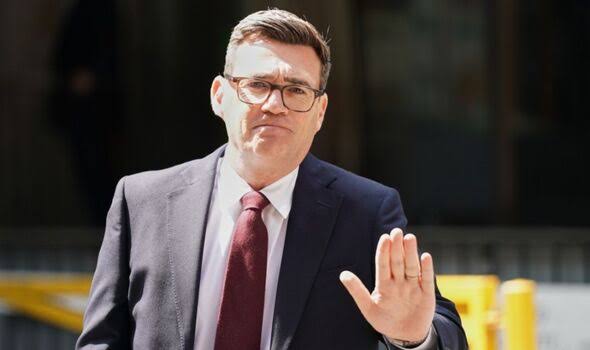
Andy Burnham’s dramatic return to the centre of British politics has already produced a fierce backlash, with critics accusing the new Labour leader of offering grand promises, emotional rhetoric and political theatre rather than a detailed plan for governing Britain.
After Burnham delivered his first major speech as Labour leader, the reaction from his opponents was brutal. Reform UK figures were particularly scathing, with Robert Jenrick dismissing the address as “20 minutes of vacuous twaddle”. The phrase quickly captured the central criticism being directed at Burnham: that while his speech sounded confident and inspiring, it failed to explain precisely how his ambitious promises would be delivered.
For Burnham, the speech was supposed to mark the beginning of a new political era. For his opponents, it was evidence that the new Labour leadership had more slogans than solutions.
The contrast could hardly have been clearer.
Burnham used his address to promise hope, unity and what he described as a fundamental change in the direction of British politics. He argued that Labour needed to return to its traditional roots and reconnect with communities that had been left behind by decades of economic and political change.
He spoke about industrial towns, working-class communities, housing, public services and the concentration of political and economic power in London.
The emotional message was obvious.
Britain, Burnham argued, had taken a wrong turn and needed a new path.
But the question immediately raised by his critics was simple: What exactly is the plan?
That question has followed Burnham since his sudden elevation to the Labour leadership.
Unlike a conventional leadership contest, his arrival was extraordinarily rapid. After Keir Starmer’s political downfall, Burnham returned to Westminster and quickly became the overwhelming choice of Labour MPs. With hundreds of MPs supporting him, he effectively secured the leadership without a prolonged contest.
That extraordinary speed created an unusual political situation.
Burnham entered the leadership without having gone through the intense public scrutiny normally associated with a leadership campaign. There were no months of televised debates, no lengthy manifesto battles and no sustained examination of every policy detail.
Instead, Britain was presented with a new Labour leader who had promised that he had a plan.
But the details remained unclear.
That became the central vulnerability of his first speech.
Burnham is undoubtedly an experienced politician and an accomplished communicator. He has spent years at the highest levels of British politics and almost a decade as mayor of Greater Manchester. His ability to connect emotionally with audiences is one of his greatest political strengths.
His speech reflected that ability.
He spoke about people who had lost faith in politics. He spoke about communities that once had steelworks, mines, shipyards and manufacturing industries. He talked about the decline of traditional economic structures and argued that Labour should once again become the political voice of people who feel abandoned.
It was powerful political storytelling.
But storytelling is not the same thing as governing.
That is where his opponents have chosen to attack.
The accusation of “vacuous twaddle” suggests that Burnham’s rhetoric may have sounded impressive while avoiding difficult questions about taxation, immigration, energy, defence, welfare and economic growth.
These are not minor details.
They are the fundamental issues facing any government.
If Burnham wants to expand public ownership, how much will it cost? If he wants to build thousands of new council homes, where will the money come from? If he wants to reform social care, how will the system be funded? If he wants to reduce household costs, which taxes will be cut and which spending commitments will be delayed?
These questions cannot be answered with references to hope and national renewal.
They require numbers.
They require difficult decisions.
And, above all, they require political courage.
Burnham’s critics argue that his first speech provided too few answers.
His supporters, however, would strongly disagree.
They would argue that a leader’s first speech is not supposed to be a detailed budget document. It is supposed to establish a political direction. Burnham’s purpose was to explain what kind of Labour Party he intends to lead and what kind of Britain he wants to build.
From that perspective, his speech succeeded.
He clearly positioned himself against the political settlement of the past four decades. He criticised excessive centralisation and argued that economic and political power should be distributed more widely across the country.
This is a major ideological statement.
Burnham believes that Britain’s economic problems cannot be solved simply by allowing the market to operate without intervention. He argues that government should play a more active role in essential services such as water, energy, housing and transport.
His supporters see this as a return to Labour’s traditional purpose.
Critics see it as a dangerous attempt to turn the clock back.
That ideological divide is likely to dominate British politics during Burnham’s leadership.
The most striking element of Burnham’s speech was his repeated emphasis on change.
He promised what he described as one of the most significant changes in British politics in decades. He portrayed his leadership as a break with the political model that had dominated Britain since the 1980s.
For Burnham, the problem began with the centralisation of power and the expansion of privatisation. His argument is that Britain gradually surrendered control of essential services while allowing wealth and political influence to become concentrated in fewer hands and fewer regions.
His answer is greater public control and stronger regional government.
This is where his experience in Greater Manchester becomes particularly important.
As mayor, Burnham developed a political identity that was distinctly different from the traditional Westminster model. He presented Greater Manchester as an example of what could happen when local leaders received greater control over transport, housing, health and economic development.
Now he wants to apply that philosophy to the whole country.
He has even promoted the idea of shifting significant government activity away from London and towards Manchester.
For Burnham, this represents decentralisation.
For his opponents, it risks creating a government obsessed with the North.
That criticism has already emerged.
Burnham has repeatedly insisted that although his political identity was shaped by northern England, he intends to govern for the entire United Kingdom. He has spoken about the North and South, Scotland, Wales and Northern Ireland and has attempted to present himself as a national rather than regional leader.
Yet his political brand remains strongly connected to Manchester.
That could become both an advantage and a weakness.
It gives him authenticity among voters who believe Westminster has ignored their communities. But it could also alienate voters in southern England who fear that the new government will prioritise northern interests at their expense.
The coming months will reveal which interpretation wins.
Another major problem is the economy.
Burnham has promised to pursue growth while expanding the role of the state. This sounds attractive politically, but the economic reality is far more complicated.
Britain already faces enormous pressure on public finances. Debt is high, borrowing costs are significant and the government faces competing demands from defence, healthcare, social care, housing and welfare.
Every new promise therefore creates another financial question.
The accusation of “vacuous twaddle” could become much more damaging if Burnham’s government fails to explain how its policies will be financed.
Political opponents will argue that emotional speeches cannot pay the bills.
They will demand figures.
They will demand timetables.
They will demand evidence that government intervention will actually improve people’s lives rather than simply increasing the size of the state.
Burnham therefore faces a simple but difficult test.
He must turn rhetoric into policy.
His first speech may have been about hope.
His next challenge is delivery.
That is particularly important because Burnham’s political success has been built on communication. He understands how to create memorable political narratives. He knows how to speak about ordinary people in a way that feels personal and authentic.
But Britain is not simply looking for another compelling political speaker.
It is looking for a government capable of solving difficult problems.
The country faces weak economic growth, pressure on household finances, an overstretched public sector, an immigration crisis, international instability and serious questions about the future of Britain’s public services.
None of these challenges can be solved through political language alone.
That is why the reaction from Reform UK is significant.
Farage and his allies will attempt to portray Burnham as the latest example of an establishment politician promising change without being able to deliver it. They will argue that Labour’s programme will eventually mean higher taxes, greater state intervention and more bureaucracy.
Burnham will have to prove them wrong.
He will need to demonstrate that public ownership can work, that regional devolution can generate economic growth, that public services can become more efficient and that his government can improve living standards without losing control of the national finances.
If he succeeds, the criticism will look increasingly hollow.
If he fails, the phrase “vacuous twaddle” could become much more than an insult.
It could become a political weapon.
That is the danger facing Burnham.
His first speech created expectations of historic change. But the larger the promise, the greater the pressure to deliver.
British voters may enjoy political speeches, but eventually they judge governments by results.
They will ask whether their bills are lower.
Whether wages are rising.
Whether public services are improving.
Whether hospitals are functioning better.
Whether housing is more affordable.
Whether their communities are safer.
And whether the country is genuinely becoming more prosperous.
Burnham has given himself a formidable political challenge by promising such substantial change.
For now, his opponents are laughing.
They see a politician who talks about hope while leaving too many practical questions unanswered. They see a leader who promises a new Britain without yet explaining exactly how that Britain will be built.
But Burnham has time to prove them wrong.
His political career has already demonstrated that he is capable of surviving setbacks and reinventing himself. His rise from Labour frontbencher to Greater Manchester mayor and now Labour leader has been remarkable.
The next stage will be considerably harder.
He no longer has the luxury of being the politician making promises from the sidelines.
He is now responsible for delivering them.
The phrase “vacuous twaddle” may dominate the headlines for a few days, but ultimately it will not decide Burnham’s political future.
Results will.
If he can turn his message of hope into economic growth, stronger communities and better public services, the insults will eventually disappear.
If he cannot, his critics will argue that they saw the problem from the very beginning.
For Andy Burnham, therefore, the first speech was only the opening chapter.
The real test has now begun.