

Biggest Ever Byelection Will Test Nation’s Mood – and Burnham’s Credentials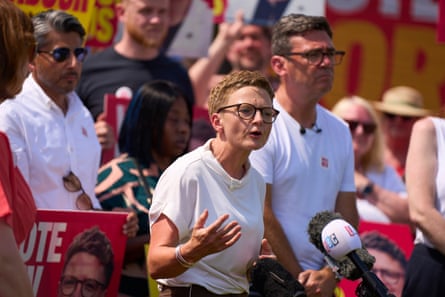
The Greater Manchester mayoral by-election of 2026 was far more than a local political contest. With more than two million people eligible to vote, it was the largest by-election ever held in Britain and became an important test of the country’s political mood. The contest was also closely connected to the political future of Andy Burnham, who had left the Greater Manchester mayoralty after winning a parliamentary by-election in Makerfield and becoming prime minister. Labour’s candidate, Bev Craig, was therefore fighting not only to become mayor but also to protect Burnham’s political legacy and demonstrate that Labour could resist the growing challenge from Reform UK.
The importance of the election came from its timing. British politics had entered a period of considerable uncertainty. Labour had suffered disappointing results in the May local elections, while Reform UK had made substantial gains across Greater Manchester. Reform won 106 council seats in the region, including almost all of the seats available in Wigan and 18 of 19 in Tameside. These results represented a major challenge to Labour’s traditional strength in parts of northern England.
Against this background, the mayoral election offered an opportunity to discover whether Reform’s success in local elections represented a genuine long-term change in political allegiance or simply a protest against Labour’s previous national leadership. If Reform could win the most powerful mayoralty outside London, it would have demonstrated that its support extended beyond individual constituencies and local protest votes. If Labour retained the position comfortably, it would suggest that Reform’s momentum might have limits.
The election was particularly important for Andy Burnham. Before entering national politics, Burnham had become one of Britain’s most successful directly elected mayors. He won the Greater Manchester mayoralty three times, never receiving less than 60% of the vote. His 2024 victory produced 63.4% of the vote, giving him an exceptionally strong personal mandate. His political reputation was closely associated with Greater Manchester, where he had developed an image as a powerful advocate for the North of England.
However, Burnham was not standing in this election. His absence created a crucial question: could his political success be transferred to another Labour candidate? Bev Craig, the leader of Manchester City Council, became Labour’s candidate. She had previously worked closely with Burnham and had held the economics brief in his mayoral team. Her campaign therefore represented an attempt to continue the policies and political style associated with the former mayor.
Craig faced a difficult challenge. Labour’s poor performance in the May elections had demonstrated that many voters in Greater Manchester were willing to abandon the party. In Manchester itself, the Greens won significant numbers of seats, partly because of dissatisfaction with Labour’s national position on issues including Gaza. Reform, meanwhile, expanded dramatically in areas that had traditionally been Labour strongholds.
The scale of Reform’s advance made the mayoral election particularly unpredictable. Seven weeks before polling day, the party had emerged as the biggest winner in Greater Manchester’s local elections. Reform’s success in Wigan, Tameside and Rochdale showed that its appeal was not limited to traditionally Conservative voters. It was increasingly competing directly with Labour among working-class and economically disadvantaged communities.
This represented one of the most important changes in northern English politics. For many decades, Labour had been able to rely on strong support across towns and cities in northern England. Reform’s rise challenged that assumption. The party’s policies on immigration, national identity and government reform appealed to voters who felt that traditional parties had failed to address their concerns. Consequently, Greater Manchester became an important battleground in the wider struggle between Labour and Reform.
Yet the mayoral election was not simply a two-party contest. The Green Party also emerged as a serious competitor. The Greens had made impressive gains in the region, including victories in Gorton and Denton and substantial support in Manchester. Their candidate, Geraldine Coggins, argued that voters were increasingly prepared to consider the Greens as a genuine alternative to Labour and Reform.
The presence of the Greens created a complicated strategic problem for Labour. If Green voters were simply protest voters who would eventually return to Labour, Craig could benefit from the supplementary voting system. If, however, Green supporters were becoming permanently independent of Labour, the party could lose an important part of its traditional coalition.
The voting system itself was therefore crucial. Under supplementary voting, if no candidate receives more than 50% of first preferences, the top two candidates proceed to a second round in which second-choice preferences are counted. This system potentially favoured Labour because the party could attract second-choice support from voters who preferred the Greens, Liberal Democrats or even Conservatives. Reform, by contrast, faced the problem that it was a more polarising political force and might struggle to attract sufficient second preferences.
This made the battle for second place almost as important as the battle for first place. If Reform finished second, it could potentially challenge Labour directly in the final count. If the Greens overtook Reform, Labour could benefit from Green voters transferring their second preferences to the Labour candidate.
The contest therefore became a test not only of political popularity but also of political coalition-building. Labour needed to demonstrate that it could reunite voters on the centre-left and prevent the Greens from capturing too much of its support. Reform needed to show that it could broaden its appeal beyond its most committed supporters. The Greens needed to prove that their recent electoral victories represented a genuine political transformation rather than temporary dissatisfaction with Labour.
The election was also important because it occurred shortly after Andy Burnham became prime minister. His political future had suddenly expanded from regional government to national leadership. A defeat for Labour in Greater Manchester would therefore have been particularly damaging. As one political analyst observed, Burnham’s premiership would have started badly if Labour lost the mayoralty of England’s second city.
Greater Manchester’s mayoralty is not merely symbolic. The mayor controls a budget of approximately £3 billion and has significant responsibilities involving transport, housing, policing and health. Greater Manchester has also experienced strong economic growth over the past decade, making its political leadership increasingly influential nationally.
For Burnham, retaining the mayoralty was therefore essential to protecting his political legacy. If Craig won, Burnham could argue that his model of regional government remained popular even after he moved to Westminster. If Reform won, critics could argue that the political movement Burnham had built in Greater Manchester had been overtaken by a new political force.
The contest also had national implications for Reform UK. Nigel Farage had hoped to make significant gains in Greater Manchester, but his political strategy became complicated by his decision to resign his Clacton seat and seek re-election. Reform activists were reportedly encouraged to move from Manchester to Clacton to support Farage. One Reform councillor described the decision as evidence that the party was desperate to demonstrate support for its leader. Reform denied that its Greater Manchester campaign had been weakened and insisted that it was taking both elections seriously.
This development revealed the tension between Reform’s national ambitions and its dependence on Farage personally. The party needed to campaign aggressively in Greater Manchester to demonstrate its growing strength, but Farage’s own political difficulties required significant attention. The competing demands placed pressure on Reform’s organisation and raised questions about whether it had sufficient activists and resources to fight effectively on multiple fronts.
The eventual result provided a clear answer. Labour’s Bev Craig won the Greater Manchester mayoral election decisively, defeating Reform’s Sian Astley. Later analysis concluded that Craig performed better than polling had predicted and that the supplementary voting system increased her advantage.
The result was important because it demonstrated that Reform’s impressive local-election performance did not automatically translate into control of Greater Manchester’s mayoralty. Reform remained a major political force, but its support was not sufficient to overcome Labour’s broader coalition.
For Labour, the victory provided an important psychological boost. It suggested that the party could recover from the poor May local-election results and that Reform’s growth had limits. Craig’s success also allowed Burnham to argue that his political legacy remained strong in Greater Manchester even after his departure.
However, the result should not be interpreted as a complete rejection of Reform. Craig’s vote share was significantly lower than Burnham’s 63.4% in 2024, demonstrating that Labour’s traditional dominance had weakened. Reform had also established itself as a major competitor across the region. The party’s performance showed that it could no longer be dismissed as a temporary protest movement.
The Greens also played an important role. Their recent successes indicated that Labour’s traditional coalition was becoming more fragmented. Although the Greens did not win the mayoralty, their growing support could force Labour to change its policies and campaigning strategies. Labour cannot assume that voters who leave the party will automatically return at the next election.
For Burnham, therefore, the result was both reassuring and challenging. He could point to Labour’s victory as evidence that his political model remained attractive. At the same time, the reduction in Labour’s support demonstrated that Greater Manchester was no longer the overwhelmingly Labour territory it had once been.
The election ultimately provided an important insight into the changing nature of British politics. Voters are increasingly willing to move between parties, and regional political identities are becoming more complicated. Labour, Reform and the Greens are competing for groups of voters that were once more predictable in their political behaviour.
The Greater Manchester contest also demonstrated the continuing importance of local political leadership. National parties matter, but voters can distinguish between national and local candidates. Burnham’s popularity had been based partly on his strong personal relationship with Greater Manchester voters. Craig had to build her own reputation rather than simply inherit his popularity.
Her victory suggests that she succeeded in convincing enough voters that Labour could continue to provide effective leadership. Her campaign included proposals such as free bus travel for 11- to 18-year-olds and investment in town centres, allowing her to focus on practical regional issues rather than relying entirely on national political arguments.
In conclusion, the Greater Manchester mayoral by-election was one of the most significant local political contests in modern British history. Its enormous electorate, the importance of the mayoralty and the strength of the competing parties meant that the result offered a valuable indication of the country’s political mood.
For Andy Burnham, the outcome was ultimately encouraging. Labour retained control of Greater Manchester, and Bev Craig’s decisive victory protected his regional political legacy at a crucial moment in his national career. For Reform UK, however, the result was a warning that its rapid rise was not unstoppable. Its strong performance in local elections did not automatically translate into victory at mayoral level.
The election therefore demonstrated that British politics is undergoing a major transformation, but the direction of that transformation remains uncertain. Labour is weakened but capable of recovery; Reform is powerful but still struggling to broaden its appeal; and the Greens are increasingly capable of challenging both. Greater Manchester became a laboratory for this changing political landscape.
Most importantly, the contest showed that political success cannot be measured by one election alone. Reform’s rise remains significant, but Labour’s victory demonstrates that the party still has the ability to rebuild its support. For Burnham, the result offered a valuable political breathing space. His credentials were strengthened, but the wider challenge facing his government remains: converting one regional victory into a national recovery and convincing voters across Britain that Labour once again deserves their trust.