
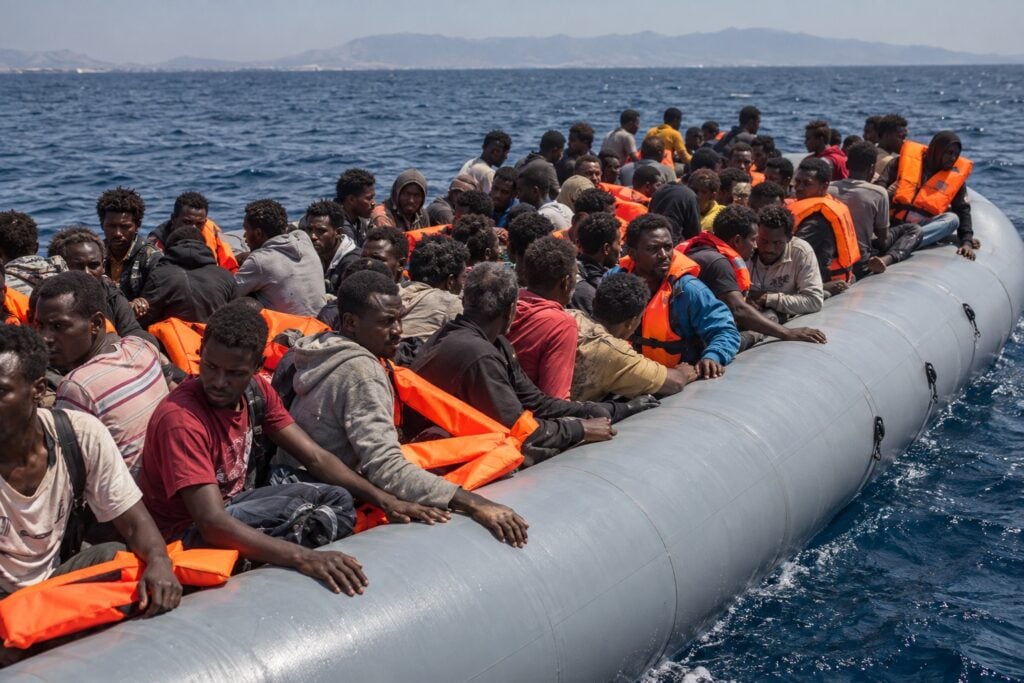
At least 139 migrants, including 15 children, have died after a boat capsized off Djibouti, according to the International Organization for Migration (IOM). The vessel was carrying 305 people when it went down near Guhere, north of the port town of Obock, during the night of 8-9 October. It was travelling from Djibouti to Yemen, according to survivor accounts cited by the IOM. Eighty-two people survived, all of them Ethiopian nationals, and Djiboutian authorities are continuing to search for the 84 who remain missing.
At least 139 migrants, including 15 children, have died after an overcrowded boat capsized off the coast of Djibouti while travelling towards Yemen. Dozens more remain missing, making the disaster one of the deadliest recorded along a migration route used by people seeking safety and employment in the Gulf region.
The tragedy occurred during the night of October 8–9, 2026, near Guhere, north of the port town of Obock. According to the International Organization for Migration (IOM), the vessel was carrying 305 people when it overturned. Around 82 people survived, while 84 were reported missing as search and rescue efforts continued. <Cite refs={[“turn917842news8″,”turn917842search1”]}/>
The disaster has drawn renewed international attention to the dangers faced by migrants travelling through the Horn of Africa and across the Gulf of Aden. It has also raised urgent questions about the circumstances that lead people to risk their lives on overcrowded boats, even when the destination lies in a country experiencing serious conflict of its own.
A journey that ended in catastrophe
Survivors told the IOM that the boat began sinking backwards shortly after the passengers boarded. The vessel was severely overcrowded, and the conditions appear to have contributed to the disaster.
When a boat carrying hundreds of people capsizes, the consequences can be devastating. Passengers may have little room to move, few effective life-saving devices and limited opportunities to escape. Darkness and rough sea conditions can make rescue operations even more difficult.
The initial death toll was reported at 109, with many others missing. As additional bodies were recovered, the number of confirmed deaths rose to at least 139. Authorities continued search and rescue operations, while the IOM worked alongside local officials to provide emergency assistance. <Cite refs={[“turn917842search0″,”turn917842search4”]}/>
The survivors were reported to be Ethiopian nationals. Some received medical assistance and support at the IOM’s migrant response centre in Obock, where staff were also helping survivors reconnect with relatives.
Behind the statistics are families facing uncertainty and grief. Some may have lost several relatives in the same disaster, while others may have no reliable information about whether loved ones survived. In some cases, identifying those who died can be difficult, particularly when official documents are missing or bodies cannot immediately be identified.
For families waiting for news, the search for missing passengers can become a painful period of uncertainty.
Why were the migrants travelling to Yemen?
The boat was travelling from Djibouti to Yemen, across the Bab al-Mandeb Strait, a strategically important waterway connecting the Red Sea with the Gulf of Aden.
Many migrants use this route in the hope of eventually reaching wealthier Gulf countries where they believe they may find employment and improve their living conditions. The journey is especially common among people from Ethiopia and Somalia, although the nationalities and circumstances of those travelling can vary.
For many, the decision to leave home is shaped by several pressures at once. Poverty, unemployment, drought, insecurity and conflict can make it difficult for families to meet their basic needs. Some migrants are seeking work, while others may be fleeing violence or coercion.
The IOM has warned that these pressures can drive people to undertake dangerous journeys despite the risks associated with overcrowded vessels, trafficking networks and instability in destination countries. <Cite refs={[“turn917842search0″,”turn917842search5”]}/>
The circumstances surrounding every passenger are different. It would be inaccurate to assume that all were fleeing the same threat or that every person intended to remain in Yemen. Some hoped to continue towards the Gulf, while others may have been seeking immediate safety or economic opportunities.
What the tragedy demonstrates is that people continue to take extraordinary risks when they believe the alternatives available to them are limited.
Yemen presents its own dangers
One of the most troubling aspects of this route is that Yemen itself has endured years of conflict and humanitarian hardship.
The country has been affected by fighting between forces aligned with the internationally recognised government and the Iran-backed Houthi movement. Renewed violence and displacement have added to the difficulties facing civilians and people travelling through the region.
Migrants who reach Yemen may encounter further dangers, including exploitation, trafficking, arbitrary detention and violence. Those hoping to travel onward to Gulf states can find themselves stranded, with limited resources and few reliable ways to continue their journey.
The fact that people continue to cross into Yemen despite these risks reflects the complex circumstances driving migration. For some, the possibility of earning money abroad appears worth the danger. Others may feel that remaining where they are offers little prospect of a secure future.
This does not make the journey safe, nor does it reduce the responsibility of governments and criminal networks to prevent avoidable deaths. It does, however, help explain why warnings alone have not stopped people from attempting the crossing.
A dangerous migration corridor
The disaster is part of a wider pattern of fatal incidents along the so-called Eastern Route between the Horn of Africa and the Arabian Peninsula.
According to the IOM’s Missing Migrants Project, more than 900 migrants died or went missing along the route in 2025. The agency also reported an increase in the number of people undertaking the journey during that year. <Cite refs={[“turn917842news8″,”turn917842search5”]}/>
These figures underline the scale of the problem. They also show that the latest shipwreck did not occur in isolation.
Overcrowding is a recurring concern. When smugglers attempt to maximise the number of passengers carried on a vessel, the boat may become unstable and difficult to control. Passengers may not receive adequate safety equipment or clear information about the journey ahead.
People who are desperate to leave may have little power to negotiate the conditions offered to them. Some may not know how dangerous the crossing will be, while others may understand the risks but feel they have no viable alternative.
Criminal networks can exploit these circumstances by charging substantial sums for journeys in unsafe vessels. The resulting profits create incentives to keep operating even when previous crossings have ended in disaster.
Authorities face the difficult task of disrupting these networks while also protecting people who are already at sea or stranded along the route.
The challenge facing rescue teams
Following the capsizing, Djiboutian authorities continued search and rescue operations, with the IOM providing medical care and emergency support to survivors.
Rescue efforts after a major maritime disaster can be complicated by the number of people involved, the condition of the sea and the difficulty of determining how many passengers were aboard. Missing people may have been carried away from the immediate area, making searches more difficult.
The process of recovering and identifying bodies can also take time. Where documentation is unavailable, authorities may need to rely on information from survivors, relatives and other sources to establish identities.
Beyond immediate medical care, survivors may require psychological support. People who have witnessed others drowning can experience severe distress, especially when friends or family members remain missing.
The aftermath also creates urgent needs for food, shelter, communication and assistance with family tracing. Humanitarian organisations often work with local authorities to provide these services while search operations continue.
The IOM has called for stronger support for responses along the route, including search and rescue capacity and life-saving assistance. Its wider message is that deaths at sea should not become an accepted feature of migration. <Cite refs={[“turn917842search0″,”turn917842search4”]}/>
Could safer migration routes prevent future tragedies?
The disaster has renewed debate over how governments can reduce the number of people making dangerous journeys.
One approach is to strengthen efforts against people-smuggling networks. Better intelligence-sharing, investigations and cooperation between countries can help identify organisers and disrupt the businesses that profit from unsafe crossings.
However, enforcement alone may not eliminate the demand for migration. If people continue to face severe economic hardship, conflict or insecurity, some may still attempt dangerous journeys despite the possibility of arrest, exploitation or death.
The IOM has therefore urged governments and donors to strengthen support for Djibouti and expand access to safe and legal pathways. Its director general, Amy Pope, has argued that people should not have to risk their lives at sea because safer alternatives are unavailable. <Cite refs={[“turn917842search0″,”turn917842search5”]}/>
Creating safer options is not straightforward. Governments must decide who qualifies for protection or migration programmes, how many people can be accommodated and how responsibilities should be shared. Countries also have legitimate interests in controlling their borders and enforcing immigration rules.
Nevertheless, the scale of the danger raises questions about whether existing arrangements are sufficient. Better access to lawful migration channels, protection for people fleeing serious threats and stronger action against traffickers could form part of a broader response.
No single measure will resolve the pressures driving migration, but reducing the dependence on dangerous sea crossings could save lives.
Poverty, conflict and climate pressures
The reasons people leave their homes are often interconnected. Economic hardship can become more severe when drought damages crops or livestock, while insecurity can prevent families from working, attending school or accessing essential services.
In Ethiopia, the IOM has documented migrants reporting difficult living conditions, the effects of drought, conflict and concerns about forced recruitment. The region has also experienced renewed fighting, adding to uncertainty for some communities. <Cite refs={[“turn917842news8″,”turn917842search0”]}/>
These factors do not mean that every person travelling along the route has the same protection needs. Some may qualify for international protection, while others may be seeking employment or better economic prospects. Individual circumstances must be assessed carefully.
The distinction matters because migration policy must respond to different situations. Humanitarian protection, labour migration, border enforcement and action against organised crime are related but separate policy areas.
A system that recognises these differences can better identify people who need protection while pursuing lawful and effective measures against those who exploit migrants.
Remembering the people behind the numbers
The death toll of 139 is a measure of the disaster’s scale, but it cannot capture the full human consequences. Fifteen children were among those reported dead, and many families were left waiting for information about relatives who had disappeared.
Each passenger had a personal story, whether they were travelling in search of employment, fleeing insecurity or hoping to build a more stable future. Their individual circumstances may never be fully known.
For the survivors, the end of the journey brought not the future they had hoped for, but the trauma of a shipwreck and the loss of fellow passengers. For families who remain without news, uncertainty can prolong the suffering long after the immediate rescue operation ends.
The tragedy also places pressure on governments and international organisations to examine what more can be done to prevent similar incidents.
A warning that cannot be ignored
The capsizing off Djibouti is a stark reminder of the dangers faced by migrants travelling in overcrowded boats. With at least 139 confirmed deaths and 84 people reported missing, it ranks among the deadliest known disasters on the Eastern Route.
The immediate priorities are to continue searching for the missing, care for survivors and help families obtain reliable information. The longer-term challenge is to reduce the conditions that allow people-smuggling networks to flourish and persuade people that dangerous crossings are their only realistic option.
That requires cooperation between countries of origin, transit and destination, along with support for humanitarian operations and credible action against criminal exploitation.
Migration policy will continue to involve difficult questions about borders, employment, protection and national responsibilities. But whatever governments decide, preventing avoidable loss of life must remain a central concern.
The deaths off Djibouti are not merely another set of figures in a migration report. They represent a devastating human tragedy—and a warning that the dangers along this route demand sustained international attention.
Reform UK just unveiled anti-woke plan that would ‘tear up’ DEI policing
Reform promises a ‘massive expansion of stop-and-search powers’ and says ‘DEI will be ripped out of British policing’

Nigel Farage’s Reform UK is making a major push on law and order (Image: Ioannis Alexopoulos/LNP)
Reform UK has unveiled plans to “tear up” the present “diversity-obsessed policing system” by scrapping the College of Policing and hiring 30,000 new police officers. Nigel Farage’s party would introduce a “total ban” on diversity, equality and inclusion (DEI) policies in policing and “axe structures set up solely to advance equality of outcome”. A Reform UK Government would remove DEI-related modules from training materials and “race action plans” would be forbidden.
These pledges come alongside promises for stronger policing in areas plagued by antisocial behaviour with “guaranteed foot patrols”. Reform also wants to overhaul the anti-terror Prevent programme to “focus on Islamist terrorism and mandate home searches in cases of repeat referrals”. Under its plan: “Where an individual is referred by three separate corroborating authorities, they will automatically and without exception be subject to a thorough physical search of their homes.”
The measures are part of Reform’s SAFE plan, focussing on “Safety, Antisocial behaviour, Functioning institutions and Equal enforcement”. Colin Sutton, a former detective chief inspector who is Norfolk Police and Crime Commissioner, said: “We’re prioritising the safety of Brits with a massive expansion of stop-and-search powers and 30,000 more officers on the street. We’ll come down hard on antisocial disorder, banning balaclavas and cracking down on nuisances like illegal e-bikes. We’re intent on having functioning institutions, ending early release for serious criminals and ensuring that our brave police officers are protected from woke outfits like the College of Policing. We will doggedly pursue equal enforcement; DEI will be ripped out of British policing.”
Mr Sutton claimed the proposals were “practical and common sense answers” which drew on the expertise of people who have a “track record of success in bringing even the most hardened criminals to justice”. Earlier this year the Policy Exchange think tank estimated that police and crime commissioners and forces have spent £631million on DEI initatives since 2020. Reform wants a “saturation of stop-and-search in crime hotspots” alongside the “restoration of short sentences”, fast-track courts for repeat offenders and 12,000 new prison places.

Nigel Farage on walkabout in Chelmsford (Image: Will Colebourne/the Press Association)
Shadow Home Secretary Chris Philp responded, saying: “The Conservatives have a fully funded and credible plan to hire 10,000 more police and build 50,000 more prison places. We will abolish non crime hate incidents so the police catch criminals, not harass people for what they put on social media. We will hotspot patrol high crime areas, triple stop and search and use live facial recognition to catch criminals. We will make sure prolific and dangerous offenders end up where they belong – in prison.”
A Home Office spokesperson said: “We are delivering the biggest reforms to policing in over 200 years, including bringing the College of Policing into the National Police Service to ensure consistent standards across the board. The National Police Service will have a clear mandate and powers to get things done, focus on protecting their communities and make the public safer. We have already committed to delivering 13,000 additional neighbourhood officers into communities blighted by antisocial behaviour by 2029. In the first year of this pledge, more than 3,800 extra personnel are in these roles across England and Wales.”

Colin Sutton as a detective chief inspector in 2008 (Image: Getty Images)
COMMENT by Norfolk Police and Crime Commission Colin Sutton
We all know what’s going on. You pay for your train ticket, walk through the barrier, and then someone forces their way through behind you. Nobody stops them. You look around, half-expecting a member of staff to do something, but the offender has already disappeared down the escalator. Gone.
In moments like these, we might not be frightened, but we’re all annoyed. Irritated. Angry. And the question going through all of our minds is perfectly reasonable: why am I being mugged off for following the rules?
It’s the same for the shopkeeper who reports a thief for the third time. He doesn’t need a lecture about the “root causes” of criminality. He wants to know the thief won’t come back. He wants the thief caught and punished. We all do. Except apparently the Conservative party, who told the police not to bother investigating thefts below £200.
Calling this sort of thing “low-level crime” is convenient for politicians. But I’m not a politician. I’m a crimefighter. A manhunter. I’m the former Detective Chief Inspector for the Metropolitan Police who led the investigation into Milly Dowler’s murder. I locked up serial killer Levi Bellfield, and serial rapist Delroy Grant.
But, some of the cases I am most proud of are those that people don’t know about. The thefts, the muggings, the drug dealing. The so-called petty crime, that gnaws away at society and neighbourhoods.
Every crime matters. Every indignity matters. And as Reform UK’s Policing and Crime Advisor, it is my number one priority to bring not just everyday safety back to British streets, but to ensure we fix our broken institutions, and end two-tier policing.
No more having to watch your back. No more getting mugged off.
Our S.A.F.E. plan, which we’re launching today, commits us to tackling all crime, big or small. Local and national.
We’re prioritising your Safety with a massive expansion of stop-and-search powers and 30,000 more officers on the street. We’ll come down hard on Anti-social disorder, banning balaclavas and on nuisances like illegal e-bikes. We’re intent on having Functioning institutions, ending early release for serious criminals and ensuring that our brave police officers are protected from woke outfits like the College of Policing. We will doggedly pursue Equal enforcement; DEI will be ripped out of British policing.
Protecting people must come first. Serious violence, sexual offences, and criminals who prey on vulnerable victims require painstaking investigation and properly-equipped specialist police.
It is a scandal that only one in ten sexual offences results in a conviction. And what happens in those handful of cases which result in a conviction? Too often plastic sentences. Take the pedophilic men who view and send child pornography. Of those convicted on this basis, fewer than 1 in 5 will see the inside of a prison cell.
At the same time, British neighbourhoods and high streets up and down our country have been left to criminal gangs because in this day and age, it’s deemed easier or simpler just to let it all fester. There seems to be no interest in tackling the persistent harassment, especially of women, in our communities. Things like vandalism and threatening behaviour go totally unassailed but they create misery for people every single day. It’s not on. It’s not the country we want to live in.
The distinction between serious crime and everyday disorder matters operationally. But one can’t be abandoned in pursuit of the other.
Making the machinery of all of this work against the criminals is not glamorous. But it’s critical and often ignored.
People need to feel like they know what’s being investigated, why, and what the process is going to look like. The idea that someone comes and takes a statement and then you never hear from them again is just insulting for everyone. And it’s a waste of time.
Where there’s no realistic prospect of identifying an offender, an honest explanation is better than a reference number presented as though it were a result in and of itself. It is unacceptable that over two million crimes go unsolved each year. Two million victims without answers. Two million criminals who escaped justice.
Equal enforcement is what holds the whole thing together. It’s part of the social contract of our nation. Over the last five years, as law and order has collapsed, the police have found time to arrest over 60,000 for speech offences. This is a stain in itself, but also indicative of the warped priorities of British policing.
Punishments for real crimes matter. But if you’re going to get tough in rhetoric, you’ve got to match that in prison capacity and broader infrastructure. We’ve all watched local police stations close at the same time successive governments have tried to pretend they’re “getting tough.” People can see through such empty claims. And critically, so can criminals.
Reform UK has a plan. The S.A.F.E. plan. The practical and common sense answers, led by people who have a track record of success in bringing even the most hardened criminals to justice.
The people following the rules have kept their side of the bargain. It is time for the government to keep theirs. And that starts on day one of a Reform UK administration.