
Brexit Backlash as New Minister Reveals Labour’s Plans to Move UK Closer to EU Under Burnham
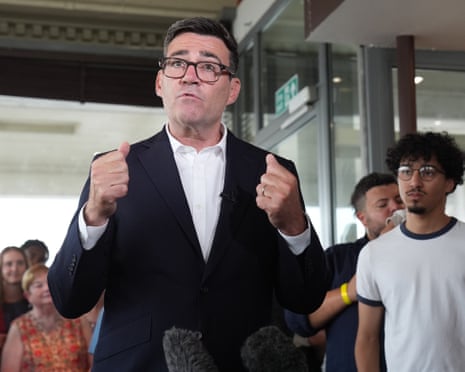
Britain’s long-running Brexit argument has burst back into political life after a new Labour minister signalled that the government wants a significantly deeper relationship with the European Union under Prime Minister Andy Burnham.
Hamish Falconer, the minister responsible for European relations, has said the government wants a “deeper relationship” with the EU and a more ambitious approach to the negotiations. His intervention has immediately raised questions about how far Burnham’s government intends to go in rebuilding Britain’s links with Europe.
For supporters of closer European cooperation, the announcement represents an opportunity to repair some of the economic and political damage they believe Brexit created. For committed Brexit supporters, however, it risks looking like the beginning of an attempt to reverse the result of the 2016 referendum by stealth.
That is why the issue could become one of the most politically explosive questions of Burnham’s premiership.
The government insists that closer cooperation with Brussels does not automatically mean rejoining the EU. Labour has maintained important limits around freedom of movement, the single market and the customs union. But the political direction is nevertheless clear: ministers want Britain to reduce some of the barriers that have developed between the UK and its largest neighbouring trading bloc since Brexit.
For many voters, that distinction will matter.
Brexit was never simply an argument about trade. It was a debate about sovereignty, immigration, national identity and Britain’s place in the world. The decision to leave the EU transformed British politics and helped reshape the electoral map.
Ten years later, the arguments have not disappeared.
Instead, they have evolved.
The new question is no longer simply whether Britain should leave the European Union. Britain has already left. The question is what kind of relationship the country should have with Europe now.
That debate is becoming increasingly complicated.
Businesses have long complained about additional bureaucracy and barriers to trade with European markets. Universities and young people have also raised concerns about the loss of opportunities that existed before Brexit. A proposed youth mobility agreement is now among the issues being discussed between Britain and the EU, although significant differences remain over its potential size and terms.
For Labour, there is an obvious economic argument for pursuing closer ties.
The European Union remains Britain’s most important regional economic partner. Reducing unnecessary barriers could make it easier for British companies to export, for European businesses to invest in Britain and for workers and students to move between the two sides.
But every step towards greater alignment carries political risks.
The government cannot simply assume that voters who supported Brexit have changed their minds. In many Leave-voting communities, Brexit remains connected to a broader belief that politicians in Westminster failed to respect ordinary people’s concerns about immigration, economic inequality and democratic accountability.
If Labour moves too quickly towards Brussels, critics will accuse Burnham of ignoring those voters.
The language used by ministers will therefore be crucial.
Falconer has spoken about a “deeper relationship” rather than rejoining the EU. That distinction appears deliberate. The government wants to explore practical areas of cooperation while avoiding the impression that Britain is preparing to reverse Brexit altogether.
Yet the political problem is that the destination can sometimes appear more important than the terminology.
A closer relationship could eventually involve agreements on trade, carbon markets, youth mobility, scientific cooperation and other areas. Each agreement might appear relatively limited in isolation. Taken together, however, they could gradually bring Britain closer to European institutions and standards.
That is precisely what some Brexit supporters fear.
They argue that Brexit was intended to give Britain the ability to make its own rules. If the UK increasingly aligns itself with EU regulations without having a vote in Brussels, critics will ask whether Britain has achieved the sovereignty promised by Brexit.
That argument will be particularly powerful if Labour eventually considers arrangements involving the single market or customs union.
There have already been reports of proposals that could take Britain considerably closer to the single market. However, such ideas remain politically controversial and should not be confused with an announced government policy to rejoin.
Burnham therefore faces a delicate balancing act.
He has previously expressed sympathy for the idea that Britain could eventually rejoin the EU, while also making clear more recently that returning to membership is not his immediate policy. Reporting on his position shows a distinction between recognising the long-term case for closer European integration and actually proposing that Britain reverse Brexit during his premiership.
That distinction could become increasingly difficult to maintain.
Once negotiations begin producing tangible changes, political opponents will inevitably ask where the process ends.
Does it stop with easier trade?
Does Britain participate in a youth mobility scheme?
Does it align more closely with European environmental and product regulations?
Does it join the customs union?
Does it eventually seek access to the single market?
Or could the long-term destination ultimately become EU membership again?
Labour will need convincing answers.
The danger for Burnham is that the government could lose both sides of the argument. Pro-European voters may become frustrated if ministers refuse to go far enough, while Brexit supporters may become alarmed by every new agreement with Brussels.
That is the political trap of the Brexit debate.
It is almost impossible to satisfy everyone.
Yet there are reasons why the government believes closer cooperation is necessary.
The economic relationship between Britain and Europe has changed significantly since Brexit. Businesses have had to adapt to new customs procedures and regulatory requirements. The government may conclude that reducing those frictions is simply a matter of economic pragmatism rather than ideology.
Burnham could therefore attempt to present his European policy not as “Brexit reversal”, but as a practical attempt to make Brexit work better.
That would be broadly consistent with the approach Labour has taken since taking office: maintaining the formal fact that Britain is outside the EU while seeking a closer relationship in selected areas.
But Burnham’s arrival at Downing Street has changed the political atmosphere.
Unlike some Labour politicians, he has a long history of talking openly about the possibility of Britain eventually returning to the European Union. That means every new announcement involving Brussels is likely to attract greater scrutiny.
His opponents will not simply ask what the government is doing today.
They will ask what it intends to do tomorrow.
That question could become particularly important as the next general election approaches.
If Labour succeeds in improving trade and cooperation with Europe, Burnham could argue that his government has delivered practical benefits without reversing Brexit. If the economy responds positively, that could strengthen the case for continued engagement.
But if negotiations become associated with concessions, higher costs or renewed immigration concerns, the political backlash could be severe.
Reform UK is likely to be particularly aggressive on the issue.
The party has built much of its appeal around sovereignty, immigration and opposition to what it sees as attempts to dilute Brexit. Any suggestion that Britain is moving towards the EU will provide Reform with an opportunity to accuse Labour of betraying Leave voters.
The Conservatives could also face pressure to take a clearer position.
The result could be a new political divide in which Brexit once again becomes a defining issue — but this time with the argument centred not on whether Britain should leave, but on how closely it should cooperate with the bloc it left.
That would be a remarkable development.
The referendum took place in 2016. A decade later, Britain could still be fighting over the same fundamental question: how much distance should there be between Britain and Europe?
For Burnham, the answer will require political skill.
A pragmatic European policy could benefit British businesses, universities and young people while improving diplomatic cooperation. But the government must also respect the fact that millions of voters supported Brexit because they wanted greater national control.
The challenge is therefore not simply negotiating with Brussels.
It is negotiating with Britain’s own divided electorate.
If Burnham can persuade voters that closer European cooperation is about economic opportunity rather than surrendering sovereignty, he may be able to build broad support for his approach.
If he fails, the government could face a powerful backlash.
The most important question is therefore not whether Britain is “rejoining Europe”. There is currently no evidence that Burnham’s government has formally adopted a policy of immediate EU re-entry.
The real story is more subtle — and potentially more consequential.
Britain is beginning another phase of its relationship with Europe.
Labour wants a deeper connection. Brussels appears willing to discuss one. Businesses and younger voters may welcome it. Brexit supporters are already watching carefully.
And Andy Burnham now has to decide how far he is prepared to go.
The Brexit battle may have changed.
But it certainly has not ended.