
British Patriots STRIKE BACK and Start TAKING DOWN Muslim Asylums

Reports of protests outside accommodation for asylum seekers have reignited Britain’s immigration debate, with growing tensions over hotel contracts, public safety, government spending and the future of the asylum system.
Britain’s increasingly bitter debate over immigration has returned to the streets, with demonstrators gathering outside properties reportedly being used to accommodate asylum seekers and demanding urgent action from the Government.
Footage circulating online appears to show confrontations between protesters and police in Epsom, Surrey, where residents have reportedly expressed anger over local accommodation arrangements and allegations of serious criminal behaviour.
The demonstrations have been portrayed by some online commentators as evidence of a wider patriotic backlash against Britain’s asylum system.
However, claims that protesters are “taking down” asylum accommodation have not been established by the material available. Nor is there verified evidence that the properties involved are exclusively housing Muslims.
The distinction matters because asylum seekers come from different countries, religions and backgrounds, and allegations against particular individuals cannot reasonably be extended to an entire community.
Nevertheless, the protests highlight an increasingly difficult political challenge: how can Britain manage asylum accommodation, address legitimate public safety concerns and maintain public confidence without allowing tensions to escalate into violence?
Epsom protests bring local anger into the national spotlight
The latest controversy centres on footage reportedly recorded outside a Travelodge hotel and another property described online as a house in multiple occupation, or HMO, in Epsom.
According to the original commentary, demonstrators gathered outside the accommodation demanding answers about its use and the individuals living there.
Some protesters were reportedly heard shouting for occupants to be removed.
Other footage appeared to show confrontations with police officers positioned near an entrance.
The narrator also referred to reports of projectiles being thrown and arrests taking place.
However, the material does not independently establish the number of demonstrators, the precise circumstances of any arrests or whether the different clips depict the same incident.
Those details would require confirmation from Surrey Police, local authorities or other reliable evidence.
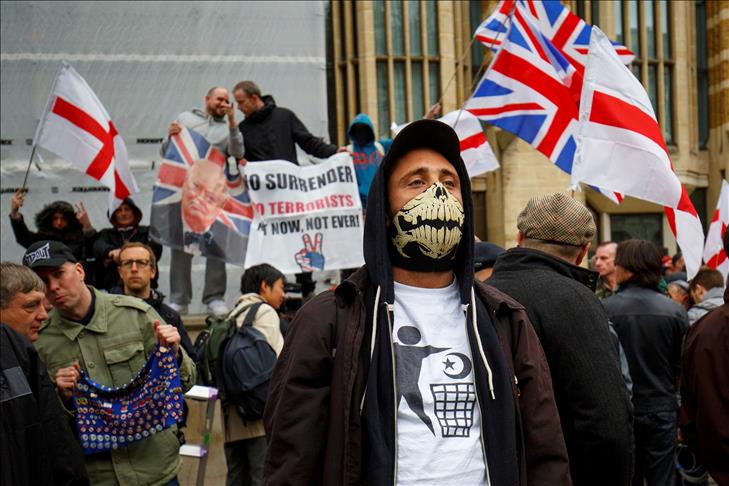
The footage nevertheless illustrates how quickly disputes over asylum accommodation can become confrontational.
For residents concerned about changes in their neighbourhood, the presence of police and large crowds can reinforce a sense that events are spiralling beyond local control.
For people living inside the properties, hostile demonstrations may create fears about their personal safety.
Both concerns deserve attention.
The immediate priority for authorities must be preventing violence while establishing the facts behind the allegations circulating online.
Serious criminal allegations demand evidence
A central element of the commentary involves allegations of serious sexual offences reportedly linked to individuals associated with local accommodation.
Such allegations are extremely serious and must be investigated thoroughly.
Anyone responsible for sexual violence should face appropriate criminal investigation and prosecution, regardless of nationality, immigration status or religion.
Victims must receive protection, support and access to justice.
However, the original material does not provide sufficient verified information to establish the identities of suspects, the circumstances of the alleged offences or whether any accused individuals were asylum seekers.
That uncertainty is important.
Online reports can spread rapidly before police have confirmed basic details.
If allegations are incorrectly attributed to particular communities, innocent people may become targets of harassment or intimidation.
Equally, authorities must avoid creating unnecessary uncertainty through poor communication.
Where legally appropriate, police should provide timely updates explaining what is known, what remains under investigation and whether there is any continuing risk to the public.
Transparency can help prevent rumours from becoming more influential than verified information.
Police face growing pressure at demonstrations
The footage described in the original commentary shows officers confronting protesters near a property entrance.
Some demonstrators reportedly challenged police directly, while other clips appeared to show officers intervening to remove individuals from an area.
These scenes have prompted criticism from commentators who believe the police are protecting accommodation providers rather than listening to local residents.
But officers have responsibilities that extend to everyone involved.
They must protect peaceful protesters exercising their lawful rights, safeguard residents of the properties and prevent criminal offences.
Police intervention does not automatically demonstrate support for any particular immigration policy.
Nor does the presence of officers establish that allegations made by protesters are true or false.
The right to peaceful protest is an important part of British democracy.

However, threatening individuals, attacking property or throwing projectiles crosses a different legal boundary.
Public frustration can be expressed forcefully without becoming violent.
The challenge for police is to enforce that distinction consistently and proportionately.
Why asylum hotels have become so controversial
Hotels have played a prominent role in Britain’s asylum accommodation system, particularly when demand for housing has exceeded the capacity of other arrangements.
For the Government, hotels can provide accommodation relatively quickly.
However, they can also be expensive and politically contentious.
Local residents may question why particular hotels have been selected, how long the arrangements will continue and whether public services have sufficient resources to cope.
Businesses may also face disruption when properties previously serving tourists or commercial travellers are repurposed.
The original commentary criticises accommodation providers for accepting government contracts while potentially damaging their relationships with surrounding communities.
That concern raises legitimate questions about procurement, transparency and value for money.
However, claims about the profitability of individual contracts require financial evidence.
A hotel’s government income cannot automatically be treated as profit because staffing, maintenance, security and other costs must also be considered.
The central policy question is whether the accommodation model delivers safe, cost-effective housing while respecting the needs of local communities.
HMOs emerge as another focus of concern
The commentary also discusses houses in multiple occupation as a possible alternative to hotels.
An HMO generally refers to a property occupied by multiple people who are not part of a single household and who share certain facilities.
Such properties can include converted houses with separate bedrooms and communal kitchens or bathrooms.
They are already a familiar part of Britain’s private rented sector.
Depending on the circumstances, HMOs may require licensing and must comply with relevant safety standards.
The suggestion that asylum seekers could be moved from hotels into shared accommodation has prompted concerns about overcrowding, housing standards and the concentration of residents in particular neighbourhoods.
However, not every HMO is used for asylum accommodation.
Nor does the existence of an HMO establish that its occupants are migrants or asylum seekers.
Any assessment of a specific property must therefore be based on verified information.
Local authorities have an important role in ensuring that accommodation meets applicable standards and does not create unacceptable risks for occupants or neighbouring residents.
Communities demand clearer information
One of the recurring complaints in debates about asylum accommodation is that residents feel excluded from decisions affecting their neighbourhoods.
The original commentary reflects that frustration.
It suggests that people are being told hotels will close while remaining uncertain about where asylum seekers will be housed next.
A lack of clear information can create an environment in which rumours spread easily.
Residents may assume that a newly occupied property is part of a government accommodation programme even when there is no evidence supporting that conclusion.
Authorities can reduce uncertainty by explaining accommodation policies, outlining safeguarding arrangements and clarifying which organisations are responsible for managing concerns.
There may be legitimate reasons to protect certain personal information, particularly where vulnerable individuals are involved.
But protecting privacy does not require avoiding public discussion about expenditure, housing standards or the impact on local services.
Effective communication is essential if communities are to have confidence in the system.
National identity becomes part of the debate
The original commentary places considerable emphasis on the presence of English flags at demonstrations.
For some participants, displaying the St George’s Cross represents national identity and frustration with immigration policy.
Others may interpret the same imagery differently depending on the surrounding slogans and conduct.
National flags are not inherently associated with hostility towards immigrants or religious minorities.
They can express patriotism, cultural identity and a sense of belonging.
However, the meaning of a demonstration is shaped by more than the symbols displayed.
Threats against individuals or calls for discrimination cannot be justified simply by describing them as patriotic.
Britain’s democratic traditions allow people to demand changes to immigration policy.
Those same traditions also protect religious freedom, equality before the law and the right of individuals to live without intimidation.
A constructive national debate must recognise both principles.
Nigel Farage proposes reviewing asylum decisions
The controversy has also brought renewed attention to statements by Reform UK leader Nigel Farage.
In footage included in the original commentary, Farage argued that asylum decisions granted during the previous five years should be reviewed.
He suggested that decisions found to have been wrongly approved should be reversed.
Farage also called for a tougher approach towards people entering Britain through unauthorised routes.
His comments reflect a broader political argument that existing asylum policies have failed to deter dangerous Channel crossings.
Supporters believe a more restrictive approach would restore confidence in immigration enforcement.
Critics question whether blanket restrictions would comply with Britain’s legal obligations and whether they would distinguish properly between people with valid protection claims and those without them.
The practical details of Farage’s proposal would be crucial.
Reviewing previously granted asylum decisions would require clear legal criteria, procedural safeguards and substantial administrative resources.
A review could not fairly assume that every previously approved claim was invalid.
Channel crossings remain politically explosive
The original commentary refers to Farage citing 602 people crossing the English Channel on a particular Saturday.
That figure is presented as part of his political statement and has not been independently verified here.
Nevertheless, small-boat crossings remain one of the most prominent issues in Britain’s immigration debate.
The journeys are dangerous, and people-smuggling networks have exploited those seeking to reach the United Kingdom.
Governments have faced pressure to disrupt those networks, reduce crossings and improve the efficiency of asylum decisions.
But enforcement alone does not resolve every underlying challenge.
The asylum system must also distinguish between individuals entitled to protection and those whose claims do not meet the legal requirements.
Delays can increase accommodation costs and prolong uncertainty for applicants and communities alike.
A functioning system therefore requires timely decisions, credible enforcement and lawful procedures.
Allegations of fraudulent asylum claims fuel mistrust
Farage also referred to allegations that some applicants make false claims about sexuality or religious conversion to obtain protection.
Fraudulent claims, where established, undermine confidence in the asylum system.
Authorities must assess evidence carefully and identify deliberate deception.
However, the existence of some fraudulent claims does not establish that claims involving sexual orientation or religious persecution are generally dishonest.
People can face genuine persecution because of their sexuality, religion or other protected characteristics.
Such cases often involve complex evidence and sensitive personal circumstances.
The challenge for decision-makers is to distinguish genuine protection needs from fabricated accounts without relying on stereotypes.
That requires properly trained officials, consistent standards and effective appeal procedures.
Political proposals that promise faster or tougher decisions must still explain how fairness and accuracy will be maintained.
Can Britain abolish the asylum system?
The original commentator goes further than Farage, suggesting that Britain’s asylum system should be abolished and replaced.
That is a far-reaching proposal.
Britain’s asylum framework is connected to domestic law and international refugee obligations.
A government seeking fundamental reform would need to address how the country would continue handling people who claim to face persecution or serious harm if returned to their home countries.
It would also need to consider the legal consequences of any new arrangements.
Abolishing an administrative system does not remove the underlying humanitarian and legal questions.
Nor does it eliminate the need to make decisions about who may remain in the country.
Reform could involve changes to processing, accommodation, enforcement and international cooperation.
But a workable alternative would require detailed legislation, funding and operational planning.
Political slogans alone cannot resolve those challenges.
The economic argument behind accommodation reform
The cost of asylum accommodation is another major source of public concern.
Hotel contracts can become particularly expensive when applications take a long time to process.
Longer waiting periods mean that individuals may require accommodation for extended periods.
That creates additional pressure on government spending.
Moving people into other forms of housing could reduce certain costs, but it may also introduce new challenges.
Shared accommodation requires oversight, maintenance and appropriate safeguarding.
Concentrating large numbers of residents in particular areas can place pressure on local services if planning is inadequate.
Equally, poorly managed accommodation can create problems for the people housed there.
The Government therefore needs to demonstrate that any replacement for hotels is both financially responsible and operationally sustainable.
Publishing clear information about costs and performance would allow the public to judge whether reforms are working.
Online footage can intensify public anger
The commentary repeatedly praises individuals who record demonstrations and share footage online.
Citizen reporting can provide valuable evidence of events that might otherwise receive limited attention.
Videos may help document police actions, crowd behaviour and incidents requiring further investigation.
However, short clips rarely provide a complete account.
They may omit what happened before filming began or fail to establish why officers intervened.
Captions can also contain unverified allegations.
For that reason, footage should be assessed alongside police statements, eyewitness accounts and other reliable information.
Responsible reporting should distinguish what a video visibly shows from what its uploader claims happened.
That distinction is especially important when the subject involves criminal allegations, immigration status or religious identity.
What should the Government do next?
The demonstrations underline the need for a coherent response to both immigration pressures and community concerns.
Ministers face several interconnected challenges.
They must reduce unnecessary accommodation expenditure, improve asylum decision-making and ensure that criminal allegations are investigated without delay.
They must also provide local authorities with sufficient information to manage the consequences of accommodation decisions.
Police should be able to protect peaceful demonstrations while responding firmly to violence and intimidation.
Accommodation providers must meet appropriate standards and be accountable for their operations.
And politicians should explain the practical consequences of proposed reforms rather than rely exclusively on confrontational rhetoric.
Public confidence is unlikely to improve without measurable progress.
That means clearer reporting on costs, processing times, enforcement outcomes and the impact of accommodation policies.
Britain faces a choice between reform and confrontation
The scenes described in Epsom reflect genuine tensions surrounding asylum accommodation, public safety and government transparency.
They also demonstrate how quickly local disputes can become part of a wider national political argument.
People have every right to question immigration policy, challenge public spending and demand effective policing.
Those concerns should not be dismissed.
But allegations must be verified, and responsibility for criminal behaviour must remain individual rather than being assigned collectively on the basis of religion or immigration status.
The original commentary presents the protests as a patriotic movement taking decisive action against asylum accommodation.
The available evidence supports a more limited conclusion: demonstrations and confrontations have been reported, while claims about criminal offences, property closures and the identities of those involved require further verification.
Britain’s asylum system faces serious questions about cost, efficiency and public confidence.
Addressing them will require effective government, lawful enforcement and open communication.
The ultimate test of political leadership is not whether public anger can be amplified, but whether that anger can be translated into workable policies that protect communities, uphold the law and prevent further confrontation.