
Caerphilly By-Election Shock: Plaid Cymru’s Historic Victory Leaves Labour Fighting for Its Political Future
Labour suffered a political earthquake in Wales when Plaid Cymru captured the Caerphilly Senedd seat in a historic by-election defeat that exposed just how dramatically the political landscape was changing.
For generations, Caerphilly had been regarded as one of Labour’s safest political territories.
The party’s connection with the area was not simply electoral.
It was historical.
It was cultural.
It was deeply embedded in the political identity of the constituency.
But that political fortress suddenly collapsed.
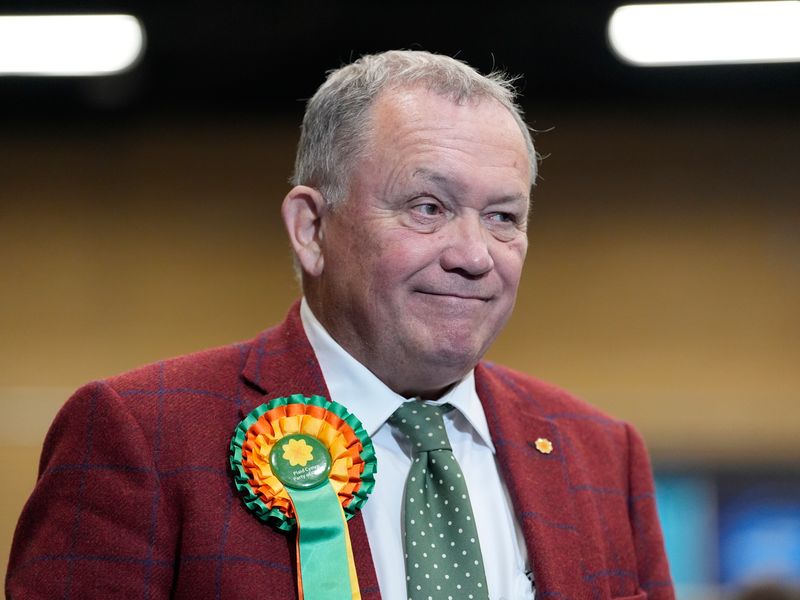
Plaid Cymru candidate Lindsay Whittle secured victory with 47 per cent of the vote and a majority of 3,848, while Reform UK also performed strongly and Labour was pushed into third place. The result represented the first time Labour had lost the Caerphilly Senedd seat since devolution began.
The result was therefore much bigger than one by-election.
It was a warning.
And Labour was not the only party that needed to pay attention.
A historic Labour stronghold falls
For decades, Labour dominated the political landscape of the South Wales Valleys.
The relationship between Labour and communities such as Caerphilly was built over generations.
Mining communities, trade unions and working-class politics created a powerful political culture.
Labour was not simply a party people voted for.
For many families, it was part of their identity.
That made the Caerphilly result especially significant.
When a party loses a marginal constituency, it can blame a particular candidate, a campaign mistake or local circumstances.
When it loses a seat that has been considered part of its political inheritance, something deeper may be happening.
The electorate may be changing.
Plaid Cymru’s breakthrough
Plaid Cymru had a historic opportunity.
The party had long argued that Wales needed a stronger political voice and greater control over its own affairs.
But winning a constituency historically associated with Labour gave that argument a powerful new dimension.
Lindsay Whittle was hardly an unknown political figure.
He had stood for election numerous times and had spent decades involved in local politics.
His eventual victory was therefore presented not simply as a protest vote, but as the culmination of a long political campaign.
When the result was announced, Whittle described the victory as a major achievement against both Labour and Reform UK. BBC reporting highlighted the scale of the swing away from Labour and the symbolic importance of the result.
Reform UK comes close
There was another important story inside the result.
Reform UK was not eliminated.
The party finished second and established itself as a serious competitor in a constituency where the traditional political battle had largely been Labour versus Plaid Cymru.
That mattered enormously for Nigel Farage.
Reform’s political strategy in Wales has been based on the belief that dissatisfaction with Labour can be converted into support for a new political movement.
Caerphilly offered evidence that the strategy could work.
Even though Reform did not win, coming so close meant the party could claim that its support was spreading into territory once regarded as almost impossible for the political right.
Labour’s third-place humiliation
For Labour, the most painful part of the result was not simply losing.
It was finishing third.
A party that had dominated the area for generations was suddenly behind both Plaid Cymru and Reform UK.
That creates an uncomfortable question.
Where did Labour’s voters go?
Some moved towards Plaid Cymru.
Some moved towards Reform.
Others may have stayed at home.
That fragmentation is potentially more dangerous than a straightforward defeat.
If Labour voters had simply moved to one rival party, Labour could attempt to win them back with a targeted strategy.
But when voters scatter in different directions, rebuilding the coalition becomes much harder.
The political centre is disappearing
Caerphilly demonstrates how difficult traditional party politics has become.
Plaid Cymru appeals to voters motivated by Welsh identity and greater autonomy.
Reform appeals strongly to voters concerned about immigration, national politics and dissatisfaction with the Westminster establishment.
Labour attempts to occupy a broad centre-left position.
These parties are competing for voters with very different motivations.
That creates an unusual political battlefield.
A Labour voter can move to Plaid Cymru because they believe Labour is not Welsh enough.
Another can move to Reform because they believe Labour is not tough enough on immigration.
A third may simply become disillusioned with politics altogether.
The old political map cannot easily explain this behaviour.
The end of automatic Labour loyalty
The Caerphilly result should also be viewed as part of a much wider trend.
Traditional political loyalty is weakening.
Younger voters do not necessarily inherit the political identities of their parents.
Working-class voters are increasingly willing to consider parties outside Labour.
Brexit changed political alignments.
National identity has become more important.
Economic insecurity remains a powerful force.
And social media allows political movements to communicate directly with voters without relying entirely on traditional institutions.
That creates opportunities for parties such as Plaid Cymru and Reform.
A warning that Labour cannot dismiss
Labour could have attempted to portray the result as an unusual by-election.
There is some logic to that.
By-elections often produce unusual results.
Turnout is lower.
Local personalities can become disproportionately important.
Voters sometimes use them as protest opportunities.
But the problem for Labour was that Caerphilly was not an isolated event.
The result formed part of a broader pattern of political instability across Wales.
And events that followed made the warning even harder to ignore.
Wales changed dramatically in 2026
At the Senedd election in May 2026, Plaid Cymru emerged as the largest party with 43 seats.
Reform UK won 34.
Welsh Labour was reduced to just nine.
Official election figures show Plaid Cymru receiving 444,665 votes across Wales, compared with 367,985 for Reform UK and 139,203 for Welsh Labour.
That was a historic transformation.
After more than a century of Labour dominance in Welsh politics, the party was no longer the automatic force at the centre of Welsh government.
Plaid Cymru had become the largest party.
Reform had become a major political force.
The Caerphilly by-election now looks less like an isolated shock and more like an early warning of the political earthquake that followed.
Farage’s Welsh problem — and opportunity
For Nigel Farage, Wales presents both an opportunity and a challenge.
Reform has demonstrated that it can win support in parts of Wales where the Conservatives historically struggled.
But Plaid Cymru is also a powerful competitor.
This makes Welsh politics fundamentally different from England.
A voter dissatisfied with Labour has more than one alternative.
They can choose Reform.
They can choose Plaid Cymru.
They can choose the Greens.
They can support the Conservatives.
Or they can simply stay at home.
Reform therefore cannot assume that every anti-Labour voter will automatically move towards Farage.
Plaid Cymru’s historic opportunity
Plaid Cymru, meanwhile, has an extraordinary opportunity.
Its Caerphilly victory showed that the party could break into traditional Labour territory.
Its 2026 Senedd performance confirmed that the breakthrough was not merely temporary.
The party can now present itself as a genuine governing force.
That changes the political debate.
Instead of asking whether Plaid Cymru can win elections, voters can ask whether it can govern Wales effectively.
That is a much more demanding question.
From protest to responsibility
Winning seats is one thing.
Running a government is another.
Plaid Cymru will now face questions about healthcare, education, economic growth, transport, housing and public services.
The party cannot simply campaign against Labour forever.
It has to demonstrate that it can provide credible solutions.
The same is true of Reform.
The more successful Reform becomes, the more voters will expect detailed answers rather than slogans.
Political movements can grow through dissatisfaction.
Governments are judged on results.
The working-class question
The most uncomfortable issue for Labour is its relationship with working-class Wales.
The party’s historic connection with the Valleys remains powerful.
But political identity is no longer determined entirely by class.
A voter can be working class and support Plaid Cymru.
A working-class voter can support Reform.
A voter can care deeply about public services while also demanding tighter immigration controls.
Political identities are now mixed.
Labour therefore cannot simply assume that its traditional economic message will automatically restore its old coalition.
It has to understand what those communities actually want now.
The danger of taking voters for granted
Perhaps the most important lesson from Caerphilly is that political history does not guarantee political loyalty.
A constituency can vote for one party for decades.
Then the electorate changes.
One election later, the old assumptions collapse.
That is exactly what happened.
Labour’s historic status did not protect it.
Its past victories did not protect it.
Its institutional presence did not protect it.
Voters made a different choice.
And once voters discover that alternatives can win, the psychological barrier disappears.
A new political Wales
The consequences go beyond one seat.
Wales is entering a new political era.
Plaid Cymru has demonstrated that it can become the dominant force.
Reform has demonstrated that it can compete seriously.
Labour has been forced to confront the collapse of its traditional dominance.
And voters have demonstrated that they are willing to experiment.
That creates a far more competitive political environment.
The days when Welsh politics could be understood simply as Labour versus everyone else are disappearing.
What does Caerphilly mean for Westminster?
The implications also extend beyond the Senedd.
Westminster parties will be watching Wales closely.
If voters are willing to abandon Labour in historically safe areas, Labour MPs elsewhere will take notice.
If Reform can build a substantial base in Wales, Conservatives will worry about further fragmentation on the right.
And if Plaid Cymru continues to grow, Labour will face a stronger nationalist challenge.
The result is a political triangle that could become increasingly important.
Labour versus Plaid Cymru versus Reform.
That is a very different contest from the one Wales was accustomed to.
The beginning of a much bigger story
When Plaid Cymru won Caerphilly, the immediate headlines focused on Labour’s historic defeat.
But the deeper significance was broader.
The political foundations of Wales were shifting.
Voters were becoming less predictable.
Traditional loyalties were weakening.
New political movements were gaining credibility.
And parties that once seemed incapable of breaking through were suddenly winning seats.
The 2026 Senedd election subsequently confirmed just how profound that transformation had become. Plaid Cymru emerged as the largest party, while Reform became the second-largest force and Labour was pushed into a dramatically reduced position.
Labour’s moment of reckoning
For Labour, Caerphilly should therefore be remembered as a warning that arrived before the earthquake.
The party had an opportunity to ask difficult questions.
Why were voters leaving?
Why were some turning to Plaid Cymru?
Why were others turning to Reform?
Why were traditional Labour communities becoming politically unpredictable?
Those questions are still relevant.
Because winning back voters will require more than reminding them of Labour’s history.
It will require rebuilding trust.
It will require understanding modern Wales.
And it will require proving that Labour still has something meaningful to offer communities that once regarded the party as their natural political home.
A historic defeat with historic consequences
The Caerphilly by-election began as a contest for one Senedd seat.
It ended as a symbol of something much bigger.
Plaid Cymru proved that Labour’s old strongholds could fall.
Reform proved that it could compete seriously in Labour territory.
And Labour discovered that even the deepest political loyalties have limits.
The result did not by itself determine the future of Welsh politics.
But it revealed the direction in which the political winds were blowing.
Months later, the wider Senedd election produced an extraordinary confirmation of that shift.
Plaid Cymru became the largest party.
Reform emerged as a major force.
Labour’s century-long dominance was broken.
The political map of Wales had been redrawn.
And looking back, the Caerphilly by-election appears less like a sudden accident and more like the moment when Wales first saw the future coming.
The old political order was weakening.
The voters were moving.
And Labour could no longer assume that Wales belonged to it.