
Donald Trump Threatens to Pull Troops from Europe and Demands Control of Greenland
President Donald Trump’s renewed comments linking the future of American military forces in Europe to the question of Greenland’s status have once again placed transatlantic relations under intense international scrutiny. Speaking around a NATO summit, Trump suggested that the United States could remove its troops from Europe if Denmark continued to reject his long-standing proposal for the United States to take control of Greenland. He argued that the Arctic island is strategically important and should ultimately be controlled by the United States rather than Denmark. The remarks immediately generated debate among political leaders, security experts, and diplomats on both sides of the Atlantic.
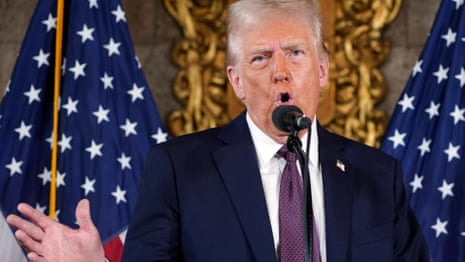
The controversy illustrates how questions of national security, military alliances, and territorial sovereignty have become increasingly interconnected in modern international politics. While Greenland has been at the center of Trump’s foreign policy rhetoric before, connecting the issue directly to the presence of American troops in Europe represents a significant escalation in diplomatic pressure. European leaders responded cautiously, emphasizing the importance of NATO unity and Denmark’s sovereignty over Greenland.
Greenland is the world’s largest island and an autonomous territory within the Kingdom of Denmark. Although it has a relatively small population, its strategic importance has increased considerably in recent decades. Climate change has opened new Arctic shipping routes, while melting ice has made valuable natural resources more accessible. At the same time, increasing activity by Russia and China in the Arctic has heightened the region’s geopolitical significance.
For decades, the United States has maintained a military presence in Greenland through agreements with Denmark. The island hosts important facilities that contribute to missile warning systems, satellite operations, and Arctic defense. American officials from several administrations have described Greenland as an essential component of North American security because of its location between Europe and North America.
Trump has repeatedly argued that direct American control of Greenland would strengthen U.S. national security. His position reflects broader concerns about competition in the Arctic, where global powers are seeking greater influence over emerging trade routes, critical minerals, and military infrastructure. According to Trump, Greenland’s strategic value justifies a stronger American role in its future governance.
However, both Denmark and Greenland have consistently rejected proposals suggesting that the territory could be transferred to another country. Greenland’s government has repeatedly emphasized that the island is not for sale and that its future should be determined by the people who live there. Danish leaders have likewise maintained that questions of sovereignty are not open for negotiation.
The issue became even more sensitive when Trump suggested that America’s military commitment to Europe could depend on how European allies responded to his Greenland proposal. The United States currently maintains tens of thousands of troops across Europe, supporting NATO’s collective defense strategy and contributing to deterrence against potential threats. American military bases in Germany, Italy, Poland, the United Kingdom, and several other countries play an essential role in alliance operations.
A large-scale withdrawal of U.S. forces would represent one of the most significant changes to European security architecture in decades. Since the end of the Second World War, the American military presence has been regarded as one of NATO’s most important pillars. Although European countries have increased defense spending in recent years, many analysts argue that U.S. forces continue to provide capabilities that are difficult to replace quickly.
Supporters of Trump’s position argue that European allies should assume greater responsibility for their own defense. They note that successive American administrations have encouraged NATO members to increase military spending and reduce dependence on U.S. resources. From this perspective, linking military commitments to broader strategic objectives reflects a negotiation strategy designed to encourage allies to take American concerns more seriously.
Critics, however, contend that military alliances should not be used as leverage in disputes over territorial sovereignty. They argue that NATO’s strength depends upon mutual trust, predictable commitments, and collective defense obligations rather than transactional bargaining. Introducing uncertainty regarding troop deployments, they say, could weaken deterrence and encourage geopolitical rivals to test alliance unity.
The controversy also highlights the unique strategic importance of the Arctic. Once viewed primarily as a remote and inhospitable region, the Arctic has become increasingly central to global politics. Scientists estimate that climate change will continue to reduce sea ice, allowing greater commercial shipping and expanding access to energy resources and critical minerals. Governments are therefore investing more heavily in Arctic infrastructure, scientific research, and military capabilities.
Russia has significantly expanded its Arctic military infrastructure during the past decade, reopening military bases and increasing patrol activity. China has similarly expressed growing interest in Arctic shipping routes and investment opportunities. These developments have encouraged NATO members to devote greater attention to northern security challenges.
Against this backdrop, Greenland occupies an exceptionally valuable geographic position. It sits between North America and Europe, making it important for missile detection, air defense, and naval operations. For military planners, maintaining secure access to the island has become increasingly significant as strategic competition intensifies in the High North.
Despite these security considerations, questions of sovereignty remain governed by international law and political agreements. Greenland enjoys substantial self-government, while Denmark remains responsible for foreign affairs and defense. Any fundamental change in Greenland’s political status would require democratic processes involving both Greenlandic institutions and the Kingdom of Denmark.
The diplomatic response to Trump’s remarks reflected this legal reality. European leaders reiterated their support for Denmark’s territorial integrity while emphasizing the importance of maintaining strong transatlantic cooperation. NATO officials largely focused on preserving alliance unity rather than engaging directly with the territorial dispute.
The debate also illustrates broader differences in approaches to international diplomacy. Some political leaders favor highly transactional negotiations that seek maximum leverage through economic or military pressure. Others argue that long-term alliances depend upon stability, shared values, and consistent commitments rather than short-term bargaining tactics. These contrasting philosophies have influenced numerous debates concerning trade, defense, and international cooperation in recent years.
Public opinion has also been divided. Some Americans believe the United States should prioritize strategic interests in the Arctic and encourage European allies to shoulder more defense responsibilities. Others worry that threatening troop withdrawals could undermine relationships built over generations and reduce American influence within NATO.
European reactions have likewise varied. Some governments have accelerated efforts to strengthen independent defense capabilities, while others continue emphasizing the importance of preserving close cooperation with Washington regardless of political disagreements. The discussion has renewed debates about Europe’s long-term strategic autonomy and the future balance of responsibilities within the alliance.
Economic considerations further complicate the issue. Greenland possesses significant deposits of rare earth minerals and other natural resources that are increasingly important for advanced technologies, renewable energy systems, and defense industries. As global demand for these materials grows, competition over access to Arctic resources is expected to intensify.
Environmental concerns also play an important role. Arctic ecosystems remain among the most fragile in the world, and expanding commercial or military activity raises questions about sustainability, Indigenous communities, and climate protection. Policymakers therefore face the challenge of balancing strategic interests with environmental stewardship and local governance.
Ultimately, the debate surrounding Trump’s remarks extends beyond Greenland itself. It reflects larger questions about the future of NATO, the evolution of American foreign policy, Arctic security, and the changing nature of global power competition. Whether viewed as negotiating tactics or as a genuine policy proposal, the comments have prompted renewed discussion about the resilience of transatlantic relationships in an increasingly uncertain international environment.
In conclusion, President Donald Trump’s suggestion that the United States could withdraw troops from Europe while renewing his demand for American control of Greenland has generated significant international attention. The episode underscores the strategic importance of the Arctic, the enduring value of NATO, and the complex relationship between national security and international diplomacy. While governments may disagree over methods and priorities, the broader challenges of Arctic competition, alliance cooperation, and regional stability are likely to remain central issues in global politics for many years to come. As events continue to unfold, diplomatic dialogue, respect for international law, and close cooperation among allies will remain essential for addressing these challenges peacefully and effectively.