

English Channel Chaos as Migrant Dies, Two Women Burned and One Stabbed on Same Boat
A desperate Channel crossing has descended into chaos after one migrant died and three others were found injured aboard a small boat attempting to reach Britain from the French coast.
The disturbing incident has renewed questions about the increasingly dangerous conditions on migrant boats crossing the English Channel and the ability of French and British authorities to prevent tragedies before they happen.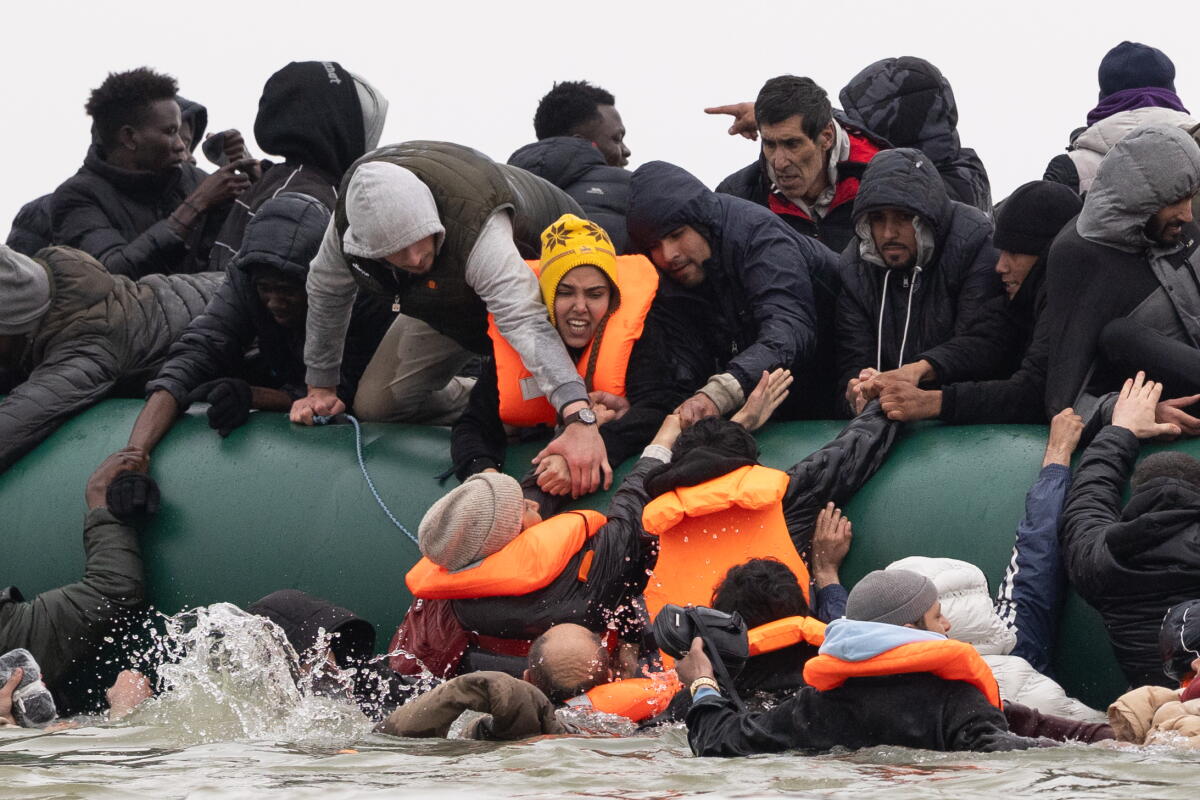
The vessel was carrying at least 110 people when it departed from Grand-Fort-Philippe, near Calais, in the early hours of Friday. French authorities had been monitoring the boat as it made its way into the Channel.
But the situation quickly became critical.
French rescuers eventually intervened after passengers requested assistance. Among those taken from the boat was a 34-year-old Afghan man who was reportedly suffering cardiac arrest. Despite efforts to save him and an emergency helicopter being deployed, he later died.
Three other people were discovered with injuries.
One man had stab wounds, while two women were suffering from burns.
The combination of a death, a stabbing and burn injuries aboard the same overcrowded vessel has prompted French investigators to examine exactly what happened during the crossing.
Authorities have not established that all of the injuries were caused deliberately, and the circumstances remain under investigation. However, reports that the dead man may have been attacked by other passengers have added another disturbing dimension to an already dangerous journey.
The incident demonstrates the extraordinary pressures created when more than 100 people are placed onto a small, unsuitable boat and sent across one of the world’s busiest shipping channels.
According to French maritime authorities, 72 migrants were rescued after requesting assistance. The Afghan man was among those taken from the boat and later died.
But remarkably, the journey did not end there.
Around 45 people remained aboard the vessel and continued towards Britain.
The boat was eventually intercepted by a British rescue vessel, with the remaining passengers taken to safety in Dover.
The extraordinary sequence of events has highlighted one of the central difficulties surrounding Channel crossings.
Authorities can rescue people from immediate danger, but they cannot always persuade everyone to abandon the attempt.
For those remaining on the boat, reaching Britain appeared to remain more important than the dangers unfolding around them.
That reality presents a major challenge for governments on both sides of the Channel.
Britain has repeatedly insisted that small-boat crossings are too dangerous and that criminal smuggling gangs are exploiting vulnerable people by placing them on unseaworthy vessels.
The French authorities face a different but related problem.
The coastline around Calais, Dunkirk and other departure points has become a major staging area for people attempting to reach Britain. Police and gendarmes patrol the beaches, dismantle camps and try to prevent boats from launching.
Yet the crossings continue.
The latest incident shows why.
Even when a vessel experiences serious problems, there may be too many people aboard for authorities to guarantee a safe outcome. A single medical emergency can quickly become a mass-casualty situation.
Crowding is particularly dangerous.
Passengers may have little room to move, limited access to medical assistance and no reliable way to separate vulnerable individuals from the rest of the group.
If panic breaks out, the situation can deteriorate within minutes.
That makes the reports of a stabbing and two women suffering burns especially alarming.
Investigators will need to establish whether the injuries resulted from deliberate violence, an accident, fuel or equipment aboard the vessel, or some combination of circumstances.
Until that investigation is complete, it would be wrong to assume that every injury was caused by criminal behaviour.
But the mere fact that several serious injuries occurred aboard the same vessel demonstrates how unstable these journeys can become.
The death of the Afghan passenger is another reminder that Channel crossings remain potentially fatal.
People attempting the journey face cold water, strong currents, unpredictable weather, heavy commercial shipping traffic and vessels that are often overloaded.
In previous incidents, migrants have died from drowning, suffocation, crushing or medical emergencies.
The Channel can look deceptively narrow on a map.
In reality, crossing it in an overloaded inflatable boat is an extremely hazardous undertaking.
This is why the latest incident will place renewed pressure on the government in London.
Prime Minister Andy Burnham has promised to take a tougher approach to small-boat arrivals and has repeatedly stressed the need to dismantle the smuggling networks responsible for organising crossings.
The government is also under pressure to demonstrate that its border policies are working.
For voters concerned about immigration, each new boat arrival reinforces the impression that the system remains out of control.
For humanitarian organisations, however, each death reinforces a different argument: people will continue taking dangerous journeys unless there are safer and legal routes available to seek protection in Britain.
The political debate therefore remains deeply divided.
One side argues that the only sustainable solution is to make Channel crossings less attractive by stopping the boats and returning people who have no right to remain in Britain.
The other argues that deterrence alone cannot solve the problem because people fleeing war, persecution or extreme insecurity may continue taking enormous risks regardless of the danger.
The latest tragedy provides ammunition for both arguments.
Those demanding tougher border controls will point to the overcrowding, injuries and death as evidence that the current system is failing.
Those calling for safer migration routes will argue that nobody would voluntarily choose such conditions unless they felt they had no better option.
But there is one point on which almost everyone should agree.
A boat carrying more than 100 people across the Channel should never become the scene of a medical emergency, a stabbing and serious injuries before help arrives.
The incident also raises questions about the role of people smugglers.
Smuggling networks make money by packing as many people as possible onto each vessel. The more passengers who pay for a crossing, the greater the potential profit.
That creates an obvious incentive to maximise capacity while minimising costs.
The passengers bear the consequences.
They are the ones standing shoulder to shoulder on unstable boats. They are the ones exposed to the sea. They are the ones who have to deal with medical emergencies and violence when something goes wrong.
The smugglers, in many cases, are nowhere near the vessel when the most dangerous part of the journey begins.
That is why governments increasingly describe the criminal networks behind the crossings as the central target.
But disrupting those networks is difficult.
The people organising the journeys can operate across borders, communicate remotely and replace boats and crews quickly.
Stopping one launch does not necessarily stop the next.
The Channel crisis therefore cannot be solved by a single rescue operation or one new policing initiative.
It requires cooperation between Britain and France, intelligence sharing, action against organised criminal networks and a credible system for processing asylum claims.
It also requires an honest conversation about what happens to people after they arrive.
Every successful crossing creates another political argument in Britain about accommodation, asylum processing, deportations and integration.
Every failed crossing creates another humanitarian tragedy.
The latest boat illustrates the uncomfortable connection between those two debates.
The people on board were attempting to reach Britain.
Some were rescued in France.
Others continued and eventually reached British waters.
One man never made it.
His death should not become merely another statistic in the immigration debate.
Behind every Channel death is an individual story: a person who made a decision to undertake an exceptionally dangerous journey in the belief that the destination offered a better future.
At the same time, acknowledging the human tragedy does not mean governments must accept uncontrolled crossings.
A country has the right to determine who enters its territory and how its asylum system operates.
The difficult question is how to exercise that right without allowing people to continue dying in the Channel.
The latest incident makes that challenge painfully clear.
A vessel carrying more than 110 people became the setting for a fatal medical emergency, serious injuries and allegations of violence. French rescuers intervened, but dozens of passengers still continued towards Britain.
It is a stark illustration of how far the small-boat crisis has evolved.
This is no longer simply a question of people arriving on British beaches.
It is a question of what happens during the dangerous journey itself.
The Channel is becoming a place where overcrowding, desperation and criminal smuggling intersect.
And every time a boat launches, the possibility of another tragedy begins.
For the British and French governments, the latest incident should therefore be more than another headline.
It should be a warning.
Stopping the crossings is important.
Saving lives is essential.
Holding violent offenders and organised smugglers accountable is necessary.
But none of these objectives can be achieved through slogans alone.
Until governments can create a system that is both secure and credible, people will continue to gamble with their lives in fragile boats.
And as this latest tragedy demonstrates, the consequences can be horrific.
One migrant is dead.
Two women have suffered burns.
Another passenger was stabbed.
Dozens more eventually reached Britain.
And once again, the English Channel has become the scene of a crisis that neither side of the water has yet managed to control.