
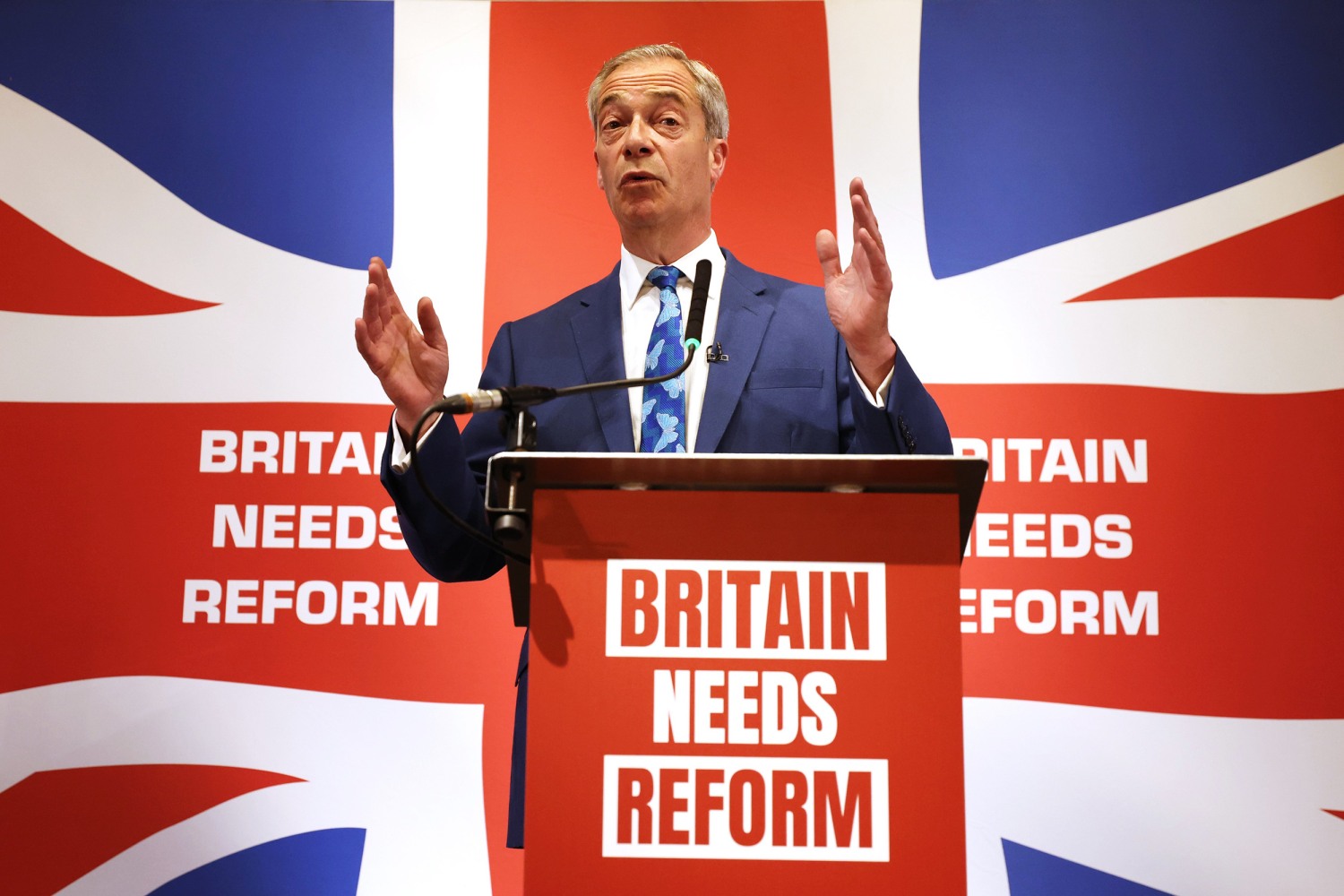
Inside Reform UK’s Strategy: How They Plan to Tackle the Next General Election
Reform UK has spent years telling British voters that the political system is broken. Now the party faces a much harder challenge: proving that it has the organisation, discipline and political strategy to replace the parties it has spent so long attacking.
Under Nigel Farage, Reform has transformed itself from a protest movement into a serious electoral force. Its breakthrough in local government has demonstrated that the party can win votes far beyond its traditional base. It has made gains in areas that were once Conservative strongholds and has also begun making inroads into traditional Labour territory. In May, Reform claimed more than 1,450 council seats and control of 14 councils, presenting the results as evidence that Britain’s old two-party system is collapsing.
But winning council seats is not the same as winning a general election.
The next parliamentary contest will require Reform to turn national popularity into hundreds of individual constituency victories. That is a completely different challenge.
First-past-the-post rewards concentration. A party can win millions of votes nationally and still fall well short of a majority in Parliament if its support is spread too thinly. Reform therefore needs to know exactly where its voters are, which constituencies can realistically be won and where resources should be concentrated.
That is likely to become the heart of its electoral strategy.
The party cannot campaign everywhere equally. It needs to identify target constituencies where Reform’s vote is already strong enough to challenge Labour or the Conservatives. Local election results, polling, membership numbers and previous parliamentary performance can all help determine where activists, money and senior politicians should be deployed.
This means Reform must become much more professional.
The party’s greatest strength has always been its ability to generate attention. Farage remains one of Britain’s most recognisable political figures, and Reform has mastered social media and direct communication with voters. But an election campaign is much more than speeches and viral videos.
It requires thousands of candidates, local organisers, volunteers, campaign offices, fundraising networks and a sophisticated data operation.
The next election will test whether Reform can build that infrastructure quickly enough.
The second element of the strategy is likely to be policy.
Reform cannot simply campaign on immigration forever.
Immigration remains one of the party’s defining issues, and Farage has continued to present Reform as the only political force willing to take sufficiently radical action on borders and asylum. But voters also care about wages, housing, the NHS, taxation, energy bills, pensions, crime and economic growth.
That is why the party has increasingly tried to present itself as a broader governing alternative.
Recent policy announcements have focused on small businesses and economic deregulation, including proposals to reduce regulatory burdens and make it easier for smaller companies to invest and employ people. Reform has also promised changes involving business taxation and incentives for family investment.
The political calculation is obvious.
If Reform wants to become a government rather than a protest party, it needs to persuade voters that it can run the economy.
This is also where the Conservatives present a particular challenge.
Reform has already taken a substantial amount of Conservative support. But there remains a large group of centre-right voters who are uncomfortable with Reform’s more radical positions. Some may be attracted by Farage’s economic message but hesitate over immigration policy. Others may want lower taxes but fear that Reform lacks the experience necessary to govern.
Reform therefore faces a delicate balancing act.
It must remain sufficiently radical to keep its existing supporters while becoming sufficiently credible to attract voters who might otherwise return to the Conservatives.
That is one of the biggest strategic problems facing Farage.
If Reform becomes too moderate, it risks losing the voters who created its rise. If it becomes too extreme, it may make itself unelectable to the wider public.
The party’s approach to immigration illustrates this dilemma perfectly.
Farage knows that immigration is one of Reform’s strongest issues. But the party also needs to convince voters that its policies can actually be implemented. A government cannot simply announce that it will solve illegal migration. It must explain how removals would operate, how international agreements would be handled, how courts would respond and how the costs would be managed.
The difference between campaigning and governing is enormous.
Reform’s strategy will therefore depend increasingly on credibility.
The party needs to demonstrate that its promises are financially realistic, legally workable and administratively achievable.
This is particularly important because Labour under Andy Burnham is trying to occupy the territory of practical government. Burnham has benefited from a strong initial political bounce and has attempted to present Labour as a competent, interventionist alternative to the previous administration. Recent analysis suggests that Reform’s momentum has weakened in some polling, while Burnham has consolidated support among voters who previously wanted a change of direction.
That means Reform cannot assume that Labour will remain unpopular.
The party’s early success was helped by widespread dissatisfaction with the previous political establishment. But Burnham is now attempting to change the political equation.
If Labour succeeds in persuading voters that it can deliver lower household costs, stronger public services and economic growth, Reform will need a much sharper argument.
Farage’s answer is likely to be that Labour is simply another establishment government.
He has already attacked Burnham as the latest example of a Westminster political class that promises change and then retreats once it reaches office. Reform’s message is that only a complete political break can solve Britain’s problems.
This “us versus them” strategy has obvious advantages. It gives Reform a clear identity and allows the party to turn almost any controversy into evidence that the establishment is failing.
But it also carries a risk.
A party cannot spend an entire general election campaign explaining why everyone else is terrible. Eventually, voters will ask what Reform itself would do.
That is why the party’s policy development over the coming months could be decisive.
The upcoming Reform conference is expected to be an important opportunity to demonstrate that the party has moved beyond slogans. Economic policy, welfare, healthcare, defence and immigration will all need to form part of a coherent governing programme rather than a collection of individual announcements. Current reporting suggests the party is attempting to broaden its economic platform while maintaining its core message on migration.
Another major issue is leadership.
Farage remains Reform’s greatest electoral asset, but he is also its greatest vulnerability.
His personality attracts enormous attention, but it also makes the party heavily dependent on one individual. If Reform wants to persuade voters that it is ready to govern, it needs a wider team of credible politicians.
Robert Jenrick, Suella Braverman and other senior figures have increasingly been used to promote individual policies and broaden the party’s public profile. Recent announcements have shown an attempt to develop a deeper leadership bench rather than leaving Farage responsible for every major political argument.
That process will be essential.
A future government cannot be built around one charismatic leader.
Voters need to know who will run the Treasury, the Home Office, the NHS, defence, education and foreign policy. Reform will eventually have to demonstrate that its MPs are capable of handling complex departments and making decisions under pressure.
The party also has another problem that cannot be ignored: division on the right.
Rupert Lowe’s Restore Britain is competing for some of the same voters. That creates a potentially disastrous situation under first-past-the-post.
If Reform wins 35 per cent in a constituency, Restore wins 10 per cent and another party wins 40 per cent, Reform can lose despite having a very large share of the vote.
The same problem exists nationally.
Reform therefore needs either to dominate the right or find some form of understanding with competing parties. Yet senior figures have so far shown little enthusiasm for a formal coalition or alliance with the Conservatives, while Reform has also rejected cooperation with other right-wing movements.
This makes electoral discipline one of the biggest strategic questions before the next general election.
Farage’s decision to resign and fight again in Clacton demonstrated another part of his strategy: keeping the focus on himself and presenting his political career as a direct battle with the establishment. He subsequently regained the seat, reinforcing his parliamentary position, although the campaign also generated further controversy and scrutiny.
The lesson for Reform is clear.
The party needs to maintain momentum without becoming trapped in permanent controversy.
Every major story about internal disputes, candidate problems, funding questions or leadership drama can distract from its central message.
Professionalism will therefore matter almost as much as ideology.
The next general election will not simply be a referendum on immigration or Farage. It will be a referendum on whether voters believe Reform can actually govern Britain.
That requires a very different campaign.
The party must identify winnable seats, build strong local organisations, recruit credible candidates, develop detailed policies and maintain financial discipline. It must also persuade Conservative voters that supporting Reform is not a wasted vote and persuade Labour voters in northern and working-class constituencies that Reform understands their economic concerns.
At the same time, it must avoid frightening moderate voters who might otherwise support change.
This is the great strategic puzzle.
Reform has already proved that it can disrupt British politics.
Now it has to prove that it can organise British politics.
The party’s opportunity is enormous. The Conservatives remain vulnerable, Labour faces difficult decisions over taxation and public spending, and many voters remain deeply dissatisfied with the established political system. Reform has already demonstrated that its message can travel across traditional party boundaries.
But opportunity is not victory.
The next general election could produce a breakthrough for Reform, a hung Parliament or even a historic realignment. It could also expose the weaknesses of a party that grew faster than its organisation and relied too heavily on one charismatic leader.
Everything now depends on execution.
Farage has spent years arguing that Britain needs political change. The next election will ask whether Reform is capable of delivering it.
The party’s strategy, in the end, can be reduced to a simple formula: turn protest into organisation, popularity into constituency victories, slogans into credible policy and political anger into a governing mandate.
If Reform can accomplish all four, the next general election could mark the moment when Britain’s political establishment truly loses its grip.
If it cannot, its extraordinary rise may remain one of the great protest movements of modern British politics rather than the beginning of a Reform government.