
Tensions have escalated sharply following four days of blockades that have caused significant disruption, leading to reports that the Gardaí and military are set to be deployed.
Protesters, a coalition of truckers, farmers, and working-class citizens, vow to “get their country back” in a direct challenge to the government’s authority.
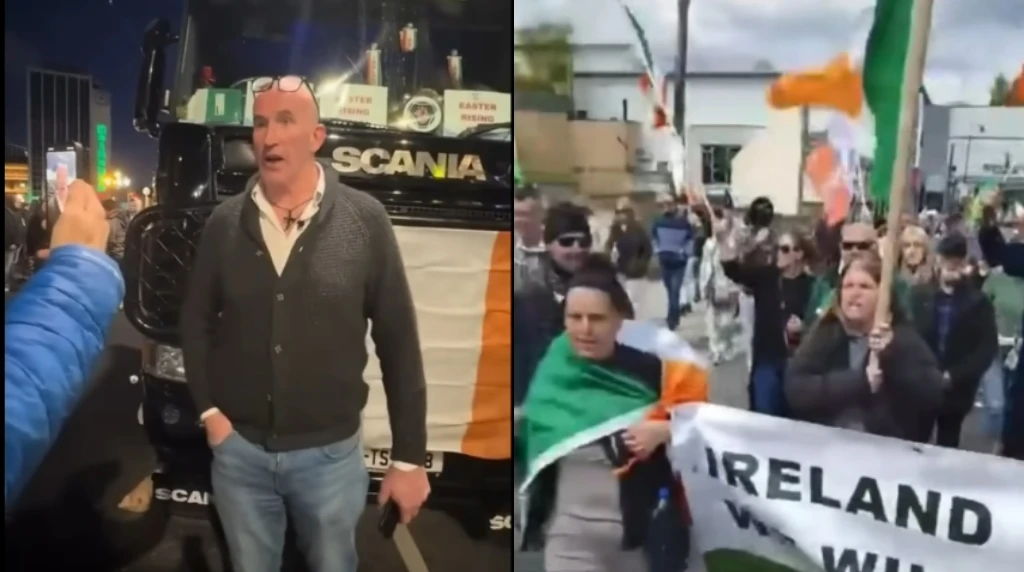
The protest movement, galvanized by soaring fuel costs and broader discontent with government policy, has seen key transport routes blocked by convoys and pickets.
In dramatic scenes from Day Four in Wicklow, a line of ten fuel tankers required a full Garda escort to move, surrounded by crowds of protesters who brought traffic to a standstill.
Chants and confrontations marked the tense standoff, with participants accusing the government of ignoring citizens in favor of corruption and misplaced priorities.
A fiery speech captured ahead of today’s planned actions has circulated widely, rallying participants with a call for maximum turnout. “We need half the country here,” the speaker declared, urging bus drivers, nurses, construction workers, and all citizens to converge.
Organizers have explicitly called for a mass march on Leinster House, the seat of the Irish parliament, with a key figure stating that between 150,000 to 200,000 people—merely 1.5 to 2 percent of the voting population—could force the government’s dissolution.
This direct appeal for regime change marks a significant radicalization of the protests’ demands, moving beyond fuel prices to a fundamental political crisis.
Further escalating the stakes, supporters have called for fishermen to blockade every port and river once weather conditions improve, aiming to sever maritime trade. This proposed economic stranglehold, coupled with the ongoing fuel and road blockades, threatens to paralyze the nation’s supply chains and intensify pressure on the administration.
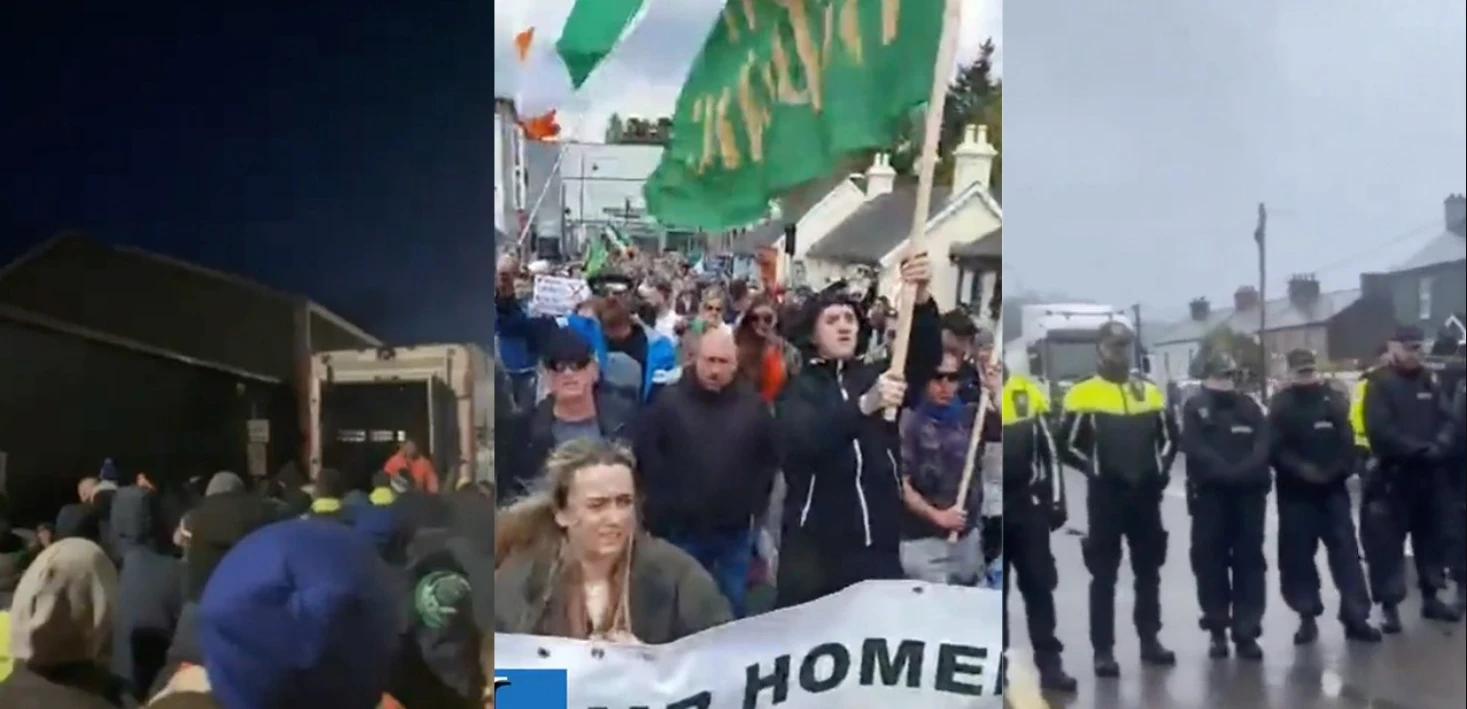
The state’s response is now a critical focal point. While official media reports suggest police are retaking control, footage from the ground and protester accounts claim the Gardaí have lost control of several areas.
The potential deployment of the military, a measure not seen in over a century, hangs over the day’s events, with one protest supporter warning that such a move would echo the conflicts of 110 years ago.
Legacy media outlets have been accused by protest channels of framing demonstrators as thugs, a characterization fiercely rejected by organizers who point to video evidence of ordinary, frustrated citizens.
The movement portrays itself as a peaceful, necessary uprising of the working class against a “tyrannical government.”
As the country awaits what protesters term “the biggest set of protests,” the atmosphere is one of palpable anticipation and defiance. The coming hours will test the resilience of both the protest movement and the state’s institutions, with the potential to redefine Irish politics.
The world watches to see if today will indeed become a historic turning point, as the Irish people mobilize in an extraordinary display of collective action aimed at reclaiming their national destiny.