
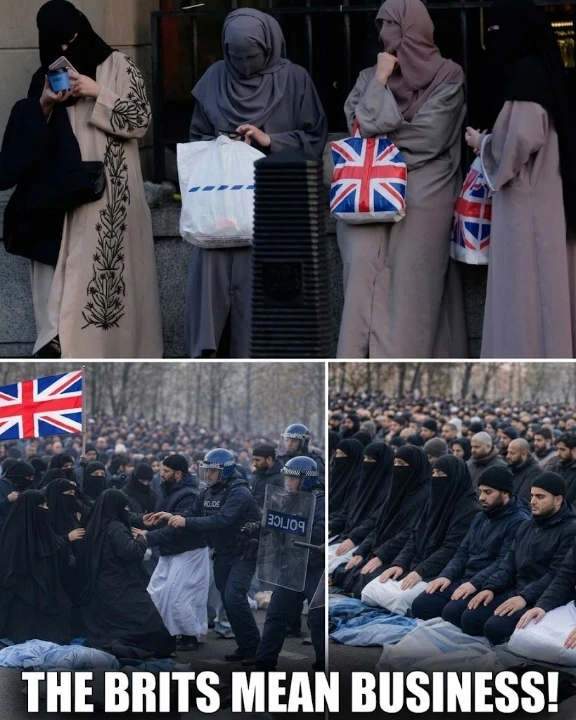
Britain’s “Religious Law” Row Reignites Debate Over Free Speech, Integration, and One Law for All
A dramatic claim circulating online says Britain has “rejected extremist demands” from people who wanted the country to “submit to religious law.” The wording is designed to provoke anger, and it should be treated carefully. There is no verified evidence in the available information that British Muslims as a group have tried to impose Islamic law on the country, nor that Britain has faced a sudden nationwide attempt to replace its legal system.
What is real is a long-running debate over Sharia councils, religious arbitration, integration, women’s rights, and the principle that Britain must remain governed by one civil legal system. That debate is legitimate. But it must be framed accurately: the issue is not “Muslims versus Britain.” The issue is how a democratic country protects religious freedom while making absolutely clear that UK law is supreme for everyone.
What Britain’s Law Actually Says
Britain does not recognise Sharia law as a parallel legal system. Religious bodies may offer guidance on marriage, divorce, family matters, inheritance, or religious practice, but they cannot override UK courts, criminal law, family law, equality law, or the rights of individuals under civil law.
Fact-checking organisations have repeatedly warned that claims about “Sharia courts” officially operating as part of the British legal system are misleading. These bodies may provide religious advice, especially around Islamic divorce, but they do not have the legal authority of state courts.
This distinction matters. A mosque, church, synagogue, temple, or religious council may advise believers. But it cannot replace Parliament, the courts, or British law.
Why the Debate Keeps Returning
The issue keeps returning because some people worry that informal religious decision-making can place pressure on vulnerable people, especially women. Campaigners have raised concerns that some women may feel pushed into religious divorce processes or family settlements without fully understanding their civil legal rights.
Parliament has debated these concerns before. In a 2019 Westminster Hall debate, MPs discussed Sharia councils, women’s rights, religious marriages not recognised in civil law, and the need to ensure that women understand the legal protection offered by civil marriage.
That is a serious concern. If anyone is pressured into accepting religious rulings against their will, or if a religious process is presented as legally binding when it is not, the state should intervene. Religious freedom cannot be used to weaken individual rights.
Supporters of a Tougher Line Say “One Law for All”
Supporters of a harder stance argue that Britain must send a clear message: no religious legal system can stand above or beside national law.
They say integration requires shared civic rules. People may worship freely, dress according to conscience, eat according to faith, and follow religious customs privately. But when there is a conflict between religious authority and British law, British law must win.
This argument resonates with many voters because it sounds fair and simple: one country, one legal system, equal rights for everyone.
It is especially powerful when linked to concerns about women’s rights, forced marriage, coercive control, inheritance disputes, or community pressure. The public wants reassurance that no one can be trapped inside an informal religious system without access to full civil protection.
Critics Warn Against Collective Blame
Critics argue that some online rhetoric turns a valid legal debate into hostility toward Muslims as a whole. That is unfair and dangerous.
Millions of Muslims in Britain live peacefully, obey the law, work, study, pay taxes, serve in public life, and raise families like everyone else. They are not responsible for extremist demands made by fringe voices, nor for every controversial practice attributed to religious councils.
A democratic society can reject extremism and defend equal law without treating ordinary Muslim citizens as suspects.
The correct target is coercion, unlawful conduct, misleading legal claims, and extremism — not an entire faith community.
The Free Speech Question
There is also a free speech issue. People should be free to criticise Sharia councils, religious conservatism, extremism, or any system they believe undermines equality. Criticism of religious ideas is not automatically hatred.
At the same time, criticism should be precise. Saying “no religious law should override UK law” is a defensible civic principle. Saying “Muslims are trying to take over Britain” is collective blame and unsupported by the evidence.
The distinction is essential if Britain wants a debate that is both honest and fair.
What a Responsible Policy Would Look Like
A serious policy response would not ban religious belief or private religious guidance. It would make clear that all religious bodies must operate within UK law.
That means religious councils should never present themselves as state courts. Women and men using religious mediation should be told clearly that civil law comes first. Religious marriages should not be allowed to leave people, especially women, without civil legal protection. Any evidence of coercion, intimidation, forced marriage, domestic abuse, or unlawful discrimination should be investigated.
The answer is not panic. It is clarity.
Britain can protect religious freedom and still insist on one legal system.
Conclusion
The viral claim that Britain “rejected extremist demands” contains a real concern beneath exaggerated language: many people want reassurance that religious law will never override British law.
That reassurance is reasonable. Britain should be governed by Parliament, independent courts, and equal civil law — not by any religious authority.
But the debate must not become an attack on Muslims as a group. The principle should apply to every faith and every community: religious freedom is protected, but coercion is not; private belief is protected, but parallel legal authority is not; worship is protected, but everyone remains equal under the same law.
A stronger and fairer headline would be:
Britain Reaffirms One Law for All as Religious Arbitration Debate Returns
That is the real issue: not defeating a religion, but defending a democratic legal order that treats every citizen equally.