
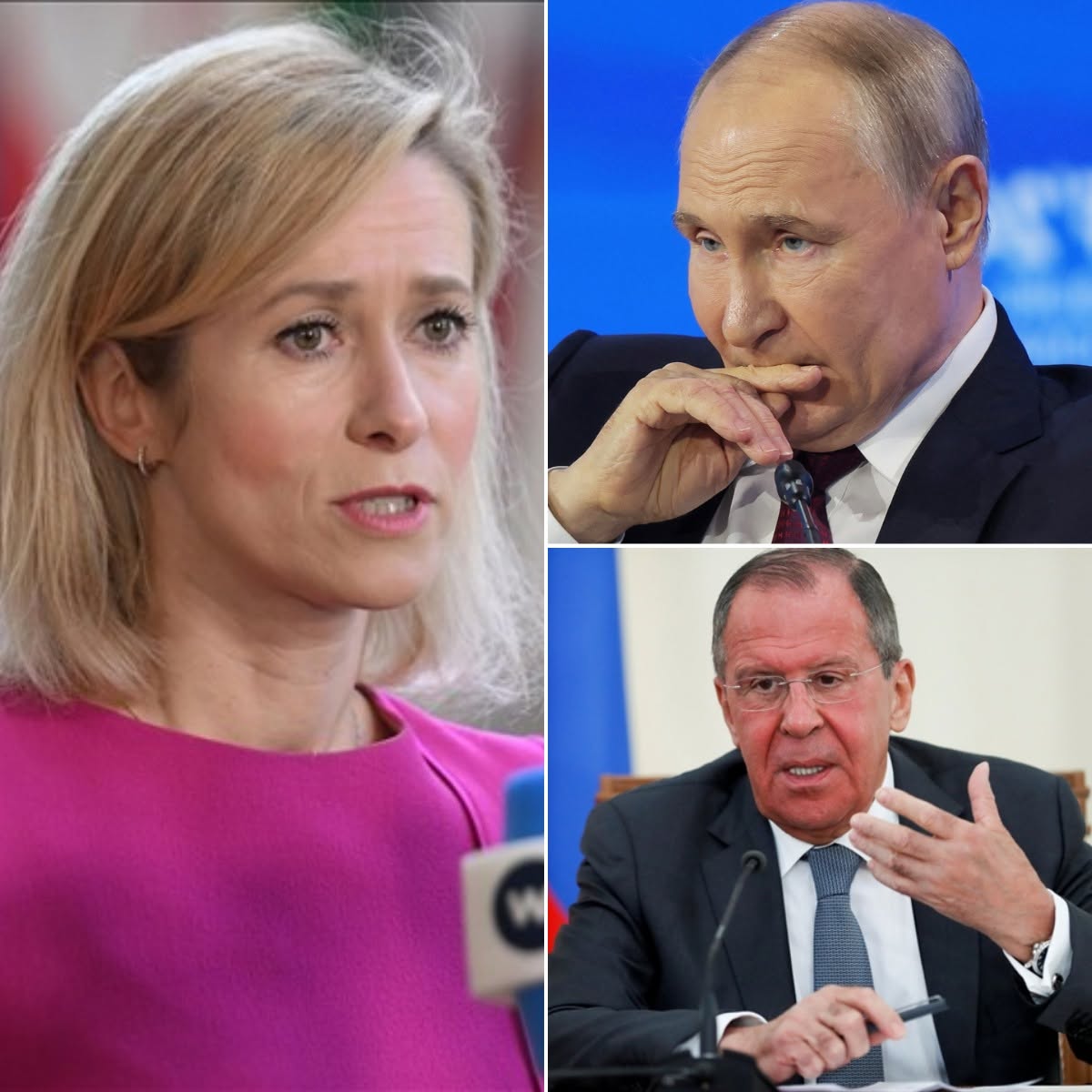

Kremlin Insider Issues Blood-Curdling Threat of a “Semi-Military” Attack Against Britain
Tensions between Russia and Britain have intensified after a former senior Russian official and Kremlin adviser warned that British factories involved in producing weapons for Ukraine could potentially face attacks from “unknown sources.” The remarks have raised concerns about the possibility of a new and more dangerous phase in the confrontation between Moscow and London, although no specific attack has been announced and there is no public evidence that Russia has ordered such an operation.
The warning came from Andrei Fedorov, a former Russian deputy foreign minister who continues to appear frequently as a commentator on Russian affairs. Speaking to the BBC’s Newsnight, Fedorov suggested that Moscow was facing growing political and public pressure to respond to Britain’s continued military support for Ukraine. He said that a Russian reaction could take several forms, including cyberattacks, political measures, or what he described as “semi-military” action.

The most alarming part of his comments concerned British companies involved in the production of drones and other military equipment for Ukraine. When asked what he meant by a “semi-military” response, Fedorov pointed to factories and enterprises supplying weapons to Kyiv. He suggested that such facilities could potentially be attacked by unidentified actors rather than openly by the Russian state. This language is significant because it appears to leave room for plausible deniability while still communicating a clear warning to Britain.
The comments followed Britain’s decision to share technical information relating to components of the SCALP long-range missile with Ukraine. The move is intended to help Ukraine develop greater domestic production capacity for long-range weapons. The decision has been strongly criticised by Moscow, which regards Britain’s military assistance to Kyiv as evidence of direct involvement in the conflict.
From the British perspective, however, the situation looks very different. London has repeatedly argued that its support for Ukraine is a response to Russia’s invasion and is intended to help Ukraine defend itself. British Prime Minister Andy Burnham reaffirmed the UK’s continued support for Kyiv during his visit to Ukraine, while questioning Russia’s characterisation of Western assistance as the cause of the conflict.
The dispute therefore reflects a much wider struggle over the boundaries of military involvement. Russia argues that the supply of increasingly sophisticated weapons makes Britain a participant in the war. Britain and its allies, by contrast, maintain that helping a country defend itself against invasion does not make them direct parties to Russia’s war. This disagreement has become increasingly important as Western countries provide Ukraine with weapons capable of striking targets at greater distances.
The threat of attacks on British defence facilities is particularly serious because it could represent an expansion of the conflict beyond the battlefield in Ukraine. A conventional Russian attack on a British military or industrial target would carry enormous political consequences, especially because Britain is a NATO member and a nuclear-armed state. Even an attack conducted through an unidentified proxy could create a major international crisis if investigators concluded that Russia was responsible.
Cyberattacks could present another possible form of retaliation. Fedorov specifically mentioned the possibility of attacks originating from unknown sources. Such operations can be difficult to attribute immediately and may allow governments to maintain a degree of deniability. A cyberattack against a defence manufacturer could disrupt production, steal sensitive information or create financial and reputational damage without taking the form of a conventional military strike.
Nevertheless, it is important not to interpret Fedorov’s remarks as confirmation that an attack is imminent. He did not announce that Russia had authorised an operation, nor did he provide evidence that specific British facilities had been selected as targets. His comments were framed as a warning about what might happen rather than a declaration of an operational plan. This distinction is crucial when assessing dramatic headlines describing the remarks as an immediate threat.
At the same time, statements by senior Russian figures cannot simply be dismissed. Russia and Western governments have increasingly engaged in a confrontation that extends beyond traditional diplomacy. Military assistance, sanctions, intelligence cooperation, cyber operations and political pressure have all become parts of the broader conflict surrounding Ukraine. As a result, warnings about “unknown sources” or deniable attacks fit into a wider pattern of concern about so-called hybrid warfare.
Hybrid warfare can involve a mixture of conventional military power and less traditional methods. These may include cyber operations, sabotage, disinformation, covert influence campaigns and attacks carried out through intermediaries. Such tactics can make it difficult for governments to determine exactly who is responsible for an incident and how they should respond. That uncertainty itself can become a strategic weapon because it creates fear without necessarily triggering an immediate conventional military response.
For Britain, the latest warning highlights the growing security challenges facing its defence industry. Companies producing drones, missiles and other equipment for Ukraine could increasingly become targets for hostile activity. Even without a direct military strike, they may face attempts at espionage, cyber intrusion, disruption or intimidation. Protecting these facilities is therefore likely to become an increasingly important part of Britain’s national security strategy.
The situation also demonstrates how quickly individual political decisions can contribute to escalating rhetoric. Britain’s decision to share missile-related technical information may strengthen Ukraine’s ability to manufacture weapons independently, but Moscow views the development as another step in Western military involvement. Russia’s response, in turn, risks encouraging Britain and its allies to strengthen their own security measures and deepen support for Ukraine.
Ultimately, the most significant danger may not be a single “semi-military” attack but a gradual escalation in which increasingly aggressive threats become normalised. If one side believes that the other is crossing red lines, each new measure can produce another retaliatory response. The resulting cycle can make accidental escalation more likely.
The warning from Andrei Fedorov should therefore be understood as part of a broader and increasingly tense confrontation between Russia and Britain over the war in Ukraine. His reference to possible attacks by “unknown sources” is alarming, particularly because it raises the prospect of deniable operations against civilian industrial infrastructure. Yet there is an important difference between a warning and evidence of an imminent attack.
For Britain, the challenge will be to continue supporting Ukraine while protecting its own territory and defence industry from potential retaliation. For Russia, any decision to target British interests would carry potentially enormous consequences because of Britain’s NATO membership. In this increasingly dangerous environment, maintaining clear communication and preventing miscalculation may be just as important as military preparedness.
The latest threat is therefore a reminder that the consequences of the Ukraine war extend far beyond the front lines. As Western military assistance becomes more sophisticated and Moscow responds with increasingly hostile rhetoric, the possibility of confrontation in other domains is becoming harder to ignore. The central question now is whether these warnings remain part of political pressure and deterrence—or whether they eventually translate into real-world action.
For the moment, there is no confirmed evidence that Britain is facing an imminent Russian attack. But Fedorov’s comments have nevertheless delivered a stark message: as London’s military support for Kyiv deepens, Moscow’s threats against British interests may become more explicit, more unpredictable and potentially more difficult to contain.