

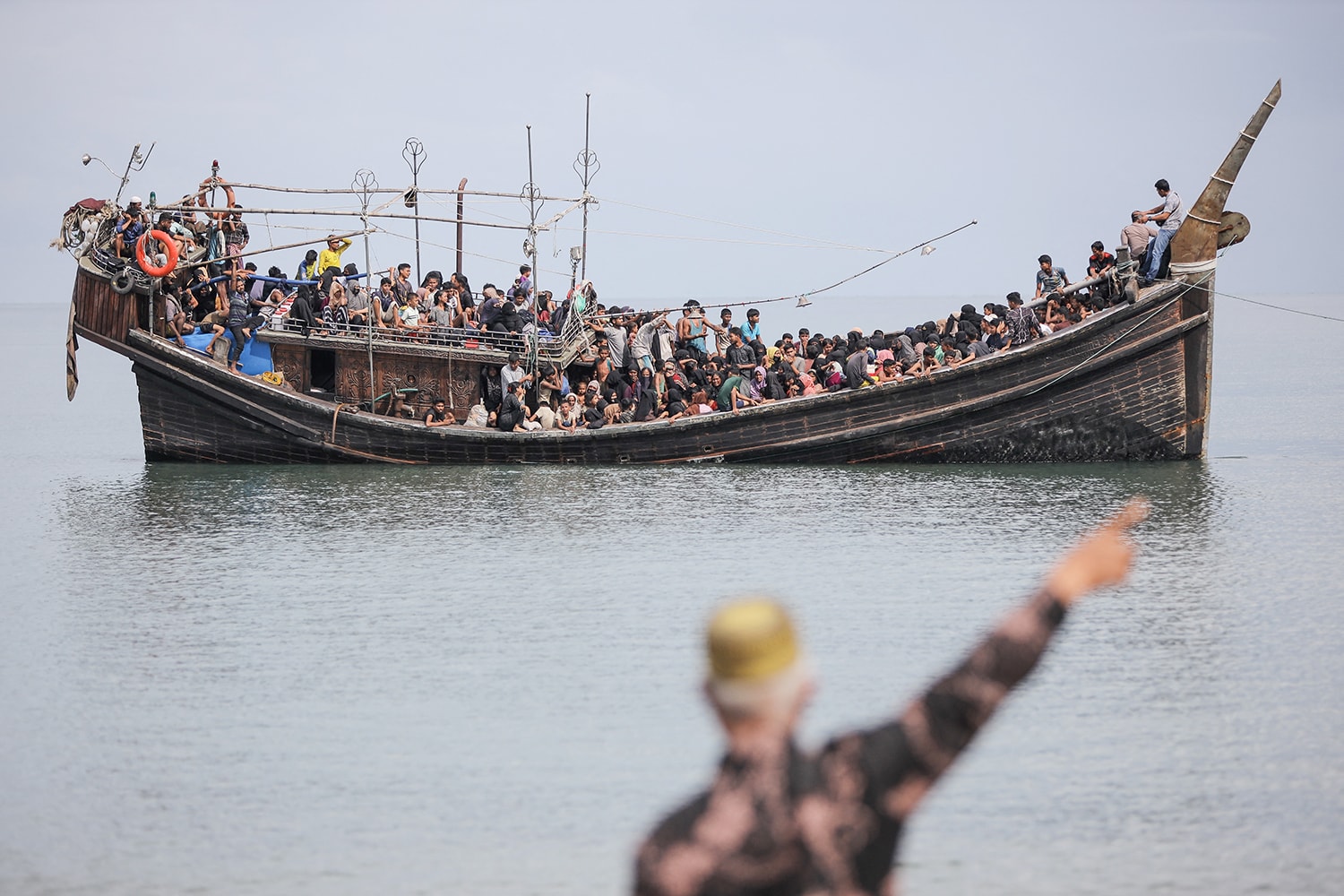
Among those on board were believed to be Rohingya passengers (Image: Getty)
More than 500 people are feared dead following reports that two boats carrying members of Rohingya minority have capsized in the Bay of Bengal, in Bangladesh. Two boats left Myanmar’s western state of Rakhine in late June carrying mostly Rohingya passengers, including some from refugee camps across the border in Bangladesh, according to a statement from the International Organization for Migration (IOM) and the United Nations High Commissioner for Refugees (UNHCR).
One of the boats is believed to have been carrying around 250 people and lost contact shortly after departure. A second one, reportedly carrying 280 people, is believed to have sunk off Myanmar’s Ayeyarwady coast on July 8. In recent years, the Rohingya population have fled both Myanmar and Bangladesh’s refugee camps. They have typically avoided such boat journeys at this time of year, when monsoons are frequent and conditions at sea are particularly dangerous, the UNHCR and IOM said in a statement on Thursday.
The journeys would have been made particularly risky by recent torrential rain and floods across the region, the IOM and UNHCR noted, who are gravely concerned by the potentially devastating loss of life. There are around 1.2 million stateless, predominantly Muslim, Rohingya who remain in refugee camps in Bangladesh after fleeing violence in Myanmar.
Myanmar military reportedly killed thousands of Rohingya in 2017, during what the United States declared a genocide. The Rohingya still living in Myanmar face severe restrictions and many are confined to internment camps.
“Stronger regional and international efforts are needed to prevent further loss of life along one of the world’s deadliest maritime routes, including through enhanced search and rescue efforts, access to asylum and protection, and actions against smuggling and trafficking networks,” the agencies said.
More than 6,500 Rohingya fled and nearly 900 were reported dead or missing in 2025, the deadliest year for Rohingya who tried to leave by boat. The figure represents the highest mortality rate of any major route for refugee and migrant sea journeys in the world, the UNHCR said.
More Than 500 People Feared Dead After “Boats Carrying Refugees Capsize” — A Humanitarian and Political Analysis
The report that “more than 500 people are feared dead after boats carrying refugees capsize” highlights one of the most tragic and complex humanitarian issues in the modern world: the dangers faced by people attempting dangerous journeys across seas in search of safety, security, and a better future. Such disasters raise urgent questions about refugee protection, border control, international cooperation, and the responsibilities of governments.
The sinking of boats carrying refugees and migrants has become a recurring tragedy in several parts of the world, particularly along dangerous maritime routes. Many people who undertake these journeys are escaping war, political persecution, poverty, violence, or instability in their home countries. They often place their lives in the hands of smugglers who operate unsafe vessels and take advantage of desperate people seeking a new beginning.
When overcrowded boats capsize, the consequences can be devastating. Hundreds of lives can be lost within minutes, including the lives of children and families. These tragedies demonstrate the extreme risks faced by vulnerable people who feel they have no other options. Survivors often describe experiences of fear, exhaustion, and uncertainty as they attempt to reach a place where they believe they can live safely.
Supporters of stronger border controls argue that such disasters show the need for governments to take firmer action against illegal migration networks. They argue that organised smuggling groups encourage dangerous journeys by offering false promises of safety and opportunity. According to this perspective, stronger borders, improved enforcement, and tougher action against criminal gangs are necessary to prevent people from being exploited.
However, humanitarian organisations and refugee advocates argue that stricter controls alone cannot solve the problem. They believe that when legal and safe routes for migration and asylum are limited, desperate people may become more willing to risk their lives on dangerous journeys. They call for greater international cooperation, safer asylum procedures, and policies that address the causes forcing people to leave their homes.
The issue also creates political challenges for governments. Leaders must balance several responsibilities: protecting national borders, maintaining public confidence, fulfilling international obligations, and responding compassionately to humanitarian crises. Different political groups often disagree about which priority should come first. Some emphasise security and immigration control, while others focus on human rights and refugee protection.
The deaths of hundreds of people at sea also raise questions about global inequality. Many refugees come from regions affected by conflict, economic hardship, or political instability. Without solutions to these underlying problems, people will continue to search for safety elsewhere. International efforts involving diplomacy, economic development, conflict prevention, and humanitarian assistance are therefore important parts of addressing the crisis.
Another major concern is the role of criminal smuggling networks. These groups often profit from human suffering by charging large sums of money for unsafe transportation. They may abandon passengers at sea or force many people into vessels that are not designed for long journeys. Combating these networks requires cooperation between countries and stronger law enforcement measures.
At the same time, it is important to recognise that refugees and migrants are not a single group with identical experiences. Some are fleeing immediate threats to their lives, while others are moving for economic reasons. Effective policies require careful assessment of individual circumstances while maintaining fair and secure immigration systems.
In conclusion, the deaths of more than 500 people after boats carrying refugees capsize represent a heartbreaking humanitarian tragedy. The event reflects the dangers created by conflict, poverty, illegal smuggling networks, and the lack of safe migration pathways. While governments have a responsibility to control borders and protect citizens, they also face the challenge of responding humanely to people in desperate situations. Preventing future tragedies will require a combination of stronger action against criminal organisations, international cooperation, and long-term solutions to the problems that force people to leave their homes.