


Nigel Farage (Image: GB News)
Nigel Farage has warned that Labour are seeking to make funding for political parties state run, fuming that it was “like being a communist country.”
The row comes after mounting attacks by the Government over large donations made to Reform UK by the crypto-tycoons Ben Delo and Christopher Harborne.
Get the latest politics news – straight from our team in Westminster and more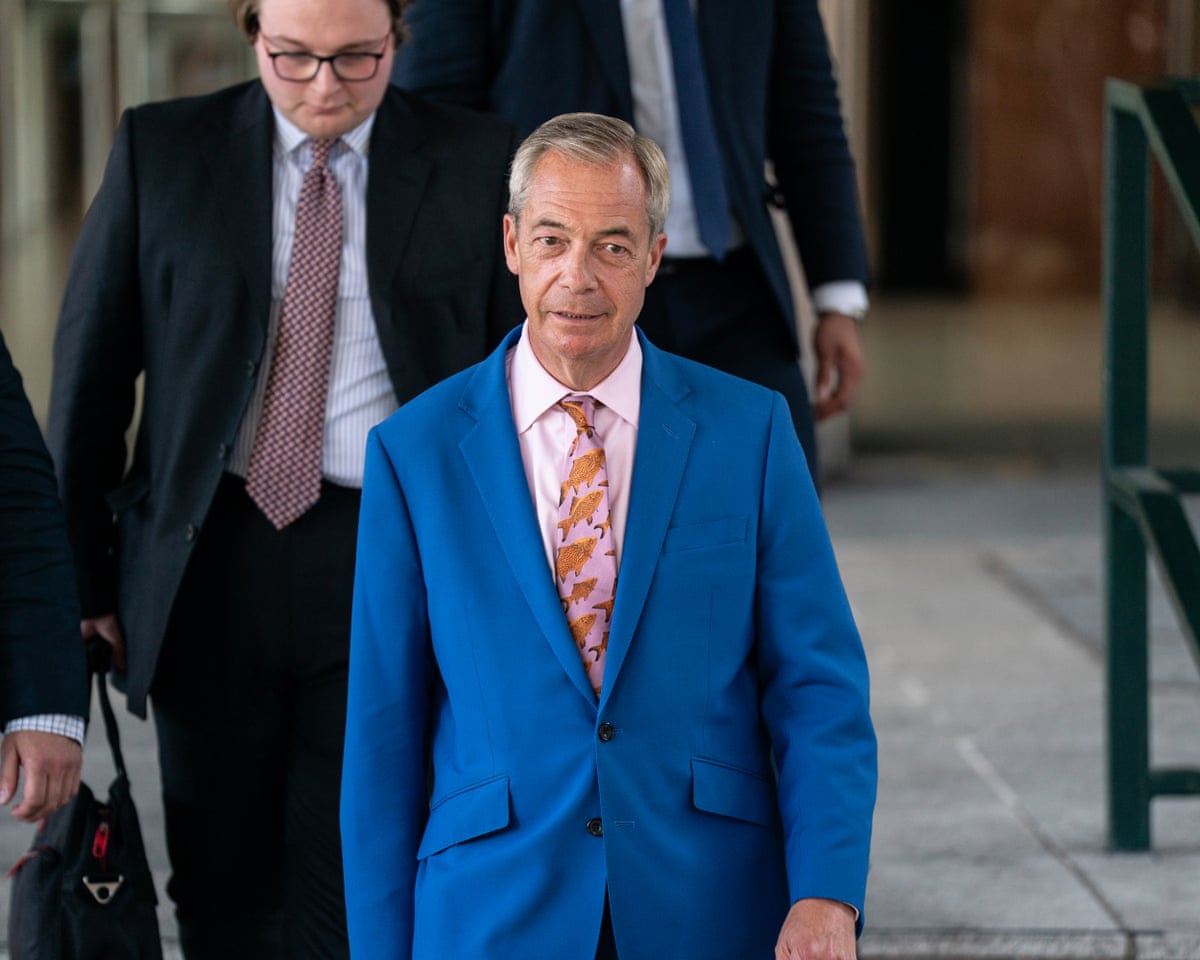
Invalid email
You agree you are 18 or over. We use your sign-up to provide content in ways you’ve consented to and to improve our understanding of you. This may include adverts from us and third parties based on our knowledge of you. You can unsubscribe at any time. More Info.
His party has received some £72m from the pair last week sparking fury from Labour who then want to “change the law” Mr Farage claimed.
Labour Ministers have said they will seek to retrospectively change the law to make foreign donations unlawful. Reform UK says that both donors are British.
Speaking earlier today a Downing Street spokesman denied claims the desire to change the law was politically motivated to target Reform, despite the cap excluding trade unions.
A furious Mr Farage said: “So big donations are fine, if they come to the Labour Party, but big donations are not fine if they come to Reform?”
He claimed that the “lumps of money that Reform has been given get up to parity with the other parties”, saying the funding was “just catching up”.
The Clacton MP added: “Neither of these men will ever go to the House of Lords, ever get a knighthood, or ever receive state funding of any kind.”
If there are caps on donations then Mr Farage warned “you finish up with state funding” for political parties, meaning “it’s you the taxpayer that would foot the bill”
“If you state fund parties […] you have a system that conserves in aspic the big parties as they are today,” the Reform UK leader added.
Mr Farage was speaking on his GB News show, the first he has presented following a short hiatus from the channel.
During his time away, the Reform UK leader contested a by-election in his Clacton seat, which he called earlier this year.
He swept to victory with more than 22,000 votes, having triggered the by-election by resigning the position amid scrutiny over his finances.
Mr Farage had bagged a £5m donation from the crypto-billionaire Harbourne, which he claimed was for security purposes.
Proposed changes to the law on donations would be backdated to this March, raising questions about whether Reform can keep the twin £36m donations from Mr Delo and Mr Harborne, British-born billionaires who have been based abroad.
But ministers are also looking at how to further tighten the rules by introducing an “enhanced” residency test requiring donors to demonstrate they have lived in the UK for an “ongoing” period.
Asked whether the proposed checks were a bid to prevent Reform UK specifically from using the £72m it received over the weekend, the Prime Minister’s official spokesman said: “No, I completely reject that.”
No 10 insisted the plans were to ensure people who contribute vast sums to political parties have a stake in the UK.
“There are multiple precedents under successive administrations, particularly to address the risk of people taking action immediately to avoid the new rule,” the spokesman said.
The Labour Party has not advocated for a policy of state-funded political parties.
Nigel Farage’s “Communist” Plot Claim and the Battle Over Political Funding
Nigel Farage has launched a fierce attack on the Labour government’s plans to tighten Britain’s political-donation rules, describing the proposals as part of what he called a “communist” attempt to force taxpayers to fund political parties. His comments came after Reform UK received an unprecedented £72 million from two cryptocurrency entrepreneurs, Ben Delo and Christopher Harborne. The controversy has raised fundamental questions about political finance, the influence of wealthy donors, state funding and the rules governing donations from British citizens living overseas.
Farage’s description of the government’s proposals as “communist” is a political characterisation rather than an established description of Labour policy. Labour has not proposed a system in which political parties are simply funded entirely by the state. The government’s stated argument is that political-donation rules should be strengthened to ensure that people making very large contributions have a genuine connection with Britain. Downing Street has rejected the suggestion that the reforms are specifically designed to target Reform UK.
The dispute began to intensify after Reform UK received two donations of £36 million. Ben Delo, a British cryptocurrency entrepreneur and co-founder of BitMEX, announced a £36 million donation to Reform. Christopher Harborne subsequently matched it with another £36 million. Together, the contributions amounted to £72 million, making them the largest donations ever given to a British political party.
For Reform UK, the money represents a substantial expansion of its financial resources. The party has said that the funds will help it develop policies, recruit staff and prepare for future elections. Farage has argued that the donations help reduce the financial advantage traditionally enjoyed by Labour and the Conservatives. In his own statement about the donations, he described them as helping to create a more level political playing field.
This argument is central to Reform’s defence. Farage claims that established parties already benefit from large fundraising networks and, in the case of parliamentary parties, forms of public support. From his perspective, limiting private donations could make it harder for a relatively newer political organisation to challenge established parties. He therefore argues that restricting donations without creating an alternative funding mechanism could ultimately favour the political organisations that already possess established infrastructures.
The government’s position is different. Ministers argue that political donations should come from people who have a sufficiently strong connection to the United Kingdom. Proposed amendments would introduce stricter residency requirements for major donors and could apply retrospectively to donations made after March 2026. This has created uncertainty over whether the two £36 million donations to Reform would remain permissible under the proposed rules.
The issue of residency is particularly significant because both donors have lived or spent substantial periods outside Britain. Reform maintains that they are British citizens and therefore permissible donors under the existing rules. The government argues that citizenship alone should not necessarily be sufficient where very large political contributions are concerned.
This distinction reflects a broader international debate about political finance. Citizenship is one possible test for determining who should be allowed to donate, while residence is another. A citizenship-based system gives people the right to participate financially even if they live abroad. A residence-based system places greater emphasis on whether donors are directly exposed to the consequences of British political decisions.
There are arguments on both sides. British citizens living overseas may retain strong connections to the country, including family, property, business interests and a continuing intention to return. They may therefore believe that they should retain the right to support political parties. On the other hand, governments can argue that people who live permanently outside the country should not be able to contribute enormous sums to determine domestic political debates.
The scale of the Reform donations makes the issue particularly significant. A £36 million contribution is very different from a small donation made by an ordinary party supporter. Such a contribution can finance extensive advertising, research, staffing and campaigning. Reform has indicated that its new resources could be used to expand its political operation considerably.
This raises the question of political equality. Every eligible voter receives a vote, but wealthy individuals can potentially provide political parties with resources equivalent to those generated by thousands or even millions of smaller donors. Supporters of donation limits argue that this can create unequal political influence. Opponents argue that wealthy citizens should not lose their ability businesses and organisations. This means that the debate concerns the wider structure of British political finance rather than only one party. The Financial Times has noted that large donations to to participate politically simply because they have greater financial resources.
The controversy is not limited to Reform UK. Britain’s established political parties have also received significant donations from wealthy individuals, businesses and organisations. This means that the debate concerns the wider structure of British political finance rather than only one party. The Financial Times has noted that large donations to different parties raise broader questions about the influence of money in British democracy.
Farage’s criticism becomes more complicated because Reform itself has benefited enormously from private donations. His argument is that large donations are necessary to allow Reform to compete with established parties. Critics can respond that the £72 million donations demonstrate precisely why stronger controls may be required.
There is also an important distinction between restricting donations and introducing state funding. Farage has argued that if private donations are capped, political parties will eventually have to depend more heavily on taxpayers. He warned that this would create a system in which taxpayers were effectively forced to finance political organisations they might not support. He also argued that state funding could preserve the position of existing large parties rather than encouraging political competition.
However, a donation cap does not necessarily mean that Britain must adopt comprehensive state funding. Other systems are possible, including lower donation limits combined with membership subscriptions, small-donor incentives or existing forms of public assistance. The precise consequences would depend on the legislation eventually adopted by Parliament.
The government has also rejected Farage’s accusation that the proposed changes are simply an attempt to punish Reform. Downing Street has said that the purpose is to ensure that people contributing very large sums to British politics have a meaningful stake in the United Kingdom. Officials have also pointed to precedents for governments changing financial rules in response to attempts to avoid new restrictions.
Another layer of controversy comes from Reform’s wider financial scrutiny. The party has recently faced investigations and allegations concerning foreign donations. Undercover reporting appeared to show senior Reform officials discussing arrangements involving an allegedly impermissible foreign donor. Reform suspended two officials following the broadcast and has denied wrongdoing. The Metropolitan Police is also investigating aspects of the party’s finances. These matters remain subject to investigation and should not be treated as proof of criminal conduct.
The timing of the proposed donation reforms is therefore politically sensitive. Reform has received £72 million at precisely the moment when Parliament is considering tighter restrictions. Critics of the government may see the timing as evidence that the legislation is aimed at Reform. The government rejects that interpretation and says that the reforms are designed to address a wider concern about foreign influence and political donations.
There is also a constitutional question surrounding retrospective legislation. Normally, political parties and donors make decisions based on the rules that exist at the time. Changing those rules later can create uncertainty. Supporters of retrospective measures also highlights the changing nature of political campaigning. Modern parties can spend enormous sums on digital advertising, social-media communication, polling, data analysis and professional campaign staff. Large donations can therefore have an immediate impact on a party’s organisational capacity. Reform’s new resources could allow it to expand its operations substantially. may argue that donors should not be able to exploit a narrow period before new restrictions take effect. Critics may argue that individuals should be able to rely on the law as it existed when a donation was made.
This question will ultimately be decided through Parliament’s legislative process. Until the final wording of the legislation is established and applied, it is premature to conclude definitively what will happen to Reform’s £72 million.
The wider controversy also highlights the changing nature of political campaigning. Modern parties can spend enormous sums on digital advertising, social-media communication, polling, data analysis and professional campaign staff. Large donations can therefore have an immediate impact on a party’s organisational capacity. Reform’s new resources could allow it to expand its operations substantially.
At the same time, money alone does not determine political outcomes. Parties still require candidates, policies, organisation, public support and effective communication. A large financial contribution can provide resources, but it cannot guarantee electoral success or public approval.
The debate over state funding is similarly more complicated than Farage’s “communist” description suggests. Public funding already exists in limited forms within Britain’s political system. The question is how extensive such funding should be and what conditions should accompany it. Some systems encourage small donations, while others provide direct or indirect public support to parties that meet particular large private donations gives wealthy individuals greater freedom to support political causes but may create concerns about disproportionate influence. A system imposing strict limits reduces the potential influence of individual donors forced to fund political parties reflects his opposition to replacing private donations with state support. The government’s response is that stronger rules are needed to ensure that major donors have a genuine connection to Britain. requirements.
Ultimately, the argument is about the balance between political freedom and political equality. A system allowing unlimited or very large private donations gives wealthy individuals greater freedom to support political causes but may create concerns about disproportionate influence. A system imposing strict limits reduces the potential influence of individual donors but may require parties to find alternative sources of income.
Farage’s intervention has therefore brought an important issue into public discussion. His warning that taxpayers could eventually be forced to fund political parties reflects his opposition to replacing private donations with state support. The government’s response is that stronger rules are needed to ensure that major donors have a genuine connection to Britain. Neither position, however, establishes the ultimate consequences of the proposed reforms.
In conclusion, Nigel Farage’s description of Labour’s plans as a “communist” plot is best understood as political rhetoric within a wider dispute over political funding. The immediate trigger was Reform UK’s receipt of £72 million from Ben Delo and Christopher Harborne, two exceptionally large donations that have intensified debate about the role of wealthy individuals in British politics.
The government’s proposed reforms could introduce stricter residency requirements and potentially affect donations made earlier in 2026. Labour says the objective is to strengthen the integrity of political funding, while Reform argues that the changes could unfairly restrict its ability to compete with established parties.
The central issue is therefore not whether one side’s political language is correct, but what system Britain should use to have to consider. The £72 million Reform donations have made those questions more urgent, but the eventual impact will depend on the legislation that Parliament adopts and how the finance democratic competition. How much should individuals be allowed to donate? Should residence matter as much as citizenship? Should political parties receive more public funding? How can foreign influence be prevented while preserving legitimate political participation?
These are questions that Parliament and ultimately the British public will have to consider. The £72 million Reform donations have made those questions more urgent, but the eventual impact will depend on the legislation that Parliament adopts and how the rules are implemented.