

Nigel Farage is appearing at a press conference with Suella Braverman following her defection earlier on Monday. The former home secretary was unveiled as the latest Tory big beast to switch to Reform UK at a rally for veterans earlier.
Mrs Braverman said she felt like she had “come home” and added that Britain “is indeed broken”.
She said: “Immigration is out of control. Our public services are on their knees. People don’t feel safe. We can’t even defend ourselves, and our nation stands weak and humiliated on the world stage.”
The Tories said her defection to Reform UK was always a matter of “when, not if”.
Mrs Braverman’s switch ends months of rumours and speculation that she was preparing to make the move. She is the latest in a string of Conservatives to make the move, and follows Robert Jenrick last week, alongside Romford MP Andrew Rosindell.
Nigel Farage Gives Press Conference After Suella Braverman’s Defection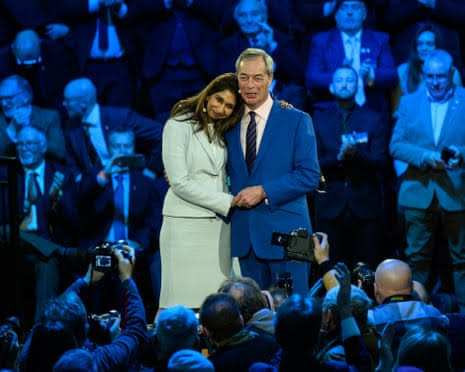
Nigel Farage has used a major press conference alongside former Conservative Home Secretary Suella Braverman to underline the growing ambitions of Reform UK, following her decision to leave the Conservative Party and join his political movement.
Braverman’s defection on January 26, 2026, marked another significant departure from the Conservatives and added a former Cabinet minister to Reform’s parliamentary ranks. The announcement came only days after Robert Jenrick also left the Conservative Party for Reform, intensifying attention on the growing number of former Conservative politicians moving towards Farage’s party.
The press conference in London provided Farage and Braverman with an opportunity to explain the reasons behind the move and to set out their arguments about the direction of British politics.
For Reform, the event was about more than welcoming another MP. It demonstrated how the party was attempting to transform itself from an insurgent political organisation into a broader parliamentary force with experienced politicians among its ranks.
Braverman Announces Her Defection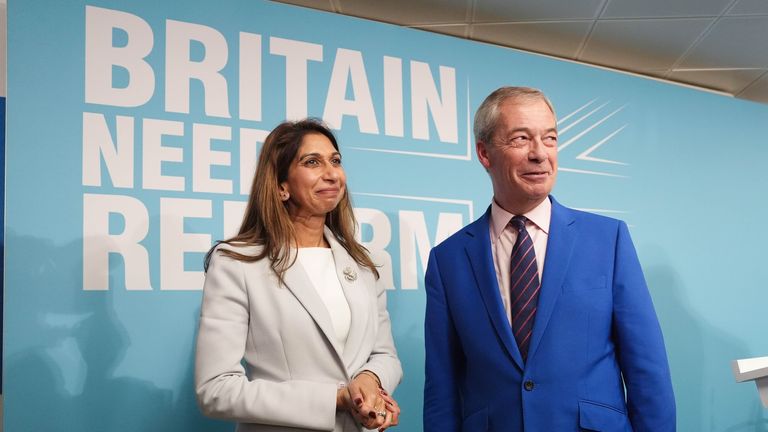
Suella Braverman had been a Conservative politician for around 30 years before announcing that she was leaving the party.
Speaking at a Reform UK event in London, she said that she no longer trusted the Conservative Party and argued that it no longer represented the values and principles that had originally attracted her to it.
She also announced that she would represent her constituency of Fareham and Waterlooville as a Reform UK MP with immediate effect.
Braverman’s decision was significant because she was not simply a former backbench Conservative. She had served as Home Secretary under both Liz Truss and Rishi Sunak and had been one of the most prominent figures on the Conservative Party’s right wing.
Her political profile had frequently been associated with immigration, asylum policy, Brexit and opposition to the European Convention on Human Rights.
At the Reform event, she argued that the Conservatives had repeatedly failed to fulfil promises made to voters.
She also criticised the party’s position on immigration and accused Conservative politicians of making commitments that had not subsequently been delivered.
Her decision therefore represented a significant political break after three decades as a Conservative.
Farage Welcomes Another High-Profile Recruit
For Nigel Farage, Braverman’s arrival provided an opportunity to reinforce Reform’s claim that it was attracting politicians with substantial experience.
At the press conference, Farage described the central difference between Reform and the established parties in terms of his assessment of Britain’s condition.
He argued that Labour and the Conservatives rejected the idea that Britain was fundamentally broken, whereas Reform believed that significant structural changes were required.
Farage said Reform wanted to go beyond what he described as minor adjustments and instead pursue a much more extensive programme of political and economic change.
The language was consistent with the message Farage had used throughout Reform’s development.
His party has sought to distinguish itself from both Labour and the Conservatives by arguing that Britain’s problems require a different political approach.
The Braverman announcement allowed Farage to present that message alongside a former senior Conservative minister who had herself concluded that her previous party was no longer the right political vehicle for her views.
Immigration at the Centre of the Debate
Immigration was one of the central themes of the press conference.
Braverman has long campaigned for tougher immigration policies, and she made immigration one of the reasons for her departure from the Conservatives.
During her announcement, she argued that immigration had become too high and linked the issue to wider concerns about public services and Britain’s future.
She also revisited her long-standing position on the European Convention on Human Rights.
Braverman argued that she had previously been punished within the Conservative government for advocating withdrawal from the ECHR, while the Conservatives had subsequently adopted a similar pledge.
Reuters reported that Braverman accused her former party of misleading voters over its immigration promises and its approach to the ECHR.
Immigration has become one of the most important issues distinguishing Reform from other parties.
Farage’s party has made reducing irregular migration and changing Britain’s asylum system major parts of its political platform.
Braverman’s arrival therefore gave Reform another senior politician with a long-established public profile on the issue.
Another Defection in a Growing Pattern
Braverman’s move did not occur in isolation.
Robert Jenrick had announced his defection to Reform earlier in January 2026. Nadhim Zahawi, the former Chancellor of the Exchequer, also joined the party earlier that month. Andrew Rosindell was another Conservative politician who moved to Reform.
The series of defections has generated significant discussion about the future relationship between the Conservative Party and Reform UK.
ITV reported that Reform had established May 7 as a deadline for current and former MPs and local councillors wishing to defect to the party.
The recruitment of former Conservative politicians presents Reform with an opportunity to acquire experience in government and Parliament.
However, it also creates a political contradiction.
Reform has built much of its identity around challenging the established political system. Yet an increasing number of its senior figures have themselves been part of that system.
Farage has acknowledged the issue while insisting that Reform is not simply a continuation of the Conservative Party.
A New Role for Braverman
Following her arrival, Braverman quickly became one of Reform’s most prominent figures.
Her experience as Home Secretary gave her particular relevance to the party’s positions on immigration, policing, security and constitutional questions.
In February, Farage subsequently appointed Braverman to Reform’s frontbench with responsibility for education, skills and equalities. Robert Jenrick was given the Treasury brief, while Richard Tice took responsibility for business, trade and energy. Zia Yusuf was given home affairs and migration.
The appointments demonstrated that Farage intended to build a wider leadership structure rather than relying entirely on himself.
Farage described the development as the creation of a “machine for government”, arguing that Reform now had senior figures capable of leading individual policy areas.
Braverman’s role was therefore not limited to being a high-profile defector.
She became part of the party’s emerging leadership structure.
Questions About Reform’s Future
The press conference also raised broader questions about what Reform UK would look like if it continued to expand.
A political organisation can attract attention relatively easily when it is outside government. Building a functioning political machine is more complicated.
Reform needs experienced politicians, policy specialists, candidates, campaigners and local organisations.
The arrival of figures such as Braverman and Jenrick provides some of that experience.
At the same time, the party must maintain internal discipline as its membership grows.
When Farage unveiled the initial frontbench team in February, he made clear that he expected loyalty from senior figures. He warned that politicians who behaved badly or acted disloyally would not remain in the party.
That approach reflects Farage’s determination to avoid the internal conflicts that have affected other political organisations.
Conservative Reaction
The Conservative Party reacted critically to Braverman’s departure.
The party suggested that her defection had been expected and argued that her move represented the continuation of a process in which former Conservatives were joining Reform.
The controversy intensified after an initial Conservative statement referred to Braverman’s mental health. The Conservatives subsequently withdrew that wording, describing it as an erroneous draft.
The episode demonstrated the political sensitivity surrounding the defections.
Every Conservative politician who leaves creates another opportunity for Reform to promote its message, while the Conservatives must explain why experienced politicians are choosing to depart.
For Labour, meanwhile, the defections provide an opportunity to argue that Reform is increasingly populated by former Conservative politicians.
Labour chair Anna Turley described Farage’s emerging leadership as a group of “failed Tories”, a characterisation that Reform and its supporters dispute.
The competing descriptions illustrate how politically contentious the defections have become.
Farage’s Wider Ambitions
The Braverman press conference should also be viewed against the background of Reform’s wider political ambitions.
Farage has sought to establish Reform as a national political force capable of competing with Labour and the Conservatives.
The party’s growing parliamentary representation, increased media attention and recruitment of experienced politicians have all contributed to that objective.
At the time of Braverman’s defection, her arrival brought Reform’s number of sitting MPs to eight.
That remained a small parliamentary group compared with Labour and the Conservatives, but the political significance of the defections extended beyond the raw number of MPs.
Braverman had served at the highest levels of Conservative government. Her decision therefore attracted considerably more attention than that of an unknown backbench politician.
It demonstrated that Reform could attract figures who had previously held major government responsibilities.
A Turning Point for the Right?
The press conference also highlighted a broader transformation within Britain’s political right.
For decades, Conservative governments dominated the right-of-centre space in British politics.
The emergence of Reform has changed that environment.
Farage’s party has positioned itself around immigration, national sovereignty, taxation, government reform and opposition to what it considers excessive political and bureaucratic control.
The Conservatives, meanwhile, are attempting to maintain their own identity under Kemi Badenoch.
The movement of politicians between the two parties has therefore become an important part of Britain’s changing political landscape.
Braverman’s defection is particularly notable because she had already occupied a prominent position on the Conservative right.
Her move suggests that disagreements over the direction of the Conservative Party are not limited to junior politicians or activists.
The Significance of the Press Conference
Nigel Farage’s press conference following Suella Braverman’s defection was therefore about more than one politician changing parties.
It provided a public demonstration of Reform UK’s growing political ambitions.
Braverman brought extensive government experience, a well-established public profile and a long record of involvement in debates over immigration and constitutional issues.
Farage, meanwhile, used the occasion to reinforce his argument that Britain requires a fundamental political change.
The event also exposed the difficult balance Reform must maintain.
The party wants to present itself as an alternative to the established political system, yet it is increasingly recruiting politicians who previously occupied senior positions within that system.
Whether that strengthens Reform or creates questions about its identity will remain a subject of political debate.
What is clear is that Braverman’s defection became one of the most significant moments in Reform UK’s development during 2026.
Her arrival was followed by a formal role on the party’s frontbench, while Farage continued to build a leadership team around himself.
The press conference marked another stage in that transformation.
Reform was no longer simply a party built around Farage’s personal political profile. It was developing a wider group of senior politicians with experience in government and Parliament.
For the Conservatives, Braverman’s departure represented another loss of a prominent figure. For Reform, it represented the arrival of a former Cabinet minister. And for British politics, it provided another clear illustration of the changing relationship between the country’s traditional political parties and the rapidly developing Reform movement.
The consequences of that transformation will depend on how voters respond in future elections, how Reform develops its policies and organisation, and whether the party can translate its growing political profile into sustained parliamentary influence.
For now, the image of Farage standing alongside Braverman at the Westminster press conference remains a striking symbol of the changing political landscape: a former Conservative Home Secretary formally joining the party led by one of the most prominent challengers to the traditional Conservative establishment.