


Mieka Smiles on Nigel Farage’s outrageous promise (Image: Daily Express/PA)
It’s that time of year again. The weird kind of reverse Christmas for UK residents, when your council tax rockets, but you see absolutely zero bang for your buck. As a local councillor – and former deputy mayor – I’ve sat in enough budget meetings to know this much: setting council tax is not for the faint of heart. Every line feels like you’re teetering between going bust or scrapping yet another bin collection. Which is why I nearly choked on my cornflakes when Nigel Farage’s lot swept to power in councils across the country last May, and vowed to tackle waste to bring down council tax. This will be interesting, I thought.
And even though everyone hates a know-it-all, I knew exactly how it would end. Because while councils are far from paragons of efficiency, sadly, there aren’t secret piles of cash lying about in the town hall loft. Council budgets are dominated by things that even the most hopeful new council member can’t just wish away. Children’s services, adult social care and the special educational needs transport bill are the unholy trinity of council tax drain.
Get the latest politics news – straight from our team in Westminster and more
Invalid email
You agree you are 18 or over. We use your sign-up to provide content in ways you’ve consented to and to improve our understanding of you. This may include adverts from us and third parties based on our knowledge of you. You can unsubscribe at any time. More Info.
Last summer Zia Yusef, head of policy for Reform UK, said that “waste and in some cases corruption” within councils was “off the charts” as he launched his own version of a US DOGE-style efficiency drive.
And it all sounded great until Reform councillors running Kent County Council waved the white flag on their hunt for pennies hiding behind the sofa cushions. Cllr Paul Chamberlain, cabinet member responsible for the council’s Department of Local Government Efficiency, (yes, DOLGE…) admitted that they’d somewhat overplayed their hand.
He said: “We made some assumptions that we would come in here and find some craziness that Doge found in America and that was wrong, we didn’t find any of that.”
But it gets worse.
At least four of 10 Reform UK councils have now proposed 5% council tax rises, the maximum permitted by law. Reform UK’s Cllr George Finch, the 19-year-old leader at Warwickshire county council, has been forced to defend proposals for a 3.89% council tax rise.
He said: “We want low tax, low spend and we were always committed to that. It’s just that national pressures that the government is not solving [such as] SEND [special educational needs and disabilities] home-school transport.”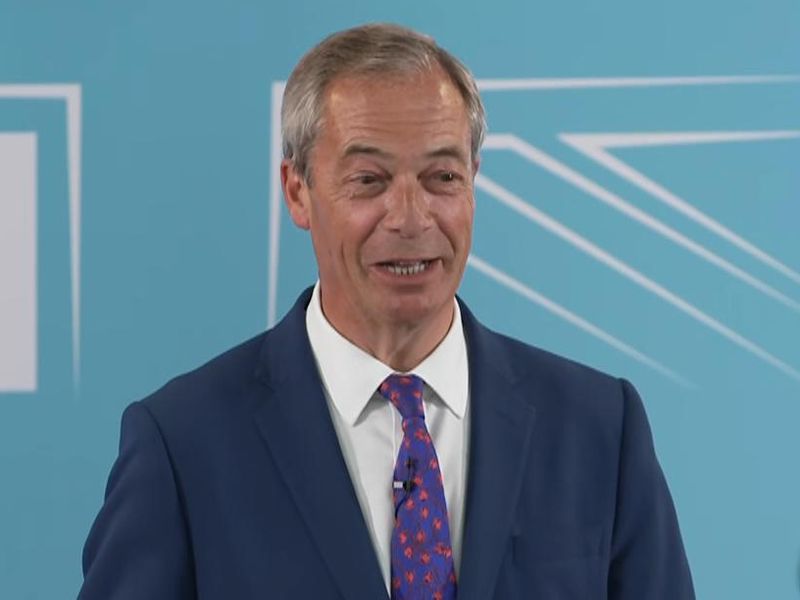
Well! I have to say, that young George has been taking notice. Indeed, I could tell you stories about the costs in those areas that would truly make your hair stand on end, which central Government needs to get a grip on pronto.
The moral of the story is simple. Reform UK can make all the crazy promises they like – but that certainly doesn’t mean they can back them up. And as we approach these make-or-break local elections in May, voters would do well to ask not just what candidates are promising, but whether they understand how on Earth they will deliver on them.
Nigel Farage Has Made an Outrageous Promise – And It’s About to Blow Up
Nigel Farage has made one of the most dramatic promises of his political career: if Reform UK enters government, he says Britain will move at extraordinary speed to deliver its programme, with Parliament potentially sitting for days on end and major policies pushed through within the party’s first 100 days.
The pledge is deliberately uncompromising.
At Reform UK’s September 2026 conference in Birmingham, Farage said his party would declare a “national emergency” on the first day of a Reform government. He promised that dozens of Bills would be introduced within days and said Parliament could be required to sit through the summer, including seven days a week, to get the legislation through.
But the most consequential part of the announcement may be the promise sitting underneath all the rhetoric: Reform says it will stop small-boat crossings within its first 100 days in office.
That commitment is now one of the clearest tests of the party’s claim that it is ready for government.
The 100-day promise
Farage’s conference message was built around speed.
Reform published what it called a “100-day pledge”, setting out a series of measures that it says would be implemented rapidly if the party formed a government. Farage specifically stated that small-boat crossings would be stopped within the first 100 days.
The party has also promised action on energy bills, NHS training, taxation and net-zero policy.
Deputy leader Richard Tice said Reform would seek to cut household energy bills by £250 a year by removing various environmental charges and changing taxation on energy. ITV reported that the proposal would involve removing policy costs from energy bills, scrapping carbon taxes on generators and permanently removing VAT from consumer energy bills.
That creates an unusually ambitious political package.
Reform is not simply promising gradual change over a parliamentary term. It is presenting the first 100 days as a period in which voters should expect visible results.
Farage has even said ministers who fail to deliver their assigned pledges within the promised timeframe would be dismissed.
The political advantage of such a strategy is obvious: it gives voters a simple way of judging whether Reform has delivered what it promised.
But it also creates a significant vulnerability.
Every missed deadline becomes politically important.
The small boats pledge is the biggest test
Immigration has been central to Farage’s political career, and Reform has made stopping Channel crossings one of its signature objectives.
The 100-day deadline therefore carries particular significance.
Reform’s own statement says plainly that the boats will be stopped within the first 100 days of government.
The difficulty is that Channel migration is not controlled by Westminster alone.
It involves relations with France, policing, border enforcement, asylum procedures, international law and cooperation with other European countries.
At the conference, Farage appeared alongside Jordan Bardella, president of France’s National Rally, and announced an agreement concerning the return of small boats to French shores. Reform presented the arrangement as part of its strategy for tackling crossings.
But an agreement between political parties is not the same thing as a binding government-to-government treaty.
That distinction could become crucial if Reform ever attempts to implement the policy.
Britain has already seen fluctuations in crossings
The political debate also needs to distinguish between the number of crossings at a particular moment and the long-term challenge.
LBC reported that the summer of 2026 had seen the lowest number of small-boat crossings in six years, although 16,513 people had nevertheless made the journey so far that year.
That means Reform would inherit a situation that can change significantly according to weather, enforcement and conditions in northern France and the Channel.
A government could introduce new measures and still face fluctuations that are partly outside its direct control.
That makes a precise 100-day promise particularly demanding.
It would require not merely reducing crossings but effectively ending them within a clearly defined period.
Whether that can be achieved would depend on the policies adopted, the cooperation secured from France and other partners, the operation of British border agencies and the legal framework governing removals and asylum claims.
Then there is the parliamentary timetable
Farage’s promise to make Parliament work at extraordinary intensity creates another issue.
He has said MPs could be required to sit seven days a week and that parliamentary recesses could be cancelled to allow Reform to pass its programme. ITV reported that he later described a possible schedule in which MPs would sit for 24 hours a day, six days a week, until the necessary legislation had passed.
The exact wording and schedule matter, because Parliament is not simply an administrative machine controlled by the prime minister.
Bills must pass through the Commons and Lords, and parliamentary procedures include debate, scrutiny and amendments.
A government with a majority would have considerably greater control over the legislative timetable than a minority government, but even a large majority does not eliminate the constitutional role of Parliament.
The Lords can scrutinise legislation, committees can examine proposals and MPs can raise objections.
Farage’s promise therefore raises a broader question about how quickly a government should seek to legislate.
Reform wants speed — critics will ask about scrutiny
There is a genuine tension here.
Rapid legislation can be useful during an emergency. Governments sometimes need to act quickly when circumstances demand it.
But major changes to immigration, taxation, energy policy, welfare or constitutional arrangements can have long-term consequences.
The faster legislation is introduced and passed, the less time there may be for detailed examination of its technical consequences.
Farage’s response is essentially that Britain has waited long enough.
His argument is that governments have spent years debating problems while failing to solve them, and that a Reform government would operate differently.
That is the political logic behind the 100-day pledge.
But the practical question is whether speed and effective policymaking can always be achieved simultaneously.
The energy promise creates another test
Reform’s £250 energy-bill pledge could also become a major political test.
Richard Tice has argued that environmental levies, taxes and other policy costs have placed unnecessary pressure on household bills. Reform says its proposed changes would return around £250 a year to households.
But cutting a bill does not automatically eliminate the underlying cost.
If taxes or levies currently fund government programmes, removing them requires the government either to find alternative sources of revenue, reduce spending elsewhere or accept a lower level of funding for those programmes.
That is why Reform’s wider economic programme matters.
The party has simultaneously been promising tax reductions and substantial spending cuts.
At its September conference, Robert Jenrick pledged to raise the income-tax personal allowance to £15,000 as an initial step towards Reform’s longer-term ambition of £20,000. The Chartered Institute of Taxation reported that Reform estimated the £15,000 increase would cost £17.7 billion in its first year.
Those figures illustrate the scale of the choices facing the party.
A government can promise lower taxes and lower bills, but it must also explain how the resulting reduction in revenue will be managed.
The promise is becoming a test of credibility
This is where Farage’s “outrageous” promise could potentially become politically difficult.
The more precise the promise, the easier it is to measure.
“Make Britain better” is difficult to define.
“Stop the boats within 100 days” is much easier.
“Cut energy bills by £250” is measurable.
“Pass dozens of Bills within days” is measurable.
And promising to dismiss ministers who fail to meet their targets adds another layer of accountability.
Reform is effectively constructing its own scoreboard.
That could help the party demonstrate that it is different from established governments. But it also means that delays, compromises or partial implementation could receive significant attention.
The timing is particularly important
Farage’s announcement came during a difficult period for Reform.
The party’s conference was overshadowed by allegations concerning political donations and undercover reporting. Two senior Reform officials stood down amid the controversy, while Farage insisted that the party had broken no laws. The Electoral Commission said it was in contact with the Metropolitan Police and was considering the relevant information.
Farage therefore used the conference to shift the conversation back toward what Reform would do in government.
The strategy was clear: focus on delivery, not controversy.
But the financial allegations make the question of credibility particularly important.
Reform has denied wrongdoing, and any legal or regulatory conclusions will depend on the relevant investigations and processes.
Nevertheless, the controversy means that the party’s claims about how it would govern are likely to receive close scrutiny.
A very different model of government
Farage’s proposal ultimately represents more than a collection of policies.
It is a proposed model of government.
A Reform administration, in his description, would act quickly, cancel parliamentary breaks, introduce legislation at speed and judge ministers against strict deadlines.
That approach contrasts with the slower process normally associated with government, where legislation can take months or longer to develop, scrutinise and implement.
Whether that would make government more effective is not something that can be established in advance.
Much would depend on the quality of the legislation, the parliamentary majority, the cooperation of other institutions and the practical ability of government departments to implement the changes.
The 100-day clock has not started yet
For now, the promise remains exactly that: a political commitment for a hypothetical future Reform government.
Farage has not yet had the opportunity to implement it nationally.
That makes the coming political debate particularly important.
Reform has deliberately chosen highly measurable targets. Stopping small boats, cutting energy bills and passing major legislation within the first 100 days give voters concrete benchmarks against which the party can eventually be judged.
The strategy may strengthen Reform’s message that it is preparing for government rather than merely campaigning.
But it also means the party has placed unusually high expectations on itself.
If Reform eventually enters government, the first 100 days will not simply be a honeymoon period.
They will be a test against promises that Farage himself has made exceptionally precise.
And that may be the biggest consequence of his boldest pledge: by putting a deadline on his ambitions, he has made it much easier for the public to ask a simple question when the clock starts ticking — did he deliver?