

Nigel Farage Hit by 3 Massive Blows That Could Stop Him Becoming Prime Minister
Nigel Farage has spent much of his political career attempting to achieve something that once seemed almost impossible: turning a populist protest movement into a serious governing force.\
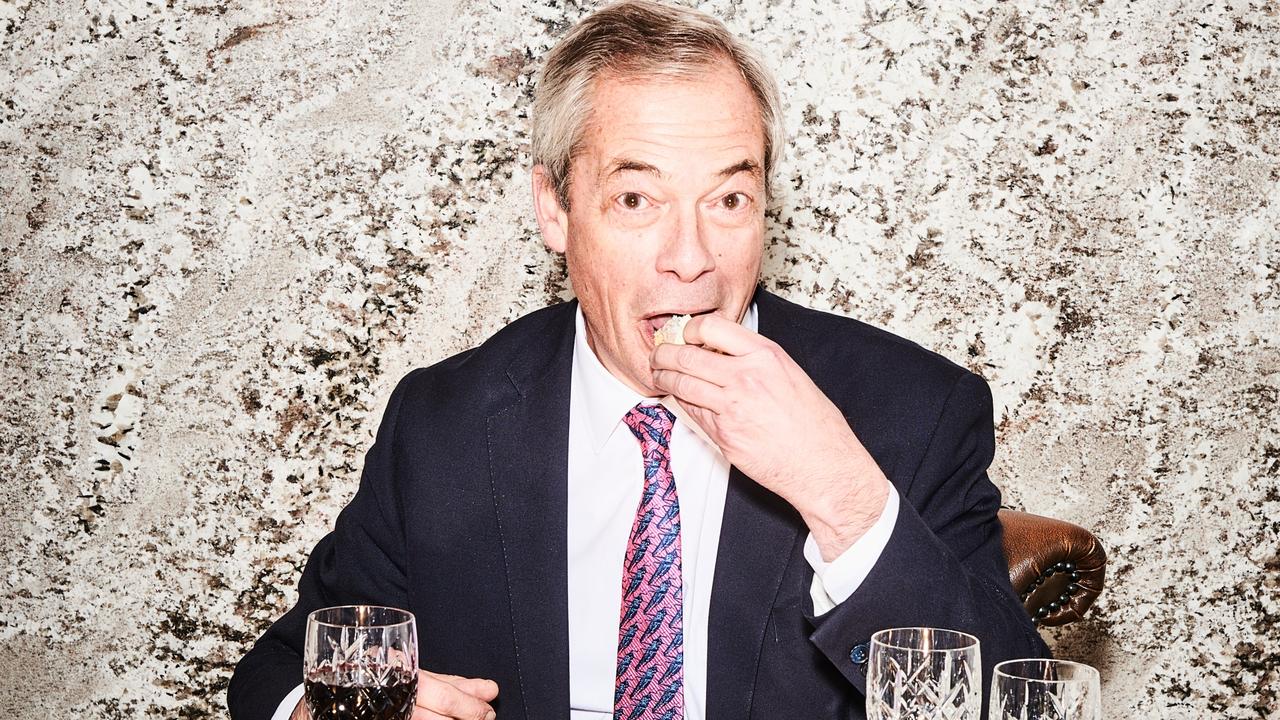
Reform UK has undoubtedly transformed Britain’s political landscape. The party has won hundreds of council seats, secured representation in Parliament and pushed immigration, national sovereignty and opposition to the political establishment back to the centre of national debate.
Yet the closer Farage gets to his ultimate ambition of entering Downing Street, the more formidable the obstacles appear.
Recent events have exposed three major problems that could prevent the Reform leader from turning his party’s support into a route to Number 10: a damaging financial controversy, signs of weakening national momentum, and divisions on the right of British politics.
None of these problems necessarily makes a Farage premiership impossible. But together, they create a serious challenge for a politician whose success depends heavily on maintaining personal credibility, party discipline and electoral momentum.
1. The financial controversy refuses to disappear
Perhaps the most immediate threat to Farage’s political future is the continuing parliamentary investigation into his financial affairs.
Farage resigned his Clacton parliamentary seat in July and then fought a by-election to return to Parliament. The resignation followed scrutiny over an undeclared £5 million gift from cryptocurrency businessman Christopher Harborne.
The parliamentary standards watchdog had already been investigating the matter. Farage’s resignation temporarily interrupted the process, but after his victory in the Clacton by-election, the investigation resumed.
Farage has rejected wrongdoing and has argued that the money was a personal gift rather than a political donation.
But the controversy presents an obvious political problem.
Reform’s central message is based on the argument that Britain’s established political class has failed voters. Farage presents himself as the outsider who will challenge the Westminster system and restore trust.
That message becomes harder to sell when the Reform leader himself is under investigation over parliamentary declarations.
The issue is particularly dangerous because it could remain in the headlines for months.
If the standards investigation were to find that Farage breached parliamentary rules seriously, he could face sanctions. A suspension of sufficient length could potentially trigger a recall petition and another by-election.
That would be an extraordinary situation for a politician attempting to persuade the country that he is ready to become Prime Minister.
Instead of discussing Reform’s plans for Britain, Farage could find himself repeatedly answering questions about money, declarations and parliamentary standards.
The Clacton victory did not completely solve the problem
Farage attempted to regain control of the story by triggering the Clacton by-election and winning his seat back.
On paper, the result was impressive.
He secured around 63% of the vote, giving Reform a commanding victory.
But the circumstances were unusual.
The major political parties did not contest the election, leaving Farage to face a field containing numerous fringe and novelty candidates, most famously Count Binface.
That makes the result difficult to interpret as a national test of Reform’s strength.
Rather than demonstrating that Farage had expanded his appeal across Britain, the contest largely demonstrated that he remains extraordinarily dominant among his core supporters in Clacton.
And the standards investigation did not disappear after the result.
Indeed, it resumed almost immediately.
That means Farage may have won his parliamentary seat, but he has not yet escaped the controversy that caused him to leave it.
2. Reform’s national momentum has started to look less secure
The second major problem is electoral momentum.
For a period, Reform UK appeared to be moving relentlessly upwards.
The party made spectacular gains at local elections, won a large number of council seats and began appearing at or near the top of national opinion polls.
That created the impression that Farage’s political breakthrough was becoming inevitable.
But the picture has become more complicated.
Following Andy Burnham’s arrival as Prime Minister, Labour has recovered ground against Reform in national polling. Recent analysis put Reform at around 23%, behind Labour, while also reporting a decline in Farage’s personal approval.
That matters enormously.
Farage’s route to Downing Street depends on Reform becoming much more than a protest party.
It needs to win large numbers of parliamentary constituencies.
Britain’s first-past-the-post electoral system makes this particularly difficult.
A party can receive millions of votes nationally but still fail to win enough seats to form a government if those votes are spread inefficiently across the country.
Reform therefore needs both national support and geographical concentration.
The party’s recent setbacks show why that could be difficult.
The Makerfield warning
One of the clearest warnings came from the Makerfield by-election.
Reform suffered a heavy defeat against Labour, with Andy Burnham’s party demonstrating that Reform’s national polling strength does not automatically translate into constituency victories. The Financial Times described the result as another significant blow for Farage.
For Reform, this was particularly uncomfortable because the party had invested heavily in the contest.
Farage had attempted to make the election a test of whether Reform could break through in traditional Labour territory.
It did not happen.
The result demonstrated that Labour can still mobilise voters against Reform, particularly when the contest becomes a direct choice between the two parties.
That could be a major problem at a general election.
Andy Burnham creates a new obstacle
Farage’s challenge has become even harder because he is no longer simply fighting against an unpopular Labour government.
Andy Burnham has changed the political equation.
Recent polling suggests Burnham enjoys a significantly stronger personal position than his predecessor, with his approval rating moving slightly above zero despite the generally negative political climate.
That gives Labour an important advantage.
Instead of asking voters whether they are happy with the existing government, Labour can present the next election as a choice between Burnham and Farage.
For Reform, that is potentially dangerous.
Farage remains highly popular with his own supporters, but his personal appeal is considerably weaker across the wider electorate.
A successful Prime Minister needs to build a coalition of voters who do not necessarily agree on every issue.
Farage’s challenge is to convince people who dislike Labour that they should actively trust him with Downing Street.
That is much harder.
3. The right-wing vote is becoming increasingly fragmented
The third major blow is arguably the most strategically important.
Farage does not only have to defeat Labour.
He also has to prevent his own side of the political spectrum from splitting.
The emergence of Restore Britain, led by former Reform MP Rupert Lowe, has created a direct competitor for voters who want a harder line on immigration and national sovereignty.
Restore has adopted an exceptionally tough immigration programme, including proposals for a large-scale deportation operation targeting both illegal migrants and certain legal foreign-born residents.
This puts Farage in a difficult position.
If he moves too far towards the centre, he risks losing his most committed supporters to Lowe.
If he moves further towards the radical right, he risks alienating moderate voters who Reform needs to win parliamentary seats.
It is a classic political dilemma.
The Farage-Lowe rivalry
The relationship between Farage and Lowe has become increasingly hostile.
Both men are attempting to occupy broadly similar political territory, while each accuses the other of undermining the wider cause.
That matters because Britain’s electoral system punishes divided parties.
Imagine a constituency where:
- Labour receives 35%;
- Reform receives 30%;
- Restore receives 20%;
- Conservatives receive 15%.
Reform could lose despite having the largest share of the right-wing vote.
The same problem could occur repeatedly across England.
This is why Farage has reportedly been interested in discussions about possible electoral cooperation.
But negotiations have themselves become controversial.
Farage and Lowe have publicly disagreed over whether talks took place, demonstrating how difficult cooperation between the rival movements could be.
For Farage, the nightmare scenario is obvious: Reform and Restore split the anti-establishment vote while Labour benefits from the division.
Migration Creates Another Internal Problem
Immigration remains Reform’s greatest political strength, but it could also become a source of vulnerability.
Farage has promised an extraordinarily tough approach.
Reform’s proposals include deportation measures, restrictions on immigration and major changes to Britain’s asylum system.
The party has also proposed Operation Fortress, involving a military-led attempt to stop small boats crossing the English Channel and return migrants to France. Reuters reported that experts questioned the feasibility of the plan, including the legal difficulties involved in operating in French territorial waters without French permission.
The policy demonstrates Farage’s determination to show voters that Reform would do things differently.
But it also raises difficult questions about implementation.
What happens if France refuses to accept migrants?
What happens when international law prevents immediate removal?
How much would such an operation cost?
Could the military legally carry it out?
And what happens to people whose asylum claims cannot simply be rejected?
These are questions Farage would have to answer as Prime Minister rather than opposition leader.
The more Reform presents itself as a government-in-waiting, the more voters will demand practical answers.
Welfare Could Become Another Electoral Trap
Farage is also facing a new political risk over Reform’s ambitious welfare programme.
The party says it could save approximately £50 billion a year through sweeping changes to benefits.
The proposals include major reductions to disability payments, restrictions on benefits for foreign nationals and compulsory community work for some long-term unemployed people considered fit to work.
From Reform’s perspective, the policy is intended to demonstrate that the party is serious about reducing government spending.
But it carries a significant electoral danger.
Many Reform-supporting constituencies have large numbers of people receiving disability and other welfare payments.
The Times reported that areas represented by Reform politicians could contain substantial numbers of PIP claimants relative to the MPs’ parliamentary majorities.
That creates an uncomfortable contradiction.
Reform wants to win working-class voters who feel neglected by Westminster.
But some of those voters could personally lose money under Reform’s proposed welfare changes.
The party therefore has to convince voters that its reforms will make Britain more prosperous and fairer in the long term without making supporters feel that they are being punished in the short term.
Farage’s Biggest Strength Could Also Be His Weakness
There is a broader issue underlying all three problems: Reform is heavily dependent on Nigel Farage himself.
Farage is the party’s greatest asset.
He is exceptionally recognisable, highly experienced in campaigning and capable of attracting enormous media attention.
But that creates a vulnerability.
If Farage’s popularity falls, there is no equally dominant figure who can simply replace him.
The party’s brand and the leader’s personal brand are closely connected.
That makes scandals more damaging.
It makes internal disputes more damaging.
And it makes poor election results more damaging.
The stronger Reform becomes, the more voters will expect it to demonstrate that it is a stable political organisation rather than simply the latest vehicle for Farage’s political ambitions.
Farage himself has previously made clear that he expects discipline from his senior politicians. When Reform unveiled its frontbench, he warned that disloyalty and internal disruption would not be tolerated.
That approach may maintain control.
But it also demonstrates just how much the party’s stability depends upon the leader.
The Three Blows Could Reinforce Each Other
The most serious danger is not any individual problem.
It is the possibility that the three problems reinforce one another.
First, the financial investigation damages Farage’s credibility.
Second, weaker polling makes it harder for him to demonstrate that Reform is heading towards government.
Third, the emergence of Restore threatens to divide the right-wing vote.
Together, these developments could create a vicious cycle.
If Reform’s poll numbers decline, more voters may return to the Conservatives or choose Restore.
If the right becomes more divided, Reform could win fewer seats even with a substantial national vote share.
If Reform performs badly at elections, questions about Farage’s leadership could intensify.
And if the financial investigation continues to dominate headlines, the party could struggle to shift the conversation towards its policy agenda.
That is the real threat to Farage.
Not one catastrophic event, but several problems arriving at the same time.
But Farage Is Far From Finished
It would nevertheless be premature to write him off.
Farage has survived political setbacks many times before.
He remains one of Britain’s most influential political figures.
Reform continues to command substantial support, and its performance in the 2026 local elections demonstrated that the party is capable of breaking through in parts of the country where the traditional parties once dominated.
The Clacton result also showed that Farage retains a remarkably loyal personal following.
The challenge is to turn that loyalty into something much larger.
He needs Reform to become the first choice not merely for angry voters, but for voters who genuinely believe it is capable of running Britain.
That requires credibility, discipline and a convincing governing programme.
The Battle for Number 10 Is Far From Over
Nigel Farage’s dream of becoming Prime Minister is therefore still alive—but the path has become considerably more complicated.
The financial investigation threatens his personal credibility.
The loss of national momentum threatens Reform’s electoral strategy.
And the rise of rival forces on the right threatens to split the very voters Farage needs to build a parliamentary majority.
There is also the growing challenge of proving that Reform’s policies can work in government rather than simply sound attractive on the campaign trail.
Immigration, welfare, taxation and public spending all present difficult choices.
The next general election could therefore become the ultimate test of whether Farage’s political revolution has matured into a genuine governing movement.
For now, the Reform leader remains a formidable force.
But becoming Prime Minister requires more than being the most effective insurgent in British politics.
It requires winning enough constituencies, maintaining a united party, surviving personal controversies and persuading voters beyond the core Reform base.
Farage has already demonstrated that he can change British politics.
The unanswered question is whether he can do the much harder thing:
turn that influence into the keys to Downing Street.
Leave a Reply
You must be logged in to post a comment.