

Nigel Farage Makes Bombshell Foreign Prisoners Announcement
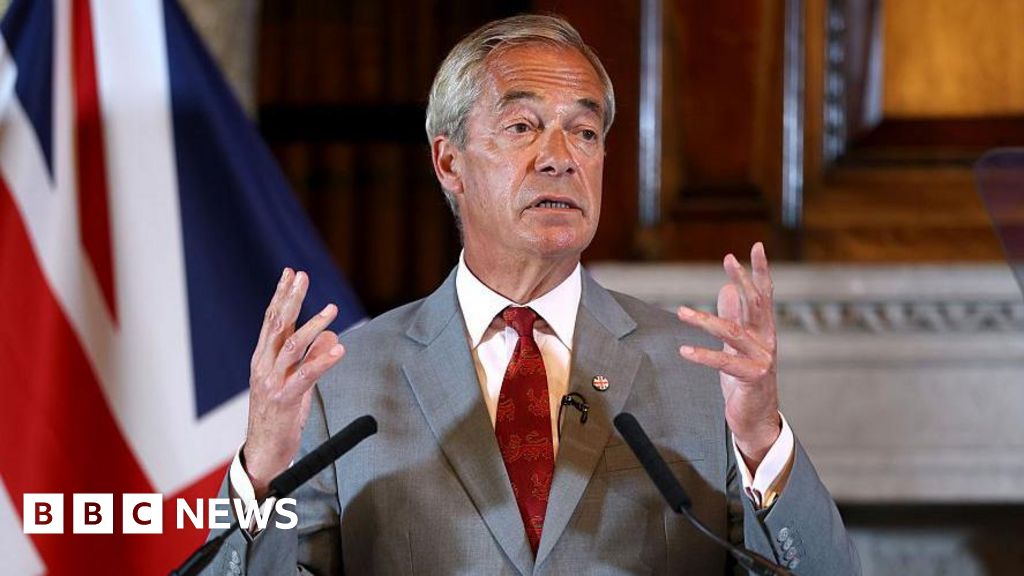
Nigel Farage has unveiled a dramatic plan to remove foreign criminals from Britain’s overcrowded prisons, including a proposal to transfer some prisoners to third countries such as El Salvador if Reform UK wins power.

The Reform UK leader announced the policy as part of a wider plan to tackle the crisis facing Britain’s prison system. The party says it would seek to deport foreign nationals serving prison sentences in the UK either to their countries of origin or, where that is not possible, to approved third countries. Reform estimates that around 10,000 foreign prisoners could ultimately be affected.
The announcement has immediately triggered a fierce political and legal debate.
Farage argues that Britain should not be using scarce prison places to accommodate foreign nationals when the domestic prison system is already under enormous pressure. Reform says removing eligible foreign prisoners would create thousands of additional spaces and help prevent serious offenders from being released early.
But critics have questioned whether the plan is legally workable, whether foreign governments would agree to receive prisoners and whether sending inmates to countries with very different prison and human-rights standards could expose Britain to serious legal challenges.
Farage’s dramatic proposal
At a Reform UK press conference in London on August 10, Farage and his colleagues announced a series of policies aimed at expanding prison capacity and reducing pressure on the criminal justice system.
The most controversial proposal was the removal of foreign prisoners from British jails.
Reform says foreign nationals convicted and serving sentences in Britain should, where possible, be transferred to their home countries. If their home governments refuse to take them, the party says it would consider arrangements with third countries.
One country has already attracted particular attention: El Salvador.
Reform has said it is exploring whether prison capacity could be rented in El Salvador, whose government has built a vast prison system as part of its controversial crackdown on organised crime. A Reform delegation led by party chairman Lee Anderson is due to visit the country to examine the possibility.
The proposal has drawn comparisons with arrangements pursued by the United States involving El Salvador.
Farage’s supporters argue that the precise location of a prison is less important than ensuring that convicted criminals remain securely incarcerated and that British prison capacity is available for offenders who cannot be deported.
Critics strongly disagree.
Why is Britain facing a prison crisis?
The announcement comes against the backdrop of severe pressure on prisons in England and Wales.
The government has been attempting to manage overcrowding by expanding early-release arrangements for some prisoners.
That policy has become politically explosive after concerns emerged about the potential release of people convicted of serious offences.
The controversy surrounding the possible early release of two men convicted over the death of PC Andrew Harper has intensified the debate, with a petition calling for them to remain behind bars attracting more than one million signatures.
Farage has used the crisis to argue that the government should be creating prison capacity rather than releasing offenders early.
Reform’s position is straightforward: foreign prisoners should be removed where legally possible, new prisons should be built rapidly and convicted criminals should serve much more of the sentences imposed on them.
Reform wants thousands of new prison places
Foreign-prisoner transfers are only one part of Farage’s wider criminal-justice strategy.
The party has also proposed building so-called Nightingale prisons, drawing a comparison with the temporary hospitals constructed rapidly during the Covid-19 pandemic.
Reform says these facilities could be built on Ministry of Defence land and would provide thousands of additional prison places.
The party has previously said that its plans could create around 12,000 additional spaces, while allowing the government to end what Reform describes as the unacceptable practice of releasing criminals early because there are not enough cells.
Farage has also pledged to restore short prison sentences and make the time served by criminals much closer to the sentence handed down by a court.
The overall message is designed to contrast sharply with Labour’s approach.
Where the government has focused on managing limited capacity, Reform says it would expand capacity and impose tougher sentences.
The El Salvador question
The proposal to send prisoners to El Salvador is by far the most controversial element.
El Salvador’s prison system has become internationally known because of President Nayib Bukele’s mass crackdown on gangs.
The country’s huge prison facilities have been presented by the government as evidence of its determination to defeat organised crime.
But human-rights organisations have raised serious concerns about conditions in Salvadoran prisons, including allegations of arbitrary detention and mistreatment.
That has prompted warnings that Britain could face legal challenges if it attempted to transfer prisoners to facilities where their treatment could breach human-rights protections.
Amnesty International has strongly criticised the proposal, accusing Farage of putting what it described as “hate and inhumanity” ahead of responsible leadership.
A Salvadoran human-rights organisation has also warned that Britain could become complicit in torture if prisoners were transferred into a system where they were subjected to abusive treatment.
Those concerns are likely to become central if Reform ever attempts to turn the proposal into government policy.
Could Britain actually deport all foreign prisoners?
This is where the policy becomes considerably more complicated.
A foreign national serving a sentence in Britain cannot simply be placed on a plane and sent to another country without the necessary legal and diplomatic arrangements.
The prisoner may have rights under British law, international law and human-rights conventions.
The receiving country must also agree to accept the individual.
In cases where a prisoner’s country of nationality refuses to cooperate, Reform’s proposed third-country model would create another layer of negotiations.
The government would need agreements covering issues such as the legal basis for the transfer, sentence enforcement, monitoring, prisoner welfare and responsibility for any subsequent legal proceedings.
There could also be questions about whether a sentence imposed by a British court can properly be served in a foreign prison under conditions substantially different from those expected in Britain.
These issues do not necessarily make the policy impossible, but they demonstrate why the proposal would be much more complicated than simply deporting prisoners.
Reform says the priority is British prison capacity
Farage’s argument is primarily about resources.
If thousands of foreign nationals could be removed from the British prison system, Reform says those spaces could immediately be used for other prisoners.
That, in turn, could reduce the pressure behind early-release schemes.
The party says the approach would also send a stronger message to foreign nationals who commit serious offences in Britain: imprisonment in the UK would not necessarily mean remaining in a British prison for the entire sentence.
The proposal is therefore both an immigration policy and a criminal-justice policy.
It links the two issues directly.
That is a familiar theme in Reform’s broader political programme, which places immigration control, border security and criminal justice at the centre of its appeal.
Labour attacks the proposal
Labour has rejected Reform’s approach as impractical.
The government argues that simply announcing plans to deport prisoners does not solve the immediate shortage of prison places.
Even if foreign prisoners could eventually be transferred, negotiations with foreign governments and legal proceedings could take considerable time.
That means the government would still need additional prison capacity in the short term.
Labour’s response is therefore focused on expanding capacity while using existing legal mechanisms to manage overcrowding.
Farage’s answer is that Britain has spent too long accepting an inadequate prison system.
He argues that governments should have built enough prisons to accommodate the sentences handed down by British courts.
The disagreement reflects two very different philosophies.
Labour is attempting to manage an existing crisis.
Reform says it would fundamentally change the system.
A political gamble for Farage
The proposal is also politically significant because it reinforces Farage’s attempt to position Reform as the toughest major party on crime and immigration.
For voters concerned about prison overcrowding, the policy offers a simple message: deport foreign criminals and build more prisons.
For opponents, however, the proposal risks appearing deliberately provocative.
Sending prisoners to a foreign country thousands of miles away is an extraordinary departure from conventional British criminal-justice policy.
The El Salvador element is particularly likely to dominate public debate because of the country’s controversial prison system.
That may nevertheless be part of the political calculation.
Farage has built much of his career around challenging political conventions and forcing issues that other parties would prefer to avoid.
The foreign-prisoner announcement fits that strategy.
What would happen to victims?
Another unresolved question concerns victims and their families.
If a prisoner convicted in Britain were transferred to another country, victims could reasonably ask how they would be informed about changes to the sentence and whether they would have any say in the process.
There could also be concerns about parole, sentence reductions and the enforcement of British judicial decisions.
Reform says its objective is to make sure criminals serve their sentences rather than benefit from Britain’s shortage of prison places.
But critics argue that transferring prisoners abroad could actually make the justice system less transparent if victims have fewer opportunities to understand what is happening.
These questions would have to be addressed in any detailed policy.
Farage’s wider message
The announcement is ultimately part of a much bigger argument about what Reform believes Britain’s criminal-justice system should look like.
Farage wants prison sentences to mean what they appear to mean when announced in court.
He wants more prison capacity.
He wants fewer foreign criminals serving sentences in Britain.
And he wants the government to adopt a much tougher approach to offenders.
The foreign-prisoner proposal gives those ideas a single, highly controversial policy.
Whether it could be implemented exactly as Reform proposes remains uncertain.
But politically, it has already succeeded in shifting attention back towards the questions Farage has made central to his political career: immigration, sovereignty, crime and the authority of the state.
A potentially explosive policy
The debate is unlikely to end with the announcement.
Reform’s planned visit to El Salvador could provide the next major development. The delegation is expected to examine whether the country’s prison system could accommodate foreign prisoners under a potential agreement.
If Reform were ever to enter government, it would then face the much harder task of converting the proposal into legally enforceable agreements.
That would require cooperation from foreign governments, detailed legal arrangements and guarantees concerning prisoner treatment.
The political stakes would be enormous.
For supporters, transferring foreign prisoners could represent a practical solution to Britain’s prison-capacity crisis.
For opponents, it raises profound questions about human rights, Britain’s international obligations and whether criminals should be sent to prison systems whose standards differ dramatically from those in the UK.
For Nigel Farage, however, the message is unmistakable.
He wants voters to see Reform as the party prepared to take measures that the established parties consider too difficult or controversial.
The foreign-prisoner announcement is therefore more than a proposal to free up prison cells.
It is a statement about the kind of government Farage says he would lead.
And if Reform eventually gets the opportunity to put that promise into practice, Britain’s criminal-justice system — and its relationship with other countries — could be transformed in ways that would be difficult to reverse.