

Nigel Farage Reveals What He Will Do With Foreign Criminals Serving Time in UK Jails
Nigel Farage has unveiled a dramatic plan to remove foreign criminals from British prisons and send them either back to their home countries or, where that is not possible, to third countries such as El Salvador.
The Reform UK leader says the proposal could free up around 10,000 prison places and help end the Government’s controversial reliance on early prisoner releases. The announcement has immediately triggered a furious political row, with supporters arguing that Britain must put public safety first while critics have questioned the legal, diplomatic and humanitarian implications of the plan.
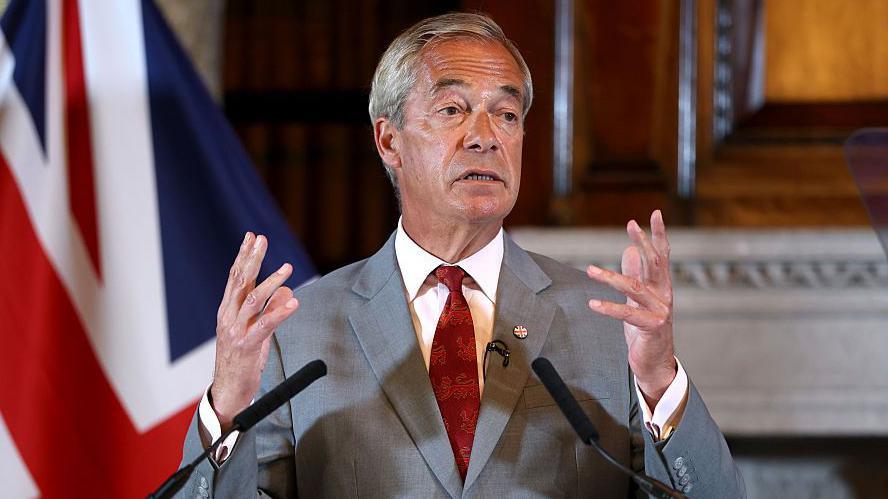
The proposal comes as Britain’s prison system faces severe overcrowding and the Government struggles to find enough space to accommodate prisoners without releasing some offenders earlier than originally expected.
For Farage, the message is straightforward: foreign nationals convicted of crimes in Britain should not continue occupying valuable prison places if their sentences can be served elsewhere.
But transforming that slogan into government policy would be considerably more complicated.
Farage’s bombshell plan
Reform UK has pledged that, if it comes to power, it would deport all foreign nationals currently serving prison sentences in Britain.
The party says offenders would first be returned to their countries of origin.
If those governments refused to accept them, Reform would seek agreements allowing the prisoners to serve their sentences in third countries.
El Salvador has been singled out as one possible destination.
Reform’s home affairs spokesman Zia Yusuf said the policy would involve moving roughly 10,000 foreign prisoners out of British jails, creating additional capacity for serious offenders who remain in the UK.
The party has argued that the proposal is part of a much wider strategy to tackle the prison crisis.
Rather than accepting a system in which prisoners are released early because there are not enough cells, Reform wants to increase capacity and ensure that people convicted of serious crimes serve much more of their sentences.
That is a message likely to resonate with voters angry about early-release schemes.
Why foreign prisoners have become such a political issue
The number of foreign nationals in British prisons has become a major political talking point.
Reform estimates that around 10,000 foreign prisoners are currently held in UK jails.
Farage’s argument is that the British taxpayer should not have to provide expensive prison accommodation indefinitely when those prisoners could potentially be transferred elsewhere.
The proposal also connects directly to the wider debate about immigration.
For Reform, criminal deportations are part of a broader argument that people who come to Britain and subsequently commit serious offences should lose their right to remain in the country.
The party believes removing foreign offenders would simultaneously address two problems: immigration and prison overcrowding.
Critics, however, argue that the reality is much less straightforward.
A prisoner cannot simply be placed on a plane and transferred to another country’s prison without legal authority, diplomatic agreements and guarantees concerning their treatment.
That is where Farage’s plan could encounter its biggest obstacles.
The El Salvador controversy
The decision to mention El Salvador has made the announcement particularly controversial.
The Central American country has become internationally known for its aggressive crackdown on organised crime and its enormous prison system.
Supporters of the Reform proposal see this as evidence that El Salvador is prepared to incarcerate large numbers of dangerous offenders.
Human-rights organisations see something very different.
Amnesty International has criticised the idea of sending foreign prisoners to El Salvador, warning about conditions in the country’s prisons and raising concerns about human rights.
That criticism is likely to intensify if Reform moves from political rhetoric to formal negotiations.
The British Government would need to establish that prisoners transferred abroad would continue to receive treatment consistent with Britain’s legal obligations.
There would also be questions about whether British courts would accept such arrangements.
Farage wants to end early releases
The foreign-prisoner plan is not an isolated proposal.
It forms part of Farage’s response to Britain’s wider prison crisis.
The Reform leader has argued that serious offenders should serve the sentences handed down by courts rather than being released early because the prison estate is overcrowded.
The issue has become particularly sensitive following the controversy surrounding the possible early release of the men convicted over the death of PC Andrew Harper.
Prime Minister Andy Burnham has faced intense pressure to prevent serious offenders from being released early and has instructed Justice Secretary Alex Norris to find ways of creating additional prison capacity.
Farage believes Reform can exploit the anger surrounding the issue.
His argument is politically simple: build more prison places, remove foreign criminals and keep serious offenders behind bars.
The challenge is whether the proposals can actually be delivered.
“Nightingale prisons”
Reform has also proposed constructing temporary prisons modelled on the emergency hospitals created during the Covid pandemic.
The party says these “Nightingale prisons” could create around 12,000 additional spaces.
The proposal would cost billions of pounds, according to estimates reported in the Financial Times.
Farage argues that Britain cannot afford to ignore the prison shortage.
If prisons are full, he says, the answer should be to increase capacity rather than release dangerous offenders.
This approach has obvious political appeal.
The public understands the basic principle that a prison sentence should mean imprisonment.
But building prisons is expensive, and creating secure facilities takes time.
That means even a large construction programme would not necessarily solve the immediate crisis.
Labour’s difficult position
The Government is facing an uncomfortable dilemma.
Ministers know that overcrowded prisons create genuine operational problems.
But they also face public anger whenever offenders are released earlier than expected.
The controversy surrounding PC Harper’s killers has made the issue even more politically toxic.
Burnham has responded by examining several options for creating additional capacity, including deporting foreign offenders and making better use of existing prison facilities.
In other words, there is an area of overlap between the Government and Reform.
Both sides accept that removing eligible foreign prisoners could free up space.
The difference is largely one of scale and method.
Reform wants a much more aggressive programme, including transfers to third countries.
Labour must also take account of legal obligations, diplomatic relationships and the practical difficulties of arranging overseas imprisonment.
Could countries be forced to take their own criminals back?
One of the biggest questions facing Farage is what happens when a prisoner’s home country refuses to accept them.
Reform’s answer is that Britain should consider third-country arrangements.
But that immediately raises another question.
Why would another country agree to house prisoners convicted under British law?
There would almost certainly be a financial cost.
There would also need to be strict agreements governing security, access to legal representatives and monitoring of prisoners.
And Britain would need confidence that transferred prisoners could not simply escape or be released prematurely.
These are not minor administrative details.
They would be central to any serious government policy.
Estonia provides a warning
The difficulties are already becoming apparent.
Estonia has rejected proposals to rent prison space to Britain, demonstrating that finding foreign governments willing to house UK prisoners is far from straightforward.
That development is significant for Reform’s argument.
If European countries with established legal systems are reluctant to participate in prison-transfer arrangements, negotiating with countries much farther away could prove even more complicated.
Farage can announce the policy.
But ultimately another government has to agree to it.
The human-rights argument
Human-rights groups are expected to challenge the policy strongly.
Their argument is that Britain cannot simply outsource imprisonment to countries where prison conditions may fall below British standards.
The European Convention on Human Rights and other international obligations would be relevant.
There would also be questions about individual prisoners.
Not every foreign national serving time in Britain is necessarily a violent criminal.
Some may have committed relatively minor offences.
Others may have family connections in Britain.
A blanket policy treating every foreign prisoner identically could therefore face legal challenges.
Reform would need to demonstrate how its proposal would operate within the law.
But Farage believes the public is on his side
Despite those objections, Farage appears confident that his position reflects public frustration.
The prison crisis has created a powerful political environment for Reform.
Many voters are already angry about stories of offenders being released early.
They may therefore be receptive to the argument that foreign prisoners should be removed from Britain’s prison system altogether.
Farage is also attempting to make the issue about fairness.
His argument is essentially that British citizens should not be told there is no room in prison for serious offenders while thousands of foreign nationals occupy cells.
That framing could prove politically powerful.
A wider Reform strategy
The announcement fits neatly into Reform UK’s broader political strategy.
The party has attempted to present itself as the toughest major political force on immigration, crime and national sovereignty.
Farage has repeatedly argued that successive governments have been too cautious.
The foreign-prisoner policy allows him to combine all three issues.
It is an immigration policy because foreign criminals would be removed.
It is a criminal-justice policy because prison places would be freed.
And it is a sovereignty argument because Reform says Britain should be prepared to take decisive action rather than allowing international bureaucracy to prevent deportations.
That combination is central to Farage’s appeal.
The political battle with Burnham
The proposal also gives Farage another opportunity to attack Andy Burnham.
The Prime Minister is already under pressure over early prison releases.
Farage can now argue that Reform has a clear alternative.
Instead of releasing offenders early, he wants to remove foreign prisoners and build additional facilities.
Burnham’s response will be crucial.
If the Government adopts elements of the proposal, Reform could claim that Farage forced ministers to act.
If Labour rejects it, Farage can argue that the Government is unwilling to take sufficiently strong action.
Either way, Reform has positioned itself directly at the centre of the prison debate.
Farage’s return to Parliament
The announcement comes immediately after Farage regained his parliamentary seat in the Clacton by-election.
He won 62.8 per cent of the vote, with Count Binface finishing second on around 27 per cent.
Farage can therefore return to Westminster claiming a fresh electoral mandate.
However, the victory does not end his political problems.
The parliamentary standards watchdog has resumed an investigation into allegations surrounding an undeclared £5 million gift from cryptocurrency businessman Christopher Harborne. Farage denies wrongdoing.
His prison announcement consequently arrives at a moment when he is attempting to shift the political conversation back towards Reform’s policy agenda.
A bold promise with enormous obstacles
There is no doubt that Farage’s proposal is politically bold.
Removing around 10,000 foreign prisoners from British jails would create significant capacity if it could be implemented.
It could also potentially reduce pressure on overcrowded prisons and make it easier for the Government to keep serious offenders incarcerated for longer.
But the practical obstacles are enormous.
Britain would need agreements with foreign governments.
Courts would almost certainly become involved.
Human-rights questions would have to be addressed.
Prisoners would need to be transferred safely.
And countries such as El Salvador would need to demonstrate that they could meet the conditions required by British law.
That is why critics have dismissed the plan as unrealistic.
Reform, however, insists that the political establishment has simply become too timid to attempt radical solutions.
The bigger question
Ultimately, Farage’s announcement is part of a much bigger debate about what Britain expects from its criminal justice system.
Should prison sentences mean exactly what they say?
Should foreign nationals convicted of crimes be deported immediately after serving their sentences?
Should Britain ever pay another country to imprison offenders?
And, most controversially, should prisoners be sent to countries with very different human-rights standards from Britain?
Those questions cannot be answered with a slogan.
But they are now firmly on the political agenda.
Farage has made his position clear.
He wants foreign criminals removed from British prisons, wants additional prison capacity built and wants serious offenders to spend longer behind bars.
The policy will undoubtedly face fierce opposition.
Yet the Reform leader appears convinced that the public mood is moving in his direction.
For a politician who has built his career on challenging the political establishment, the proposal represents exactly the kind of issue on which he wants to fight.
The question now is whether Farage’s plan can survive the legal, diplomatic and financial realities of government.
If it can, it could fundamentally reshape Britain’s approach to foreign offenders and prison capacity.
If it cannot, critics will argue that the announcement was another headline-grabbing promise that proved considerably easier to make than to deliver.
Either way, Nigel Farage has once again placed immigration and crime at the centre of Britain’s political debate.