
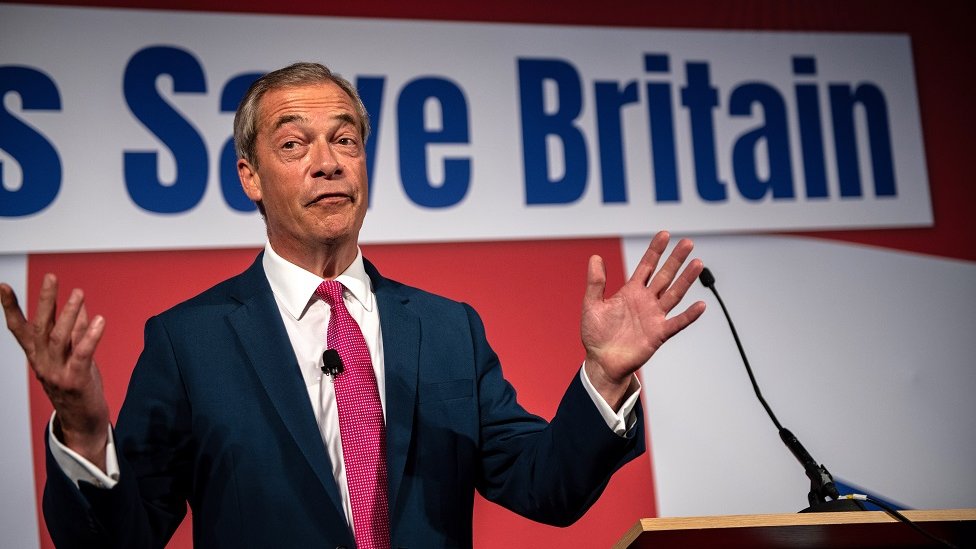
Nigel Farage’s Small Business Plan Accused of Being a ‘Disaster’
Nigel Farage, the leader of Reform UK, has attempted to strengthen his party’s appeal to Britain’s small-business community by presenting himself as a champion of entrepreneurs and independent companies. In a speech to small-business owners, Farage argued that Britain’s current political system places too many burdens on businesses and promised that Reform would reduce regulation, bureaucracy and unnecessary costs. However, the Labour Party strongly criticised his proposals, describing Reform’s existing economic plans as potentially disastrous for small businesses. The dispute highlights a wider political battle over how Britain can encourage economic growth while protecting workers and maintaining public finances.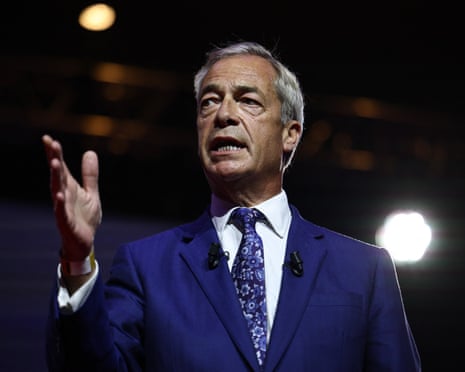
Small businesses are an extremely important part of the British economy. They employ millions of people and operate in almost every sector, from shops and restaurants to construction companies, professional services and technology firms. For many business owners, rising costs, complicated regulations and difficulty finding employees have become major concerns. Farage has attempted to use these frustrations to position Reform UK as a pro-business alternative to Labour and the Conservatives.
During his speech, Farage presented Reform as the natural political home of small-business owners. He argued that entrepreneurs have been neglected by successive governments and that excessive regulation prevents companies from expanding. His message was designed to appeal particularly to people who feel that government bureaucracy takes too much time and money away from running their businesses. The party has also argued that Britain needs a simpler tax system and a more competitive economic environment.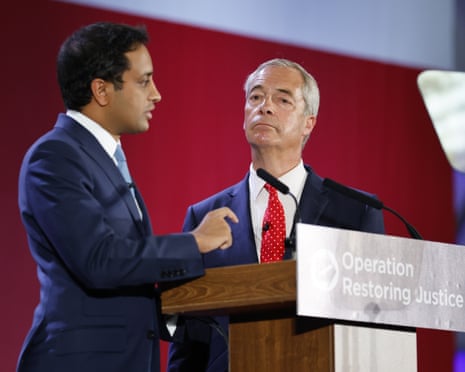
The criticism from Labour, however, focuses on whether Reform’s policies would actually help the businesses Farage claims to support. A Labour spokesperson argued that Farage would “say anything to get a headline” and warned that Reform’s existing proposals could be a “disaster for small businesses”. This criticism reflects a central question in economic politics: reducing taxes and regulations may make it easier for businesses to operate, but government also needs revenue to fund public services and regulations can protect workers, consumers and the environment.
One of Reform UK’s longstanding economic proposals has been to reduce corporation tax. Its 2024 election platform proposed cutting the main corporation-tax rate from 25 per cent to 20 per cent and eventually to 15 per cent. The party also proposed a significant reduction in government spending to finance its tax-cutting programme. Supporters argue that lower business taxes would encourage companies to invest, expand and employ more workers.
The argument in favour of lower taxation is relatively straightforward. If a business keeps more of its profits, it has more money available for investment. A small company might use additional funds to purchase equipment, open another shop, employ staff or develop a new product. Over time, this could contribute to economic growth and create additional employment. From this perspective, reducing the tax burden is not simply a gift to business owners but an attempt to encourage productive economic activity.
However, critics question whether tax cuts automatically generate sufficient economic growth to compensate for lost government revenue. A company may receive a tax reduction without necessarily increasing investment or employment. Business decisions depend on many factors, including consumer demand, interest rates, access to finance and confidence about the future. If the government loses substantial tax revenue without achieving the expected increase in economic activity, it may have to reduce spending elsewhere or increase borrowing.
This concern is particularly relevant to Reform UK because the party has previously proposed very large tax reductions. Farage has since moderated some of those ambitions, acknowledging the difficult fiscal situation facing Britain. In late 2025, for example, he abandoned plans for roughly £90 billion of tax cuts and shifted the party’s emphasis towards reducing public spending and improving fiscal credibility. The change demonstrates how difficult it is to combine generous tax reductions with balanced public finances.
Another important issue is employment costs. Reform has previously proposed different tax arrangements designed to encourage employers to hire British workers rather than relying heavily on immigration. In its 2024 proposals, the party suggested increasing employers’ National Insurance contributions for foreign workers. Critics could argue that such measures might increase costs for businesses that depend on international workers, particularly in sectors already experiencing labour shortages.
Small businesses can be especially vulnerable to additional employment costs. A large corporation may be able to absorb higher payroll expenses, while a small restaurant, care provider or construction company may operate with much smaller profit margins. If employment becomes more expensive, some businesses may reduce recruitment, increase prices or cut working hours. Consequently, policies designed to encourage the employment of British workers could have unintended consequences if companies cannot find enough suitable domestic employees.
Farage’s emphasis on reducing regulation is another central part of his economic message. Many small-business owners complain that regulations are complicated and time-consuming. A company with only a few employees may not have a large legal or administrative department, meaning that complying with new rules can be disproportionately expensive. Reform therefore argues that government should eliminate unnecessary regulations and make it easier for entrepreneurs to concentrate on running their companies.
There is a legitimate argument for simplifying regulation. Businesses need clear rules that can be understood without hiring expensive consultants. Excessive paperwork can discourage people from starting companies and can reduce the time available for productive work. Reform’s proposal therefore has potential appeal among entrepreneurs who believe government has become too bureaucratic.
Nevertheless, not every regulation is simply “red tape”. Employment rules can protect workers from exploitation, health and safety standards can prevent accidents, and consumer-protection laws can protect customers from dishonest businesses. Removing regulations without considering their purpose could create new problems. The challenge for any government is therefore to distinguish between unnecessary bureaucracy and rules that provide genuine public benefits.
Farage has also connected his small-business message to Brexit. He has argued that Britain failed to take full advantage of the opportunities created by leaving the European Union. Reform has frequently presented Brexit as an opportunity to reduce regulation and establish a more flexible economic system. In Farage’s view, Britain should use its freedom outside the EU to create policies that are more favourable to entrepreneurs.
However, Brexit itself has created new administrative challenges for many small businesses. Companies trading with European countries now face customs procedures and additional paperwork that did not exist when Britain was an EU member. For businesses that export goods to Europe, these requirements can be particularly significant. Farage’s argument is that the benefits of independent regulation can eventually outweigh these costs, while his critics argue that many small companies have already experienced additional burdens as a result of Brexit.
The debate is therefore not simply about whether Reform supports small businesses. Both sides can claim to support entrepreneurs. The real disagreement concerns which policies would create the best environment for them. Labour is likely to emphasise investment, public services, employment protections and economic stability, while Reform emphasises lower taxes, deregulation and greater freedom for businesses.
The political importance of small businesses should also be recognised. Business owners are not only economically important; they can influence their employees, families and local communities. A political party that successfully convinces entrepreneurs that it understands their problems can build a wider electoral coalition. Farage clearly understands this and has increasingly presented Reform as a party of enterprise rather than simply a movement focused on immigration and Brexit.
His speech therefore represents an attempt to broaden Reform’s political appeal. Immigration remains one of the party’s most important issues, but a party hoping to govern Britain needs credible policies across the economy, healthcare, education, housing and public services. A stronger small-business platform could help Reform demonstrate that it has ambitions beyond protest politics.
However, this also means that the party’s economic proposals will face much greater scrutiny. It is relatively easy for an opposition party to promise lower taxes and less regulation. A government must explain precisely how much policies will cost, how they will be implemented and what will happen if the expected economic benefits do not appear. Reform will therefore need to provide detailed evidence that its proposals can work in practice.
Ultimately, Farage’s small-business strategy reflects a genuine problem in the British economy. Many entrepreneurs face high operating costs, complicated regulations and uncertainty about the future. Governments should listen to these concerns and create conditions in which companies can invest and employ people. Yet solving these problems requires more than political slogans. It requires careful decisions about taxation, regulation, immigration, infrastructure and public spending.
In conclusion, Nigel Farage’s attempt to present Reform UK as the party of small businesses is an important part of his effort to expand the party’s political appeal. He argues that entrepreneurs need lower taxes, less bureaucracy and greater freedom to grow. Critics, particularly Labour, warn that Reform’s broader economic programme could instead damage small businesses if tax reductions are not properly funded or if other policies increase costs for employers.
The debate demonstrates that supporting small businesses is not as simple as cutting taxes or removing regulations. Entrepreneurs need affordable finance, skilled workers, reliable infrastructure, predictable rules and customers with enough money to spend. They also depend on public services and a stable economy. If Reform UK wants to convince small-business owners that it is ready to govern Britain, it will need to show that its promises can deliver these conditions without creating new economic problems.
Farage has successfully identified dissatisfaction among many business owners, but identifying a problem is only the beginning. The real test will be whether his party can produce a realistic, fully costed and sustainable economic programme. Only then can voters decide whether Reform UK truly represents the interests of Britain’s small businesses—or whether its critics are right to describe its plans as a potential “disaster”.