

Nigel Farage’s Anti-WHO Campaign Moves to US with Allies Added to Board
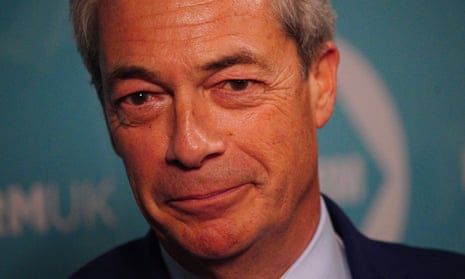
Nigel Farage’s campaign against the World Health Organization (WHO) is entering a new phase, moving from Britain to the United States and bringing several of his long-standing political allies with it. The organisation, known as Action on World Health, is relocating to Delaware as a charitable foundation and grassroots non-profit. The move raises questions not only about Farage’s continuing involvement in international health politics, but also about the increasingly close relationship between the Reform UK leader and political networks in the United States.
Farage is the honorary chair and co-founder of Action on World Health. The group was established in May 2024 with the stated objective of challenging the role and authority of the WHO. Its supporters argue that the organisation has become too closely associated with China, relies excessively on private funding and has adopted policies they regard as excessively interventionist. The campaign has called for the WHO to be replaced rather than simply reformed.
The relocation to the US is particularly striking because the American political environment has become increasingly hostile towards international organisations such as the WHO. Under Donald Trump, the United States has already withdrawn from the organisation. This means that Farage’s campaign is moving into a political environment where some of its central arguments have much greater resonance than they do in Britain.
The move also reflects Farage’s increasingly close relationship with American conservative politics. Since becoming an MP in July 2024, he has made at least 10 trips to the United States. His political career has increasingly extended beyond Westminster, with relationships involving American politicians, campaigners, donors and political strategists. The relocation of Action on World Health therefore appears to fit into a much wider pattern of transatlantic political activity.
One of the most notable developments is the appointment of Andy Wigmore to the organisation’s board. Wigmore is a long-time friend and political ally of Farage and played an important role in the Brexit campaign. His involvement demonstrates that the new American operation is not being built from scratch. Instead, it is being constructed around people who already have close relationships with Farage and experience in political campaigning.
Another important addition is Gerry Gunster, an American lobbyist and political strategist who worked with Farage’s Leave campaign during the 2016 EU referendum. Gunster brings extensive experience of American political campaigning and lobbying. His appointment could help Action on World Health develop a more sophisticated presence in the US and appeal to American donors and activists.
The board also includes Amanda Moslé Friedman, an American businesswoman associated with Farage who works for nuclear technology company IP3, and Greg Swenson, chair of Republicans Overseas UK. The combination of British Brexit campaigners, American political strategists and conservative activists gives the organisation a distinctly transatlantic character.
The campaign’s American ambitions are also visible in the way it now seeks funding. Its website is reportedly appealing for donations in US dollars and allows supporters to contribute by payment card or through an American bank account. It also provides a mechanism for people around the world to contact their politicians about the WHO, although notably there is no corresponding option specifically designed for British users to contact their MPs.
This raises an obvious question: why is a British politician so heavily involved in an American pressure group?
Farage’s supporters could argue that global health policy is an international issue and that there is nothing unusual about a British political figure participating in an international campaign. The WHO operates across national borders, and decisions about pandemic preparedness, vaccines, health regulations and international treaties can affect countries throughout the world. From this perspective, campaigning against the organisation is not exclusively an American or British concern.
However, Farage is also the leader of a major British political party. Reform UK has ambitions to become a governing party, and Farage himself has repeatedly presented his political movement as an alternative government. His involvement in a US-based campaign therefore creates questions about where his political priorities lie and how much time he devotes to activities outside Parliament.
The issue is particularly sensitive because British MPs face growing scrutiny over outside employment and political activities. Farage’s unpaid role at Action on World Health was eventually declared in the parliamentary register of interests in 2024. The delay in making the declaration previously attracted attention.
The question is not necessarily whether Farage has broken parliamentary rules. Rather, it is whether the public should expect greater transparency from a party leader whose political influence extends across national boundaries.
The controversy also becomes more complicated because Action on World Health has previously faced criticism over its links with the nicotine industry. One of its other co-founders is David Roach, a Reform UK local election candidate. Roach’s consultancy company previously provided secretariat services to the Global Initiative on Novel Nicotine, an organisation that advocated for nicotine pouches and other nicotine products. His company also lobbied on behalf of a vaping company.
Action on World Health’s 2024 manifesto opposed what it described as excessive regulation of vaping, as well as restrictions relating to food and other consumer products. Roach previously said that no vaping or novel nicotine companies were funding Action on World Health and that his consultancy was not being paid for its services to the group. He also said that the organisation did not publish a list of its funders because of confidentiality concerns.
These connections do not prove that the WHO campaign is controlled by the nicotine industry. However, they provide another reason for observers to ask questions about the group’s funding and political relationships. Transparency becomes especially important when an organisation seeks to influence public policy while maintaining that some information about its financial backers must remain confidential.
The WHO itself has previously accused Action on World Health of spreading misinformation about an international treaty designed to improve pandemic preparedness. The disagreement illustrates the fundamental ideological divide between the two sides.
Supporters of the WHO argue that international cooperation is essential when dealing with pandemics. Viruses do not respect national borders, and a global health organisation can coordinate information, research and responses between countries. Critics such as Action on World Health argue that international organisations can become too powerful and may undermine national sovereignty.
This question became particularly controversial during the Covid-19 pandemic. Governments around the world introduced unprecedented restrictions, while international organisations played an important role in coordinating scientific information and public-health responses. The experience created both greater support for international cooperation and deeper suspicion among those who believed governments had surrendered too much authority.
Farage has positioned himself firmly within the second camp. His political career has consistently emphasised national sovereignty. Brexit was based largely on the argument that Britain should regain control over its laws and borders rather than accepting decisions made by European institutions. His opposition to the WHO can therefore be understood as an extension of the same political philosophy.
From this perspective, the WHO represents another international institution that Farage believes has acquired excessive influence. His campaign is therefore not simply about healthcare. It is also about sovereignty, national decision-making and opposition to global governance.
The move to the United States adds another dimension to this argument. American conservatives have increasingly embraced the idea that international institutions threaten national sovereignty. Farage’s campaign therefore has the potential to connect British Euroscepticism with American anti-globalist politics.
This is particularly relevant during Trump’s presidency. Trump has long criticised international organisations and has promoted an “America First” approach to foreign policy. His administration’s withdrawal from the WHO has created an environment in which anti-WHO campaigning can potentially attract influential supporters.
Farage has maintained close links with Trump and the broader MAGA movement. His relationship with American conservatives has become an important part of his political identity. He has appeared at major American conservative gatherings and regularly speaks to American audiences. The Action on World Health campaign provides another platform through which he can participate in this political environment.
There is therefore a possibility that the organisation could become more than a narrow campaign against the WHO. It could develop into part of a wider international network opposing what its supporters regard as excessive global governance.
That possibility should not be underestimated. Political movements increasingly operate across national borders. Social media allows campaigners in Britain, America and Europe to communicate directly with one another. Ideas that once belonged to specific national political debates can now spread rapidly between countries.
Farage has been particularly successful at exploiting this international political environment. Brexit provided him with a platform that attracted attention from American conservatives, while his relationship with Trump gave him access to influential figures in the US. His anti-WHO campaign could further strengthen those connections.
At the same time, there are risks for Farage. The more time he spends campaigning in the United States, the more his opponents can question whether he is sufficiently focused on British politics. Reform UK is currently seeking to present itself as a serious alternative government. That requires Farage to demonstrate that he can concentrate on domestic issues such as the economy, immigration, public services and crime.
His involvement with an American pressure group could therefore become politically awkward if voters believe that he is more interested in international ideological battles than practical problems at home.
The issue also comes at a difficult moment for Farage personally. He has recently faced renewed scrutiny over his finances, including an active parliamentary standards investigation into a separate £5 million gift from cryptocurrency businessman Christopher Harborne.
Although the WHO campaign is unrelated to that investigation, the broader context matters. Farage’s political and financial relationships are receiving unusually intense attention. Any organisation with which he is closely associated is likely to attract greater scrutiny as a result.
The campaign’s structure makes this even more relevant. Action on World Health is not simply an anonymous organisation that Farage supports from a distance. He is its honorary chair and co-founder, while several board members have long-standing relationships with him. The group is therefore closely associated with Farage’s political network.
This means that the campaign’s reputation will inevitably affect perceptions of Farage himself.
If Action on World Health succeeds in attracting American supporters and becomes a significant voice in debates over international health policy, Farage could benefit. He could present himself as an influential international campaigner whose ideas have gained support beyond Britain.
If, however, the organisation becomes associated with conspiracy theories, questionable funding or extreme opposition to public-health institutions, the consequences could be different. Critics would argue that Farage is lending his political credibility to a campaign that lacks sufficient scientific or institutional legitimacy.
The central issue is therefore one of accountability. Political campaigning is an important part of democracy, and Farage has every right to criticise the WHO. But when a politician leads a pressure group, the public deserves to know who funds it, what interests are represented and how decisions are made.
The controversy over Action on World Health’s funding is particularly important in this regard. Its earlier refusal to publish a list of funders because of confidentiality concerns creates a tension with its campaign against international institutions. An organisation demanding greater transparency and accountability from the WHO can reasonably be expected to apply similar principles to itself.
Ultimately, Farage’s anti-WHO campaign reflects the increasingly international nature of his political career. What began as a British campaign against a global health organisation is now moving to the United States, where it can connect with a powerful conservative movement that shares many of Farage’s concerns about sovereignty and international institutions.
The addition of Andy Wigmore and Gerry Gunster is particularly significant because both men have deep connections to Farage’s political past. Wigmore was part of the Brexit campaign, while Gunster worked on the Leave campaign. Their involvement suggests that Farage is using a familiar network of political allies to build a new international campaign.
For Reform UK, however, the development creates a difficult balancing act. Farage’s international profile can strengthen the party’s appeal among voters who share his nationalist and anti-globalist views. But the party also needs to convince the wider electorate that it is focused on governing Britain rather than participating in ideological campaigns overseas.
The success of the project will ultimately depend on whether it can move beyond political rhetoric and demonstrate credible arguments about the WHO’s role. International health policy is too important to be reduced to slogans. The world needs effective mechanisms for responding to pandemics, but governments also have legitimate concerns about sovereignty and accountability.
In conclusion, Nigel Farage’s decision to move his anti-WHO campaign to the United States represents another step in the internationalisation of his political career. Action on World Health is now being rebuilt around a network of British and American political allies, while seeking donations and support in the US.
The campaign may appeal strongly to the growing American movement sceptical of international institutions, particularly after the US withdrawal from the WHO. But its expansion also raises questions about funding, transparency and Farage’s priorities as a British MP and party leader.
For Farage, the WHO campaign offers an opportunity to strengthen his influence among American conservatives and extend the ideas that helped define Brexit into a broader international movement. Whether it becomes a serious policy campaign or another front in the global culture wars will depend on how effectively it can demonstrate that its opposition to the WHO is based not only on political distrust, but on credible evidence and workable alternatives.
Leave a Reply
You must be logged in to post a comment.