

Prime Minister’s Questions in the House of Commons featured a sustained focus on the appointment of Peter Mandelson as the United Kingdom’s ambassador to the United States. Opposition Leader Kemi Badenoch pressed the Prime Minister on whether he had personally spoken to Lord Mandelson about his relationship with the convicted sex offender Jeffrey Epstein prior to the appointment.
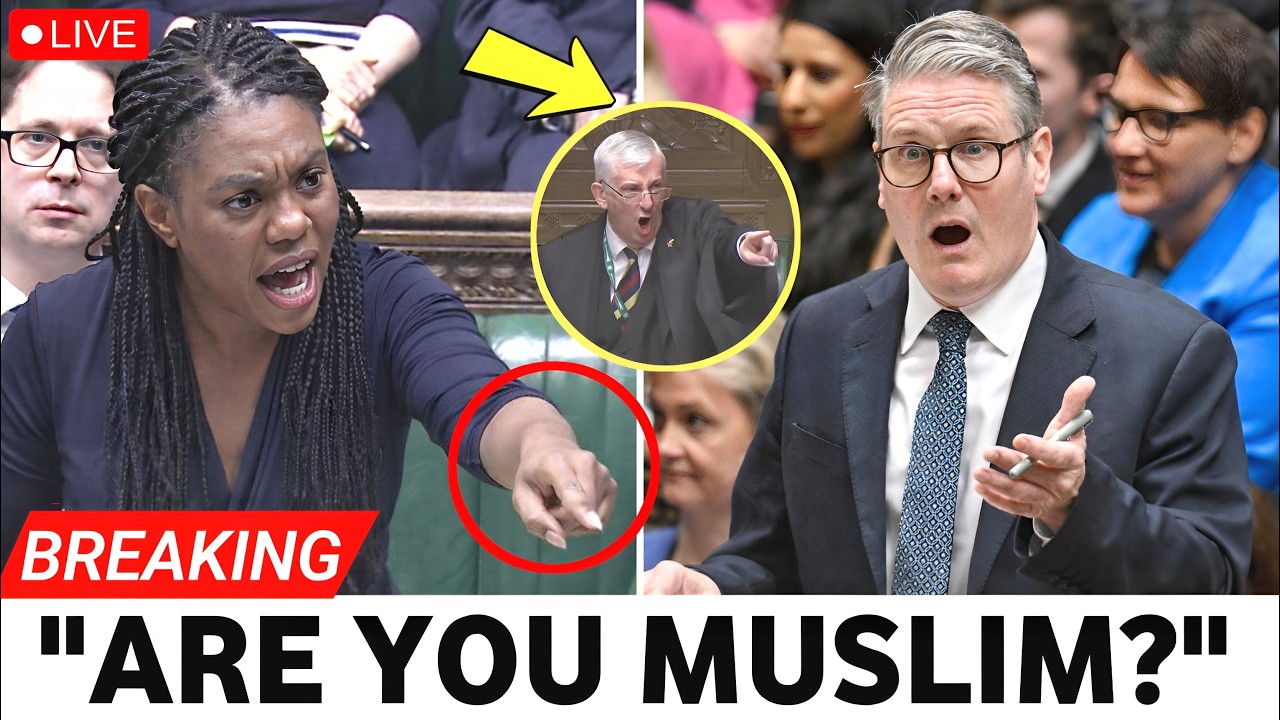
Starmer opened his response by accepting responsibility for the decision, describing it as his own mistake. He reiterated an apology to Epstein’s victims and confirmed that the government was complying fully with a parliamentary humble address for the release of related documents. He noted that the appointment process had since been strengthened following review by the independent adviser on ministerial standards.
Badenoch returned to the issue multiple times, asking for a direct yes or no answer on whether the Prime Minister had spoken personally with Mandelson about the matter. She referenced warnings that had been received and documents suggesting Mandelson had provided untruthful information. Starmer maintained that Mandelson had been asked questions and gave replies that later proved inaccurate, but he did not provide a straightforward confirmation of a direct conversation.
The exchange extended beyond the specific appointment. Starmer defended the broader principle of allowing public expressions of faith, citing religious events in Trafalgar Square involving Hindu, Jewish, Christian and Muslim communities as evidence of the country’s diversity and strength. He suggested that criticism appeared focused disproportionately on Muslim events and questioned the opposition’s stance on such matters.
Badenoch countered by referencing comments from her Shadow Justice Secretary regarding public prayer, framing them as a defence of British values rather than an attack on any faith. She accused the Prime Minister of attempting to divert the discussion away from his own judgment on the Mandelson appointment.
The debate also touched on foreign policy. Starmer criticised the opposition’s earlier calls for the UK to engage more directly in Middle East developments, arguing that such positions required careful consideration of consequences for British forces and households. Badenoch rejected the characterisation and continued to focus on accountability in domestic appointments.
Throughout the session, both leaders sought to highlight perceived weaknesses in the other’s judgment. Starmer portrayed the opposition as inconsistent on major international issues, while Badenoch emphasised the importance of thorough vetting and personal responsibility at the highest levels of government.
The appointment of high-profile political figures to diplomatic roles has long been a feature of British practice, but cases involving past controversies inevitably attract parliamentary and public attention. In this instance, the release of documents and ongoing police interest added layers of scrutiny to the process followed by Number 10.
Questions of ministerial standards and the role of independent advisers remain central to how such appointments are evaluated. Starmer stated that the process for political appointees had been reviewed and found to have been followed, yet he accepted that his personal judgment was ultimately at stake.
The opposition used the opportunity to question not only the specific decision but also the transparency and directness with which it was defended. Repeated requests for a simple yes or no answer became a focal point, illustrating how parliamentary procedure can turn on the framing and persistence of questioning.
Public expressions of faith in shared spaces such as Trafalgar Square continue to symbolise Britain’s multicultural reality. Successive governments have sought to balance respect for religious freedom with concerns over integration and public order. Debates on these issues often surface during high-profile political exchanges.
The broader context includes ongoing discussions about the UK’s international posture, particularly in relation to developments in the Middle East. Differences over the appropriate level of involvement reflect longstanding divides in British foreign policy thinking.
Attendance and engagement in the chamber during such sessions can vary depending on the topic. While foreign policy matters sometimes draw larger crowds, domestic accountability questions also command significant attention from those directly involved.

The exchange underscored the adversarial nature of Prime Minister’s Questions, where opposition leaders aim to expose perceived weaknesses and the Prime Minister seeks to defend the government’s record while highlighting opposition inconsistencies.
Independent oversight mechanisms, including the adviser on ministerial standards, play an important role in maintaining public confidence in appointments. Their assessments are frequently cited in parliamentary debate, even when ultimate responsibility rests with the Prime Minister.
The Mandelson case has prompted wider reflection on due diligence for senior diplomatic postings. While political appointments bring experience and networks, they also carry risks when past associations become subject to renewed scrutiny.
As the documents continue to be examined and any related investigations proceed, Parliament is likely to return to these themes. The balance between swift decision-making and rigorous vetting remains a recurring challenge in public life.
Britain’s political system relies on robust questioning to hold leaders accountable. Moments such as this PMQs session demonstrate how a single line of inquiry can dominate proceedings and shape public perceptions of competence and transparency.
The discussion also reflected wider societal debates on diversity, faith and national identity. Expressions of religious practice in public spaces are protected, yet they can also become flashpoints when linked to broader concerns about integration or cultural change.
In summary, the session illustrated the intensity of scrutiny applied to government appointments and the strategic use of parliamentary time to test leadership. While Starmer accepted personal responsibility for the Mandelson decision, the repeated focus on whether a direct conversation occurred highlighted ongoing questions about process and judgment.
Such exchanges contribute to the public record and inform broader political narratives in the run-up to future electoral contests. They also serve as a reminder of the expectations placed on those in high office to demonstrate both transparency and decisiveness when difficult issues arise.
The coming weeks may bring further clarity as additional documents are reviewed and any investigations advance. For now, the parliamentary record stands as a detailed account of the positions taken by the main parties on this matter of public interest.







Related Posts
Scandale Sur Le Service Public : Patrick Sébastien Lâche Une Bombe Sur Les Pratiques De France Télévisions Et Les Marges De Nagui.T.F
Scandale Sur Le Service Public : Patrick Sébastien Lâche Une Bombe Sur Les Pratiques De France Télévisions Et Les Marges De Nagui L’univers feutré et souvent opaque…
Betrayal of the Elite: SAS Veterans and Top Generals Launch Fierce Rebellion Against Starmer’s “Show Trials” – mycay
The bond between the British Crown and its most elite warriors is facing an unprecedented rupture. In a move that has sparked fury across the military establishment,…
🚨 Mark Carney SHUTS DOWN Trump’s “America First” Agenda LIVE 🇨🇦🇺🇸 — A Dramatic Clash That Turns Into One of the Biggest Political Backfires of 2026!!! 😳🔥chitam
The Resurgent North: How Trump’s Pressure Campaign Built a Canadian Majority OTTAWA — For the better part of a year, the political oxygen in the Canadian capital…
The 9-Minute Reset: How Mark Carney’s “Arctic Clause” Outmaneuvered Washington-liplip
At 9:41 a.m. Eastern time, the world of international finance shifted on its axis, not with a bang, but with a measured, nine-minute address from Ottawa. Standing…
„Die deutsche Politik kann alles von Milei lernen“ – Energieexperte Fritz Vahrenholt und Ulrich Reitz rechnen mit der Bundesregierung ab. phunhoang
Berlin – Javier Milei hat Argentinien mit radikaler Marktwirtschaftspolitik in kürzester Zeit spürbar verändert. Zum ersten Mal seit 123 Jahren erzielt das Land einen Haushaltsüberschuss, die Armutsrate…
Diplomatischer Eklat in Budapest: Peter Magyar beleidigt Staatspräsident Tamás Sulyok und fordert dessen sofortigen Rücktritt. phunhoang
Budapest – Nur wenige Tage nach seinem Wahlsieg hat der designierte ungarische Ministerpräsident Peter Magyar für einen schweren diplomatischen Zwischenfall gesorgt. Bei einem offiziellen Besuch im Präsidentenpalast…