

Reform UK Civil War Erupts as Key Party Figure Is Suspended
Reform UK has been plunged into a fresh internal crisis after one of its most prominent supporters was suspended from the party following a series of extraordinary attacks on Nigel Farage and senior figures around him.
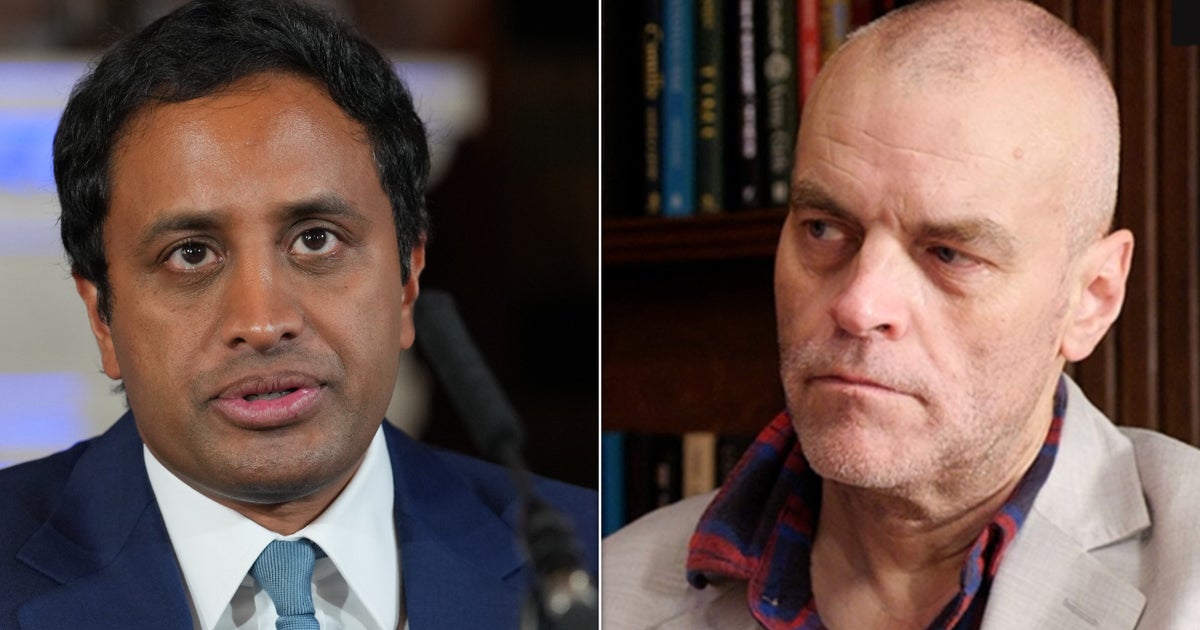
Tim Montgomerie, the founder of ConservativeHome and a high-profile former Conservative activist, has been suspended after publicly criticising Reform’s leadership and raising questions about the conduct of Farage and home affairs spokesman Zia Yusuf.
The dramatic move has exposed tensions inside a party that has spent much of the past two years presenting itself as a disciplined alternative to Britain’s established political organisations.
Instead, Reform now finds itself confronting an uncomfortable question: can a movement built around political insurgency successfully transform itself into a tightly controlled party of government without creating its own internal rebellions?
For Farage, the answer could have major consequences.
A remarkable suspension
Montgomerie’s suspension came after he repeatedly criticised the Reform leadership in public.
Among his complaints were attacks on Farage’s decision to skip the count at the recent Clacton by-election, as well as criticism of the party leader’s handling of questions surrounding a £5 million gift from cryptocurrency entrepreneur Christopher Harborne.
Montgomerie also attacked Zia Yusuf, accusing him of adopting an unnecessarily confrontational approach towards colleagues and criticising his comments about former defence secretary Ben Wallace.
Reform’s leadership, however, took a very different view.
The party has rules preventing members from publicly attacking senior colleagues, and it argued that Montgomerie’s conduct crossed that line.
The suspension therefore represents more than a personal disagreement.
It demonstrates that Farage is prepared to enforce strict discipline even against people who have played an important role in building the wider political movement.
Who is Tim Montgomerie?
Montgomerie is not an insignificant figure in Conservative politics.
He founded ConservativeHome, a website that became an influential platform for activists and politicians on the right of the Conservative Party.
He also advised Boris Johnson and subsequently became associated with Reform, joining the party in 2024.
His political background makes the suspension especially significant.
Montgomerie represents precisely the kind of conservative political network that Reform has attempted to attract since its breakthrough.
He is experienced, well connected and familiar with the mechanics of political campaigning.
His decision to criticise Farage publicly therefore carries considerably more weight than an attack from an anonymous party member.
It suggests that dissatisfaction is not necessarily confined to Reform’s fringe.
The Farage problem
The most serious issue raised by Montgomerie concerns Farage himself.
The Reform leader has just returned to Parliament after winning the Clacton by-election with more than 63% of the vote. But the victory came amid considerable controversy.
Farage had resigned his seat and triggered the by-election while facing renewed scrutiny over financial matters, including allegations surrounding an undeclared £5 million gift from Harborne. Parliament’s standards investigation was subsequently reactivated after Farage’s re-election.
Farage has denied wrongdoing and has said the gift was personal.
But the controversy has not disappeared.
Montgomerie’s criticism therefore touches a sensitive nerve inside Reform.
The party wants to present itself as an organisation prepared to hold the political establishment to account.
That makes transparency around its own leadership particularly important.
Critics can easily ask why a party demanding accountability from Labour and the Conservatives should resist scrutiny of its own leader.
The extraordinary Clacton episode
Montgomerie’s criticism of Farage’s behaviour at Clacton is also revealing.
Farage won the seat convincingly, but he did not attend the official declaration.
Instead, he appeared at a Reform event branded “Farage Fest”, telling supporters that he would not stand on a stage to be “demeaned and humiliated by nobodies”.
The explanation was that police had warned him about an alleged effort to disrupt the count.
Essex police subsequently disputed the suggestion that they had advised him not to attend.
The incident created an extraordinary political spectacle.
The main parties had declined to contest the election, leaving Farage facing a collection of fringe and independent candidates, including the satirical Count Binface.
Farage nevertheless presented his victory as a major rejection of the establishment.
For his supporters, it demonstrated that voters remained firmly behind him.
For critics, it looked more like a political publicity stunt that drew renewed attention to the financial controversy he had hoped to move beyond.
Montgomerie’s decision to attack Farage over the episode shows just how differently some people inside Reform viewed it.
Zia Yusuf enters the row
The suspension has also exposed tensions surrounding Zia Yusuf.
Yusuf has become one of Reform’s most prominent figures and an important part of Farage’s attempt to professionalise the party.
But Montgomerie has criticised his style, particularly his treatment of colleagues and his public rhetoric.
That criticism matters because Yusuf represents a newer generation of Reform leadership.
Farage remains the party’s dominant personality.
But Reform increasingly needs a team capable of operating beyond Farage himself.
The relationship between the party leader and figures such as Yusuf will therefore become increasingly important if Reform wants to build a long-term political organisation.
The problem with discipline
Farage has always been acutely aware of the dangers of internal disorder.
Reform’s earlier history is littered with disputes and controversies, including the suspension of former MP Rupert Lowe in 2025 following allegations of serious bullying, which he denied. The party has also faced controversies involving candidates and activists.
Farage’s response has been to insist on tighter control.
When he unveiled Reform’s frontbench, he warned that members would be expected to maintain discipline and behave properly.
That approach has an obvious logic.
The Conservatives suffered years of factional warfare, leadership changes and public disagreements.
Reform does not want to repeat that history.
But there is a danger in taking discipline too far.
A party can suppress public disagreement.
It cannot necessarily eliminate disagreement itself.
If critics are suspended whenever they question the leadership, tensions may simply move behind closed doors.
From protest movement to potential government
The central problem facing Reform is that it has changed faster than its internal culture.
When the party was primarily an anti-establishment movement, political discipline mattered less.
Its purpose was to disrupt.
Its politicians could be outsiders.
Its supporters could rally around a handful of simple messages.
But Reform now wants to be taken seriously as a potential governing party.
That means producing detailed policies, maintaining a professional parliamentary operation and convincing voters that it can manage the machinery of government.
The more seriously Reform is taken, the more closely its internal behaviour will be examined.
The suspension of Montgomerie therefore comes at an awkward moment.
The party has just unveiled a sweeping £50 billion welfare-cutting programme, including major restrictions on disability benefits and a proposal to prevent almost all foreign nationals from receiving benefits.
Those policies require sustained public scrutiny.
Reform cannot afford for internal arguments to overshadow its economic message.
A party under pressure
The political timing is also difficult.
Reform’s national polling position has weakened after its extraordinary surge earlier in the year.
Labour has recovered under new Prime Minister Andy Burnham, while Reform has slipped back to around the mid-20s in several surveys. Analysts have suggested that Farage’s momentum has been damaged by the controversies surrounding him and by competition from other parties on the right.
That makes internal unity more important than ever.
Political parties can survive scandals when they are winning.
They can survive leadership disputes when their electoral prospects are improving.
But when polling begins to move against them, internal disagreements can become much more dangerous.
Every argument starts to look like evidence of decline.
Every resignation becomes a headline.
Every suspension becomes a question about whether the party is losing control.
Farage still holds the power
Despite the turmoil, there is little evidence that Farage’s authority inside Reform is seriously threatened.
He remains the party’s leader, its best-known politician and its central electoral asset.
His recent victory in Clacton demonstrated that he still possesses considerable personal support, even in an unusual by-election that was boycotted by the main parties.
The problem is not whether Farage can win support.
It is whether Reform can build a political machine that survives beyond his personal brand.
That question becomes more important every time another prominent figure falls out with the leadership.
The bigger battle
Montgomerie’s suspension may ultimately prove to be a minor internal dispute.
Or it could become an early warning of a much larger problem.
Reform is attempting to combine former Conservatives, populist campaigners, anti-establishment activists and ambitious Westminster politicians under one political banner.
Those groups do not necessarily share identical priorities.
Some want a more traditional conservative party.
Others want a radical populist movement.
Some are primarily concerned with immigration.
Others are focused on taxation, welfare or opposition to the political establishment.
Farage has so far been the glue holding these groups together.
But as Reform grows, disagreements over strategy are likely to become more frequent.
A test of Reform’s maturity
The Montgomerie suspension ultimately presents Farage with a difficult balancing act.
He needs discipline.
But he also needs experienced people who are willing to challenge assumptions and identify mistakes.
A political organisation that never tolerates dissent can become dangerously insulated from reality.
At the same time, a party consumed by public infighting risks repeating the failures of the Conservatives that helped create Reform in the first place.
That is the paradox now facing Farage.
He built Reform by attacking the established parties for being dysfunctional.
Now his own party is being forced to demonstrate that it can avoid the same fate.
The suspension of Tim Montgomerie may therefore be remembered as much more than an internal disciplinary action.
It is a test of whether Reform UK can evolve from an insurgent movement into a serious political organisation.
For now, Farage has chosen discipline over dissent.
The question is whether that decision strengthens Reform — or simply pushes its internal civil war further underground.