

Reform UK Urges Andy Burnham to Immediately Make Big Migrant Change
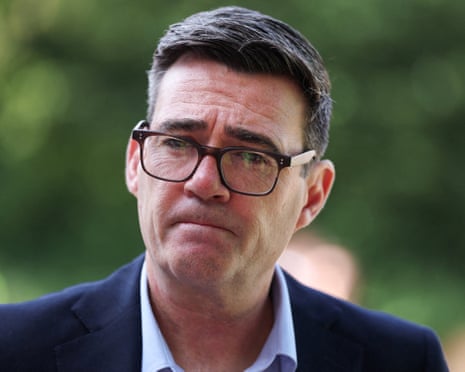
Andy Burnham’s new government is facing growing pressure over its approach to migration, with Reform UK demanding that the prime minister make an immediate change to the way Britain deals with asylum accommodation.
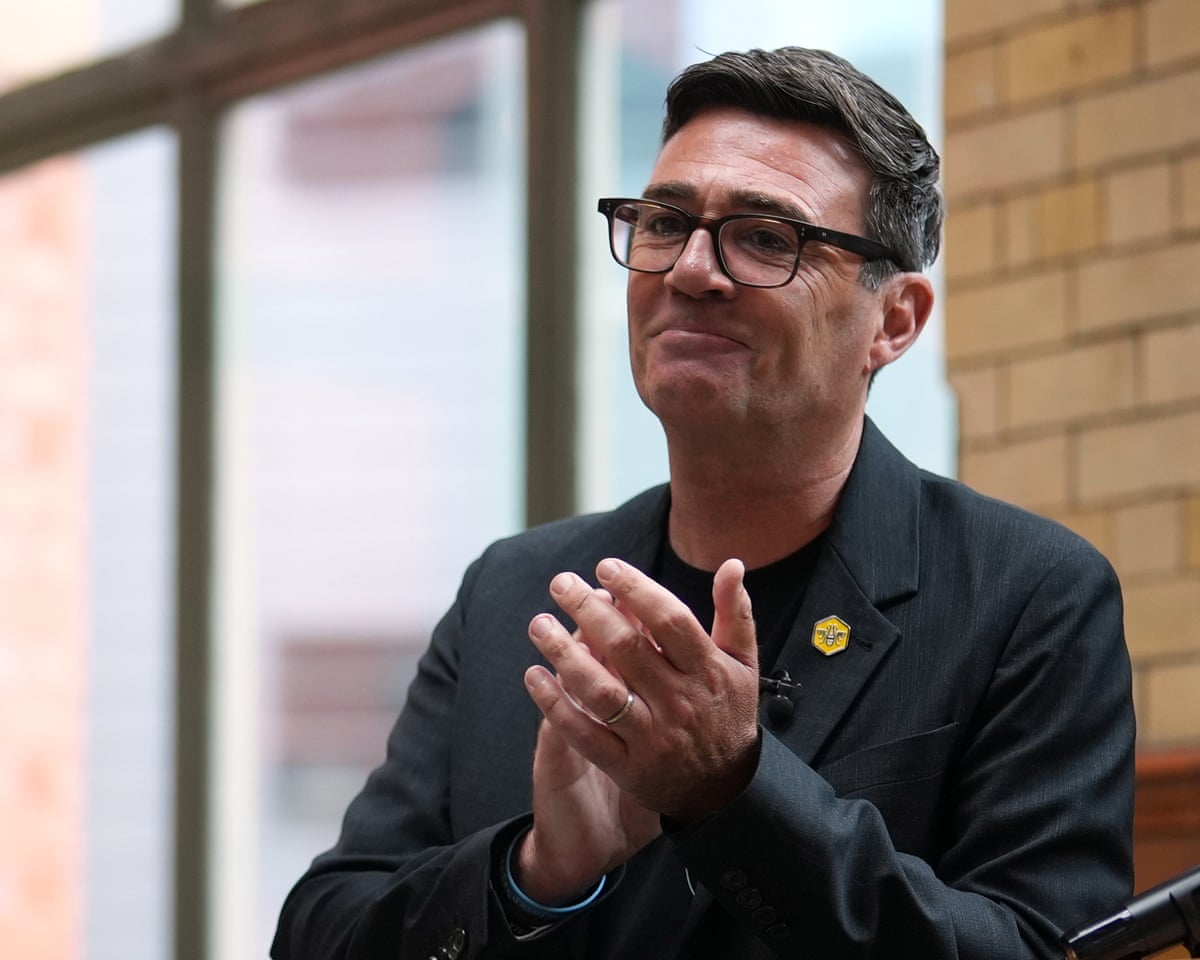
The confrontation comes at a politically sensitive moment for Burnham. Since entering Downing Street, he has attempted to present his government as both compassionate and practical, promising to tackle illegal migration while also ensuring that the responsibility for accommodating asylum seekers is distributed more evenly across the country. But that approach is producing an increasingly fierce backlash in some communities.
Reform UK believes Burnham is making a fundamental mistake.
Rather than spreading asylum accommodation to more towns and communities, the party argues that the government should focus on reducing the number of people entering the asylum system and speeding up removals of those whose claims fail.
The disagreement is becoming one of the first major tests of Burnham’s claim that his government can offer a new political model.
Burnham has attempted to frame his migration policy around the principles of “compassion and control”. His government wants to move away from relying so heavily on hotels and instead use larger, more isolated sites with dedicated facilities. The stated intention is to make the system more manageable while distributing responsibility more fairly between different parts of England.
On paper, that approach appears designed to solve several problems simultaneously.
Hotels are expensive. Local communities have often complained that they are being asked to accommodate disproportionate numbers of asylum seekers. Large sites could potentially be cheaper and easier to manage than hundreds of individual hotels.
But for Reform UK, moving migrants around Britain does not solve the fundamental problem.
It simply changes where the pressure is felt.
That criticism has become particularly powerful in communities being asked to accommodate large numbers of asylum seekers. Reports from places such as Piddington in Oxfordshire illustrate the depth of local opposition. Residents have objected to plans to accommodate around 1,250 undocumented male migrants at the nearby Bicester Garrison site, arguing that such a large development would overwhelm a small community.
The controversy demonstrates the political difficulty Burnham faces.
The government can argue that asylum seekers must be accommodated somewhere while their claims are processed. But residents can reasonably ask why their community should suddenly have to absorb a population many times larger than the existing local population.
That tension cannot simply be dismissed as hostility towards migrants.
It is also a question about planning, infrastructure, housing capacity and democratic consent.
Schools, healthcare services, transport and policing all have finite resources. If a government moves large numbers of people into an area without adequate preparation, local resentment can increase even among people who support the principle of providing protection to genuine refugees.
Reform UK has seized upon precisely this frustration.
The party’s wider political strategy is based on arguing that established parties have failed to control immigration and that voters want a much more restrictive system. Recent polling has shown Labour moving ahead of Reform UK nationally, although the contest remains close and Reform continues to exert significant influence over the political debate.
For Farage’s party, migration remains one of its strongest political issues.
The demand directed at Burnham is therefore about more than one asylum accommodation policy. Reform wants the prime minister to demonstrate that Labour is prepared to take tougher action on migration rather than simply redistribute its consequences.
That could mean faster decisions on asylum applications, more removals of failed claimants, stronger action against people-smuggling gangs and tighter restrictions on the number of people entering Britain through irregular routes.
The government has already argued that it is making progress in some of these areas.
The debate over the Channel crossings illustrates the difficulty of assessing that claim. Government figures and ministers have pointed to reductions in crossings compared with previous periods, while critics argue that the number of arrivals remains far too high and that Britain continues to struggle to remove people whose asylum claims fail.
For Burnham, the political challenge is therefore to convince voters that his government is actually reducing pressure rather than simply moving it around.
That is not an easy task.
If the government announces a new accommodation site, local residents see the immediate effect.
If ministers say that crossings are falling nationally, that improvement may feel much less convincing to a community suddenly being asked to accommodate hundreds or thousands of people.
This is why the question of fairness has become so important.
Burnham argues that the previous system placed too much of the burden on poorer and working-class areas because accommodation was often concentrated where cheaper housing was available. His answer is to ensure that more prosperous communities also “play their part”.
There is a certain logic to that argument.
If Britain has accepted a legal and humanitarian responsibility to process asylum claims, it is reasonable to argue that the responsibility for accommodation should not fall disproportionately on a small number of communities.
But there is another interpretation.
Critics can argue that spreading the problem is not the same as solving it.
If the number of people entering the asylum system remains high, moving accommodation from one part of the country to another does nothing to reduce the total demand for housing and public services.
That is the central point Reform UK is making.
The party wants the government to concentrate on the “front end” of the problem: preventing irregular entry and increasing removals.
This puts Burnham in a difficult position because he cannot simply ignore the legal obligations associated with asylum.
People who arrive in Britain and claim asylum are entitled to have their claims considered under the applicable legal framework. Some will eventually be recognised as refugees. Others will have their claims rejected.
The government’s task is to distinguish between those categories efficiently and fairly.
The problem is that delays can create a huge accommodation burden.
If asylum decisions take too long, people remain in government-supported accommodation for longer. That increases costs and creates greater pressure on communities.
So speeding up decisions could potentially help both sides of the political argument.
It could allow genuine refugees to receive security more quickly while enabling the government to remove people whose claims fail.
That is one area where Burnham could potentially challenge Reform UK without adopting every part of its agenda.
He can argue that effective border control and a functioning asylum system are not inherently incompatible with humanitarian obligations.
But he will need results.
The longer asylum seekers remain in temporary accommodation, the more difficult it becomes for ministers to persuade voters that the system is under control.
This is especially true when accommodation is located in communities that are already struggling with housing shortages.
Britain’s housing crisis makes the issue even more sensitive.
The country already has a shortage of affordable homes. Rents have risen sharply in many areas, and young people frequently struggle to find suitable accommodation.
When residents hear that a government is preparing to house large numbers of asylum seekers in their area, some inevitably ask why equivalent resources are not being used to help local families.
That is a political question Burnham cannot simply wave away.
The answer cannot be that migrants and local residents are competing for exactly the same housing in every circumstance. The accommodation system is more complicated than that.
But perception matters.
If people believe that government is prioritising newcomers over established residents, public trust can deteriorate rapidly.
Reform UK is attempting to turn that frustration into a broader political argument.
Its message is that Britain should regain control over who enters the country and how long people without a legal right to remain are allowed to stay.
The party’s recent proposals go well beyond asylum accommodation. Reform has also proposed restricting access to welfare for foreign nationals, including people with settled status, as part of a package it says could reduce the welfare bill by £50 billion.
That demonstrates how migration has become intertwined with wider arguments about public spending.
For Reform, the issue is not only the number of people arriving.
It is the cost of supporting them.
The party argues that taxpayers should not be expected to finance benefits or accommodation for people who do not have a long-term entitlement to live in Britain.
Opponents argue that some of these proposals could affect people who have lawful status and have contributed to British society for many years.
Again, the political disagreement is substantial.
Burnham must therefore decide how far he is prepared to move towards Reform’s position.
There is a strategic danger in moving too far.
If Labour attempts to copy Reform’s language and policies, it could simply strengthen Reform by making immigration the central political issue.
On the other hand, if Burnham appears unwilling to respond to public concerns, Reform can portray him as out of touch.
This is the trap facing mainstream parties across Europe.
Immigration has become an issue on which voters increasingly expect governments to demonstrate control.
But controlling migration is not simply a matter of announcing tougher rhetoric.
It requires agreements with other countries, functioning border systems, adequate enforcement capacity, effective courts and a credible removal process.
It also requires dealing with the reasons people migrate in the first place.
For asylum seekers, some are fleeing war, persecution or political repression. Others may have weaker claims. The system has to distinguish between them.
That makes simple slogans attractive but inadequate.
Burnham’s challenge is to build a system that is both firm and credible.
The prime minister has already shown that he understands the political importance of the issue. His government’s decision to move away from widespread hotel accommodation is partly an attempt to demonstrate that ministers are taking control. The use of larger sites is intended to make accommodation more efficient and reduce the pressure on ordinary communities.
Yet the backlash suggests that implementation matters as much as policy.
A government can say that responsibility is being shared fairly.
Residents may respond that their particular community is being asked to accept far too much.
The only way to resolve that dispute is through transparent numbers, proper planning and meaningful investment in local infrastructure.
That is where Burnham could potentially make a difference.
His experience as mayor of Greater Manchester has taught him the importance of local government and regional cooperation. He has consistently argued that decisions should be made closer to the communities affected by them.
Migration policy now presents him with a contradiction.
The government wants local authorities to help manage asylum accommodation, but many of the most important decisions are still made centrally.
Local councils may therefore feel that they are being asked to implement decisions they did not make.
That can create resentment among councillors as well as residents.
Reform UK will exploit every example of that frustration.
The party can argue that Burnham’s promise of decentralisation means little if local communities cannot decide whether large asylum accommodation sites should be established in their areas.
Burnham’s supporters will respond that national responsibilities cannot simply be delegated to individual communities. Britain needs a national asylum system, and someone has to make decisions about where accommodation is provided.
Both arguments contain elements of truth.
The real challenge is finding a system that combines national responsibility with local accountability.
That may be more important than the political argument over whether Britain should accept more or fewer asylum seekers.
The immediate demand from Reform UK, however, is much simpler.
Make a change now.
Stop treating redistribution as the answer.
Reduce arrivals.
Speed up decisions.
Remove people who have no legal right to remain.
And give local communities more control over decisions that affect them.
Whether Burnham accepts that prescription remains uncertain.
What is clear is that migration is rapidly becoming one of the defining tests of his premiership.
He came to Downing Street promising a government that would listen to ordinary people and tackle problems that previous governments had failed to solve.
Communities affected by asylum accommodation are now asking him to listen to them.
They want to know why their areas have been selected, how many people will be accommodated, how long the arrangements will last and what resources will be provided.
Reform UK wants Burnham to go further still.
It wants him to change the government’s fundamental approach.
The prime minister therefore has a difficult choice.
He can defend his policy of distributing asylum accommodation more evenly and argue that fairness requires every part of the country to contribute.
Or he can respond to Reform’s pressure by adopting tougher measures designed to reduce the number of people requiring accommodation in the first place.
The strongest strategy may ultimately require elements of both.
Britain needs a humane asylum system.
It also needs a controlled border.
It needs to provide protection to people who genuinely qualify for it.
But it also needs to remove those who have no legal basis for remaining.
And it needs decisions to be made quickly enough that temporary accommodation does not become a permanent and increasingly expensive feature of the system.
That is the real test for Andy Burnham.
Reform UK has identified a political weakness and is demanding immediate action. Burnham can dismiss the criticism as partisan politics, but doing so will not make the underlying public concerns disappear.
Migration has become too important for that.
The prime minister’s response will reveal whether his promise of a new political model extends to one of Britain’s most divisive issues.
If Burnham can combine firm border control with an efficient and humane asylum system, he may be able to move the debate beyond the simplistic choice between compassion and control.
If he cannot, Reform UK will continue to argue that the government is simply moving the problem from one community to another.
And that argument could become increasingly difficult for Labour to defeat.