
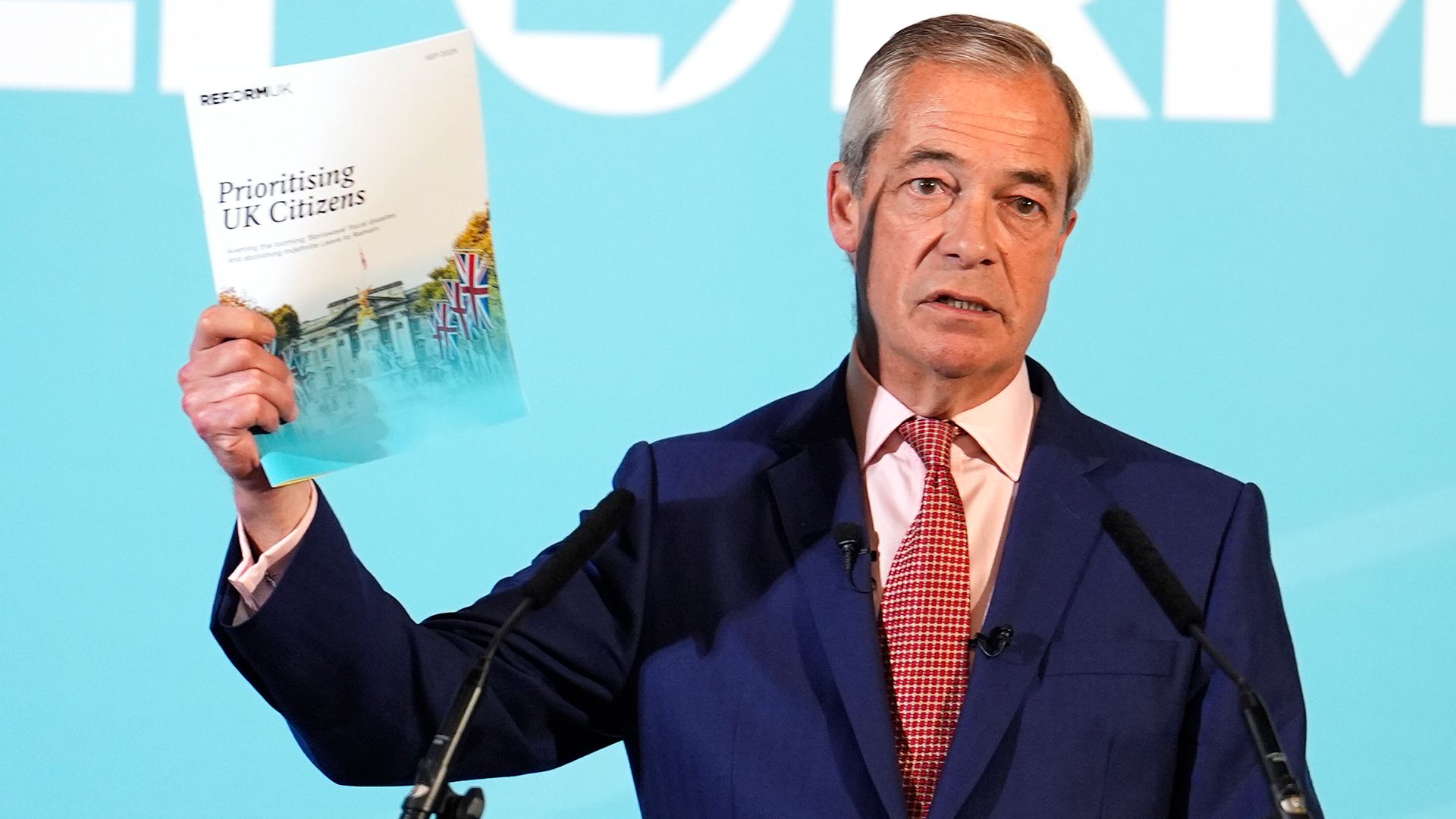
Reform’s Welfare Plan: How Benefits Could Change for British Citizens and Migrants

Reform UK has placed welfare, immigration and the relationship between work and government support at the centre of its political agenda, promising major changes to the benefits system if it enters government.

The party, led by Nigel Farage, argues that Britain’s welfare system should provide a safety net for people who genuinely cannot support themselves while ensuring that work is financially more rewarding than relying on state assistance.
Its proposals would represent a significant change in the way welfare eligibility is linked to immigration status, employment and long-term residence.
At the heart of Reform UK’s argument is a simple political message: people who work hard and follow the rules should be better off than those who do not work.
The party says the existing system has created situations in which some working households feel that employment does not provide enough financial advantage over benefits. Reform has therefore promised to reduce what it describes as incentives for dependency and redirect public resources towards British citizens who need assistance.
Its wider policy programme states that welfare should support British citizens who cannot get by without government help and that the system should no longer “trap people in dependency”.
For British citizens, the proposed changes would not mean the end of the welfare state.
Instead, Reform presents its approach as a restructuring of the system.
The party has repeatedly argued that people who are genuinely unable to work because of serious illness, disability or other circumstances should continue to receive support.
The political argument is therefore less about whether welfare should exist and more about who should qualify, under what conditions and for how long.
One of the most significant parts of the proposal concerns foreign nationals.
Reform UK’s current policy says foreign nationals would no longer be eligible for welfare payments. Its policy FAQs also state that EU nationals with settled status would retain that status but would face changes to their entitlement to benefits under a Reform government.
That would represent a major change for many migrants living in Britain.
The party argues that people who come to Britain on temporary visas should not automatically gain access to the same welfare system as British citizens.
Its proposed immigration system would also replace indefinite leave to remain with a renewable visa structure, with higher salary thresholds, English-language requirements and stricter conditions.
Reform says there would be no general recourse to benefits for foreign nationals.
There would, however, be important distinctions between different groups.
For example, the party’s policy FAQ says that EU citizens protected by the Withdrawal Agreement would not lose their settled status simply because of the proposed reforms. However, their welfare entitlement could change.
Similarly, foreign nationals who have reached pension age and have made sufficient National Insurance contributions would continue to have residence rights and receive the state pension under the party’s stated policy.
The distinction matters because the political debate surrounding benefits can sometimes make the system appear much simpler than it actually is.
Welfare eligibility is affected by factors including immigration status, residence, employment, disability, age and National Insurance contributions.
Changing one element can therefore have consequences across several parts of government policy.
Reform’s argument is that the system should place greater emphasis on contribution.
Those who work, pay taxes and contribute to the economy should, in the party’s view, receive a stronger financial reward.
That philosophy is reflected in another Reform proposal known as the “Hard Work Bonus”.
The party has proposed an uncapped personal allowance for overtime above a 40-hour working week for people earning below £75,000, meaning qualifying workers would pay no tax on overtime earnings under the proposal. Reform says the measure would benefit around 90 per cent of the workforce and estimates its cost at approximately £5 billion a year.
The proposal illustrates the wider philosophy behind Reform’s welfare plans.
Rather than simply reducing benefits, the party wants to make employment more financially attractive.
Its argument is that the best welfare reform is one that helps people move into work and remain in work.
That approach could appeal to workers who believe they are paying high taxes while receiving relatively little support from the state.
But the proposals are also likely to generate controversy.
Critics could question whether restricting welfare access for migrants would create hardship for people who are legally working and contributing taxes.
Others may ask how the policy would interact with existing legal rights and international agreements.
There are also questions about the practical administration of such a system.
The government would need to establish exactly which benefits are affected, which categories of migrants would be exempt and how eligibility would be assessed.
Any major reform would also have to account for people whose circumstances change.
A migrant who loses employment, for example, may suddenly become financially vulnerable. Under a more restrictive welfare system, the safety net available to that person could be considerably smaller.
Supporters of Reform would argue that this is precisely the point.
They believe migration rules should make clear from the beginning what level of access a person has to public services and welfare.
The party’s immigration proposals are closely connected to this principle.
Reform says Britain should no longer operate as what it describes as a “global welfare system”, and its current policy platform links restrictions on benefits to a broader programme of immigration reform.
That programme includes abolishing indefinite leave to remain in its current form, introducing renewable five-year visas and limiting shortage visas to what the party describes as genuine and acute shortages in nationally critical roles.
The party also proposes requiring sponsors to train British workers alongside the recruitment of workers from overseas.
For businesses, such changes could have significant implications.
Employers in sectors that have relied heavily on overseas recruitment could face higher costs and additional obligations.
Healthcare is one example.
Reform’s policy FAQ says foreign-national healthcare workers would be subject to the proposed immigration changes, although an Acute Skills Shortage Visa would be available where there is clear evidence of critical shortages.
The party says training places for British workers would be created on a one-for-one basis for these visas.
Supporters believe such policies could encourage employers to invest more heavily in domestic training.
Critics, however, may argue that Britain’s labour shortages cannot always be solved quickly through training alone.
The debate therefore extends beyond benefits.
It is fundamentally about what kind of economy Britain wants.
Should employers be able to recruit workers internationally whenever there is a shortage?
Or should immigration be restricted until British workers have been given greater opportunities to fill those roles?
Reform clearly favours the second approach.
Its welfare policy is part of a broader political philosophy that prioritises national citizenship, contribution and economic self-reliance.
The party’s supporters see this as a necessary correction to years of what they regard as excessive government spending and poorly controlled immigration.
Opponents are likely to see the proposals differently.
They may argue that welfare reform should focus primarily on poverty, disability and unemployment rather than immigration status.
There will also be debate about whether reducing benefit eligibility actually reduces public spending or simply transfers costs elsewhere.
For example, someone who cannot access welfare may become more dependent on family members, charities or local authorities.
That does not necessarily eliminate the underlying financial problem.
It may simply move it.
Another major issue is disability support.
Reform has indicated support for tightening eligibility in some areas, including proposals to remove Personal Independence Payment for non-serious anxiety conditions. The party has presented such measures as part of a wider package of savings intended to finance tax cuts and other policies.
This is likely to be one of the most politically sensitive areas.
Disability charities and campaigners would inevitably ask how the government would distinguish between people who can work and those whose conditions genuinely prevent employment.
The political consequences could therefore be substantial.
Ultimately, Reform UK’s welfare proposals represent a broader attempt to redefine the relationship between the individual and the state.
The party wants government assistance to remain available, but it wants access to be more tightly controlled.
It wants work to be rewarded more strongly.
It wants immigration and welfare policy to be closely connected.
And it wants British citizenship and contribution to play a greater role in determining access to public support.
Whether those ideas would produce the savings Reform expects, encourage more people into employment or create unintended social costs would depend heavily on how the policies were implemented.
For voters, however, the political choice is becoming clearer.
Reform is offering a welfare system based on a stronger principle of contribution and tighter restrictions for foreign nationals, combined with incentives designed to make employment more attractive.
Its supporters will see this as a restoration of fairness.
Its critics will argue that fairness also requires protecting vulnerable people, regardless of where they were born.
That debate is unlikely to disappear.
If Reform UK were to enter government, its welfare programme could become one of the most significant changes to Britain’s social security system in a generation.
For millions of British citizens and migrants, the details would matter enormously.
The central question would no longer simply be how much the government spends on benefits.
It would be who qualifies, what they must contribute and what the state owes them in return.
And that question goes far beyond welfare.
It is a debate about what modern Britain believes citizenship, work and social responsibility should mean.