

Robert Jenrick and Reform UK’s Plan to End the “Foreign Welfare Rip-Off”
Robert Jenrick has placed welfare reform at the centre of Reform UK’s political strategy, unveiling an ambitious programme that the party says would radically reduce the cost of Britain’s benefits system. Described by Jenrick as an attempt to end the “foreign welfare rip-off”, the proposals would prevent most foreign nationals from claiming a wide range of benefits, while also introducing sweeping changes to disability payments and requiring some long-term unemployed people to undertake community work. Reform UK claims that the package could save approximately £50 billion a year.
The announcement is significant because it represents more than a conventional welfare policy. It goes to the heart of Reform UK’s political identity. Nigel Farage’s party has built much of its appeal around immigration, national sovereignty, reducing the size of the state and challenging what it sees as excessive government spending. Jenrick’s proposals bring all of these themes together in one highly controversial programme.
At the centre of the plan is a simple principle: Reform argues that access to the British welfare system should primarily be reserved for British citizens. Jenrick has argued that taxpayers should not be expected to finance benefits for people who are not British citizens, particularly when the government is struggling to control the rapidly increasing welfare bill. Reform’s official announcement says that, under a Reform government, only British citizens would generally be entitled to benefits, subject to limited exceptions.
The proposal would represent a dramatic change to the current system. Reform says it wants to prevent foreign nationals from receiving benefits such as Universal Credit, housing support and child-related payments. The party estimates that restricting access in this way could eventually save around £21 billion each year.
The scale of the proposed savings is one of the most important aspects of the announcement. Britain’s welfare bill is enormous, running into hundreds of billions of pounds annually, although much of that expenditure consists of state pensions. The Financial Times reported that welfare spending was approximately £334 billion in the 2025–26 financial year, with more than half attributable to the state pension. Reform therefore believes that significant savings can be found by changing eligibility for working-age benefits and disability payments rather than cutting the state pension.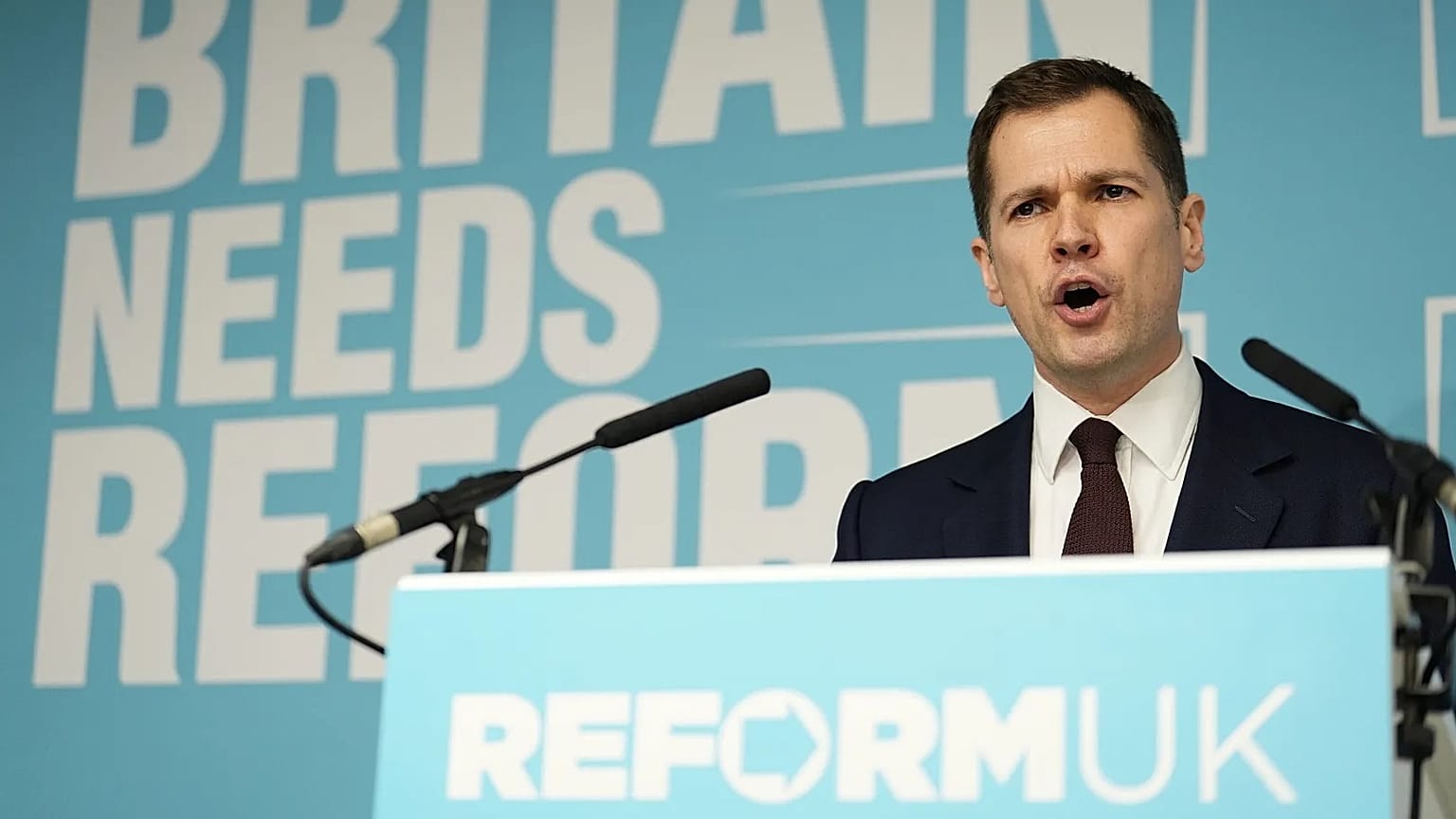
Jenrick has attempted to present the policy as an issue of fairness rather than hostility towards immigrants. His argument is that people who contribute to the British economy should have priority when public resources are distributed. Reform supporters believe that the welfare state should function as a safety net for citizens who have built their lives in Britain and contributed through taxation.
Critics, however, argue that the policy risks creating an overly simplistic distinction between British citizens and foreign nationals. Many foreign-born residents have lived in Britain for years, paid taxes, worked in essential industries and raised families in the country. Some have settled status or other legal rights that would make a blanket exclusion from benefits legally and politically complicated. The Financial Times has noted that Reform’s proposal could affect even EU citizens with settled status, potentially requiring difficult negotiations over the UK’s existing post-Brexit arrangements.
This is where the practical difficulties begin.
Britain’s immigration and welfare systems are interconnected with international agreements and domestic legal rights. A person’s entitlement to benefits can depend on immigration status, residence, employment history and specific reciprocal arrangements. A straightforward rule stating that only British citizens can receive benefits could therefore create substantial legal complications.
There could also be diplomatic consequences. Millions of British citizens live or work overseas, while foreign nationals living in Britain contribute to the British economy. Any government attempting to remove welfare rights from large groups of legally resident migrants would need to consider whether other countries would respond by imposing similar restrictions on British citizens.
Reform nevertheless argues that the current system is too generous and that the principle of reciprocity should not prevent Britain from protecting its own taxpayers. This reflects one of the party’s central political arguments: sovereignty should mean that Parliament is able to determine who qualifies for state support without being constrained by international arrangements that Reform believes have become too restrictive.
But Jenrick’s welfare programme goes much further than foreign-national restrictions.
The party also wants to overhaul disability benefits, particularly Personal Independence Payment, commonly known as PIP. Reform proposes replacing PIP with a new “health security allowance” focused primarily on people with severe and enduring conditions. Those with less serious conditions would instead receive support through locally administered disability support accounts. Reform says the changes could save around £22 billion annually.
This aspect of the programme has generated perhaps the strongest criticism.
Disability campaigners and political opponents argue that changing eligibility so dramatically could remove financial support from people who genuinely need it. Reform’s critics point out that disability does not always mean that someone is completely unable to work or incapable of living independently. People with fluctuating conditions, chronic illnesses or mental-health difficulties can require financial assistance even when their disabilities are not immediately visible.
Reform’s response is that the existing system has expanded beyond its original purpose and has become financially unsustainable. The party argues that welfare should focus resources on people who are genuinely unable to support themselves, while people capable of working should receive stronger incentives and support to return to employment.
That philosophy explains another element of Jenrick’s plan: compulsory community work for some long-term unemployed people.
Under Reform’s proposed “Welfare to Work” system, people receiving Universal Credit who are considered fit to work and have remained unemployed for a prolonged period could be required to undertake around 20 hours of community work each week. Examples include cleaning high streets, maintaining parks, helping libraries or supporting charitable organisations. Those who refuse could face the loss or reduction of benefits.
Supporters say this would restore a sense of responsibility to the welfare system. They argue that taxpayers should not be expected to finance people indefinitely when those individuals are capable of contributing to their communities.
Opponents see the proposal differently. They argue that compulsory community work could become punitive rather than constructive, particularly if the underlying reasons for unemployment include poor mental health, inadequate skills, regional job shortages or caring responsibilities.
There is therefore a fundamental philosophical disagreement behind the Reform programme.
The party sees welfare primarily through the lens of incentives, responsibility and fairness to taxpayers. Critics emphasise social protection, disability rights and the possibility that people who appear capable of working may nevertheless face significant barriers.
The debate becomes even more important because Reform is no longer merely a protest party. It is attempting to present itself as a credible alternative government. Robert Jenrick has been designated as the party’s Treasury figure, and his economic proposals are designed to demonstrate that Reform has a detailed financial programme rather than simply a collection of slogans.
That ambition creates a difficult test.
Reform claims it can save £50 billion annually through welfare reform. But turning projected savings into real savings is notoriously difficult. Governments often discover that policies which appear inexpensive on paper produce unexpected costs elsewhere. If disability benefits are reduced, for example, some recipients may require additional support from local authorities or the NHS. If unemployed people are required to undertake community work, councils may have to establish systems to supervise and administer the programme.
The economic debate is therefore not simply about how much money Reform says it can save. It is about whether those savings are realistic once the wider consequences are considered.
There is also an electoral calculation.
Welfare reform can be popular with voters who believe that the system is too expensive or that benefits are being abused. But some of Reform’s strongest potential supporters live in communities where welfare dependency is relatively high. Large cuts could therefore create an uncomfortable contradiction: a party promising to protect working people could alienate voters who themselves depend on benefits.
The Guardian reported that critics have warned Reform’s proposals could disproportionately affect disabled people and vulnerable households, while also questioning whether the savings estimates are credible.
This may explain why Reform has been careful to emphasise that the state pension would be protected. Farage has repeatedly defended the pension triple lock, and Reform has attempted to distinguish between benefits for pensioners and benefits for working-age claimants.
Yet even inside Reform there are signs of disagreement about the direction of economic policy. The party’s newly appointed economic adviser Mitchell Palmer has advocated major free-market reforms, including ending the pension triple lock, while Jenrick’s programme has focused on reducing welfare spending without targeting state pensions. The contrast illustrates the tensions between different economic philosophies inside Reform.
The disagreement could become more significant as Reform moves closer to the possibility of government.
Farage’s political instincts are populist, while Jenrick has experience as a former Conservative minister and has attempted to develop detailed policy proposals. Other Reform figures hold strongly libertarian or socially conservative views. Keeping these factions united will require careful political management.
The welfare programme also demonstrates how far Jenrick has travelled politically. Once a prominent Conservative politician, he defected to Reform in January 2026 after being removed from the Conservative front bench. He was subsequently appointed Reform’s Treasury spokesperson. His move gave Farage’s party a politician with substantial Westminster experience and strengthened its claim to be capable of governing.
For the Conservatives, Jenrick’s transformation is particularly uncomfortable. Reform is increasingly competing for the same voters who traditionally supported the Conservative Party. By adopting aggressive welfare and immigration policies, Jenrick is helping Reform occupy territory that Conservatives have historically regarded as their own.
Kemi Badenoch has rejected the idea of a Conservative-Reform alliance, despite Reform’s strong polling position. She has criticised former Conservatives who defected to Farage, including Jenrick, arguing that they contributed to the party’s difficulties before abandoning it.
This rivalry could become decisive at the next general election.
If Reform succeeds in persuading voters that its welfare programme is both economically credible and morally fair, it could significantly increase its support. If opponents succeed in portraying the proposals as excessively harsh, unrealistic or legally problematic, the policy could instead become one of Reform’s greatest vulnerabilities.
Ultimately, Robert Jenrick’s announcement is an attempt to answer a question that has followed Reform UK for years: what would the party actually do if it won power?
The answer is now becoming clearer. Reform wants a smaller welfare state, tighter eligibility, stronger incentives to work and dramatically reduced access to benefits for foreign nationals. It argues that these changes would save taxpayers tens of billions of pounds while restoring a sense of fairness to the system.
Whether Britain is ready for such a transformation is another question.
The political battle over welfare is likely to become increasingly intense. Labour will argue that Reform’s programme risks harming vulnerable people. The Conservatives will attempt to portray it as financially reckless while competing for the same voters. Disability campaigners will demand guarantees that people with genuine needs are not abandoned. Reform, meanwhile, will insist that the existing system is unsustainable and that difficult choices are unavoidable.
Robert Jenrick has therefore put Reform UK at the centre of one of Britain’s most consequential political debates. His “foreign welfare rip-off” proposal is not merely a technical change to benefit eligibility. It is a statement about citizenship, responsibility, taxation and the purpose of the welfare state.
If Reform eventually enters government, these proposals could reshape the relationship between the British state and millions of people living in the country. If the party fails to win power, the policies will nevertheless have changed the political conversation by forcing Labour and the Conservatives to confront difficult questions about welfare spending and immigration.
The biggest challenge for Jenrick will be proving that Reform’s promised £50 billion saving is achievable without creating new costs, legal battles or social problems elsewhere.
The argument has only just begun. But one thing is already clear: welfare is becoming one of the central battlegrounds in the struggle for Britain’s political future.