
The United Kingdom has witnessed a renewed wave of tension surrounding immigration, asylum accommodation and public protests, as increasingly organised anti-migrant groups attract national attention. The headline “SHOCKING! British Patriots STRIKE BACK – Muslim Asylums Targeted!” reflects the confrontational language being used in parts of the immigration debate. Behind the dramatic wording, however, lies a serious political and social issue: growing opposition to asylum accommodation, the emergence of vigilante-style movements and concerns about the safety of migrants and local communities. Recent events in Dover and Portsmouth have demonstrated how quickly immigration disputes can develop into major confrontations, raising difficult questions about public order, freedom of protest and the responsibilities of the authorities.
One of the most significant developments has involved Patriot Platform, a recently established anti-migrant movement led by Daniel Thomas, also known as Danny Tommo. The group attracted national attention after hundreds of black-clad protesters gathered in Dover in September 2026, blocking roads and disrupting traffic near the port. Its members presented themselves as people determined to defend British borders and oppose what they considered failures in immigration policy. However, the appearance of masked demonstrators, coordinated mobilisation and confrontational tactics raised serious concerns among politicians, police officers and organisations monitoring extremist activity.
The controversy intensified when members of the movement appeared in Portsmouth following the arrival of approximately 120 asylum seekers rescued from a boat in the Channel. Protesters gathered near the location where the migrants were being held, with some attempting to prevent their onward transportation. The situation required a significant police response, and confrontations between demonstrators and officers raised concerns about the potential for further disorder. What had begun as a demonstration about immigration policy developed into a wider public-order challenge.
For many people participating in anti-migrant demonstrations, the central issue is a perceived lack of control over immigration. They argue that successive governments have failed to explain adequately how asylum accommodation is selected, how public money is spent and how local communities are consulted before new facilities are established. Residents in some areas have expressed concerns about pressure on housing, healthcare, transport and other public services. These concerns deserve proper attention from elected representatives, particularly when local people feel that important decisions are being made without sufficient transparency.
However, opposition to government immigration policy must be distinguished from hostility towards people because of their religion or nationality. Muslim asylum seekers, Christian refugees and individuals from other religious backgrounds all have the right to have their circumstances considered under the law. An individual’s religion does not establish whether they are dangerous, whether their asylum claim is genuine or whether they should be granted permission to remain in Britain. Every application must be considered according to the relevant legal requirements and individual evidence.
Another important development has been the growing number of anti-migrant groups operating across the country. A Guardian investigation published in September 2026 identified at least 28 anti-migrant vigilante groups established in the preceding 18 months. These organisations reportedly range from local street patrols to movements seeking to disrupt migrant transportation and challenge the presence of asylum accommodation in particular communities. The findings have raised questions about the changing nature of political protest and the possibility that online mobilisation could contribute to confrontations on Britain’s streets.
The rise of these groups has also created difficulties for mainstream political parties. Nigel Farage, leader of Reform UK, has repeatedly made immigration a central issue in his political message. However, he has also criticised the use of balaclavas and intimidating behaviour at demonstrations, indicating that opposition to immigration policies does not automatically mean support for vigilante tactics. This distinction is important because political parties seeking public support must explain how they intend to address immigration while respecting democratic principles and the rule of law.
For the Labour government, the situation represents a difficult challenge. Home Secretary Shabana Mahmood has urged police forces to make full use of their existing powers to deal with disorder and intimidation associated with protests. The government faces pressure from different directions: some voters demand stronger immigration controls, while civil rights organisations warn that migrants and asylum seekers must be protected from harassment and violence. Maintaining public confidence requires the authorities to respond effectively to both concerns.
The issue of asylum hotels has become particularly controversial. Some local communities object to the use of hotels and other accommodation facilities, arguing that they were not designed to provide long-term housing for large numbers of people. Questions have also been raised about the financial costs of temporary accommodation and the impact on local services. These are legitimate subjects for public discussion, and government departments should provide accurate information about spending, accommodation standards and the expected duration of arrangements.
Nevertheless, targeting individual asylum seekers or attempting to intimidate residents and workers at accommodation facilities cannot provide a sustainable solution. Asylum seekers are not responsible for every decision made by the government, and many are waiting for their applications to be processed. Some have escaped war, persecution or other serious dangers. Treating people as collective enemies because of their immigration status or religion risks creating further division without addressing the administrative problems that have contributed to public frustration.
The role of social media has made the situation even more complicated. Videos of demonstrations can spread rapidly, attracting thousands of viewers and encouraging people from different parts of the country to become involved. While social media can provide a platform for legitimate criticism and community organisation, it can also circulate misleading claims, unverified allegations and inflammatory material. This can increase tension before authorities have had an opportunity to establish the facts. Responsible reporting and careful verification are therefore essential when discussing incidents involving immigration and public demonstrations.
There is also a wider question about what it means to defend British values. Freedom of expression, democratic participation, religious freedom and equality before the law are fundamental principles of British society. People have the right to criticise government policies, organise peaceful demonstrations and demand greater accountability from elected representatives. Equally, migrants and religious minorities must be able to live without threats or intimidation. These principles should apply consistently, regardless of political opinions or personal backgrounds.
Ultimately, the growing tensions surrounding asylum accommodation reveal a deeper problem that cannot be solved through confrontational headlines or street demonstrations alone. The government needs to communicate more clearly with local communities, improve the efficiency of asylum decisions, strengthen action against criminal smuggling networks and ensure that public resources are used responsibly. Police forces must also distinguish between peaceful protest and unlawful intimidation, applying the law consistently to everyone involved.
In conclusion, the recent demonstrations associated with Patriot Platform have brought the immigration debate back into the national spotlight and exposed growing divisions within British society. The concerns of local residents deserve to be heard, and the government must take legitimate questions about immigration, public spending and accommodation seriously. At the same time, no individual should be targeted because they are Muslim, an asylum seeker or a member of another minority community. Britain needs a system that protects its borders, respects the law and treats people fairly. The real measure of effective leadership will be whether politicians can restore public confidence without encouraging hostility, protect vulnerable people without ignoring community concerns and ensure that disagreements over immigration remain within the boundaries of peaceful democratic debate.

The conflict stems from recent debates surrounding significant financial contributions to Reform UK.
The government, led by Prime Minister Andy Burnham and Deputy Prime Minister Angela Rayner, is currently considering legislation that could retroactively impact or restrict large-scale private political donations.
In a recent broadcast interview, Lee Anderson vehemently defended his party’s recent fundraising success, describing it as an effort to “level up the playing field” against the established major parties.
Anderson stated the funds would allow Reform UK to expand its operational structure, including recruiting campaign and regional managers ahead of the next general election.
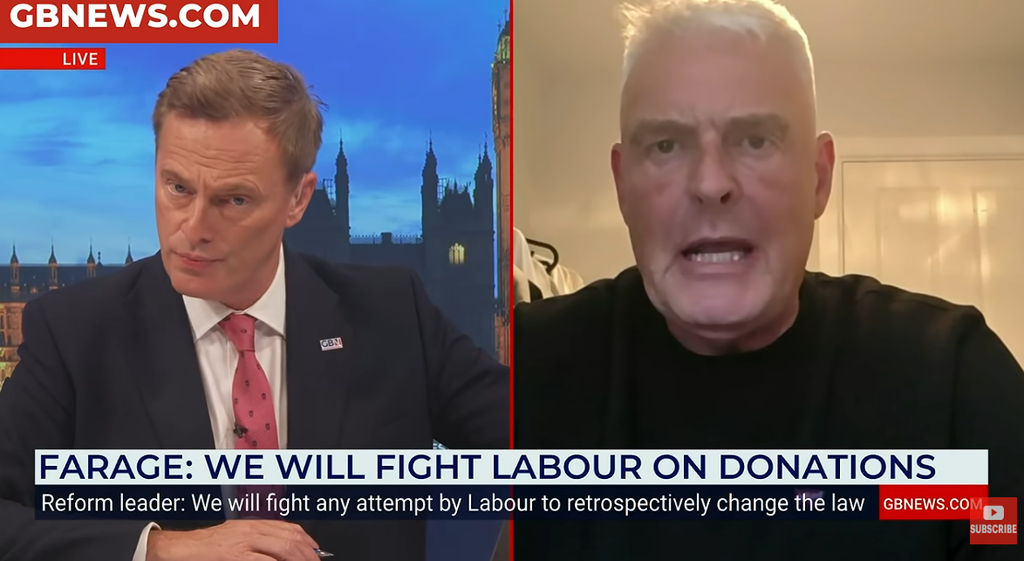
Anderson quickly turned the focus onto the Labour Party’s own funding mechanisms, specifically their reliance on trade union contributions.
Citing figures that Labour has raised £128 million since 2021, Anderson accused the government of hypocrisy.
“If they want to play silly games, then we can play them games as well… we will introduce legislation that will stop the unions funding the Labour Party,” Anderson warned.
“Then it’s game over for the Labour Party.”
The Reform MP echoed sentiments expressed by his party’s leader, Nigel Farage, who had earlier stated that if Labour targets Reform’s donors, Reform will retaliate against Labour’s union backing.
When pressed by the interviewer on whether Reform UK intended to engage in “outright political warfare” to choke off Labour’s funding, Anderson affirmed the stance.
He further claimed that a significant portion of union members in working-class communities actually support Reform UK, suggesting Labour’s actions could alienate its own grassroots base.
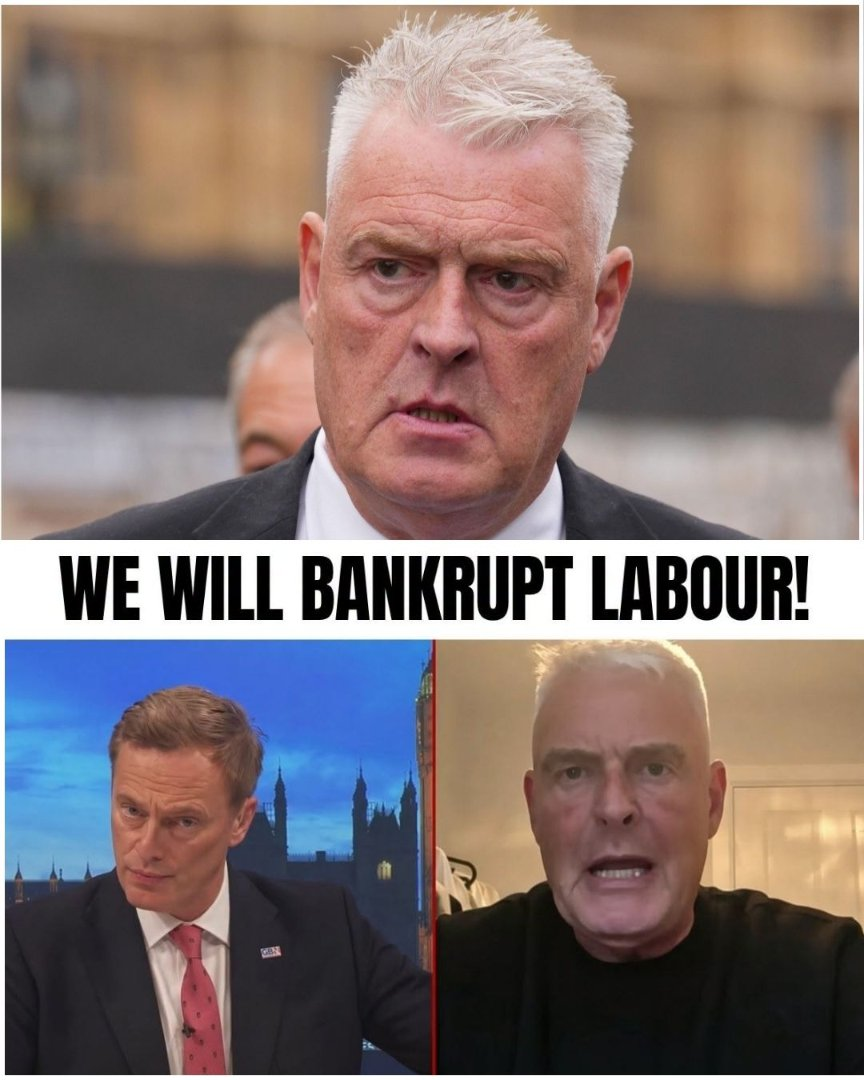
Anderson also took aim at the House of Lords, where the issue of campaign finance is currently being debated.
He questioned the impartiality of peers who have historically donated to major parties or who were appointed after serving as party treasurers, warning them to “be very, very careful what you vote for.”
Addressing potential counter-arguments from the government—specifically the claim that large private donations amount to “democracy for sale”—Anderson accused Labour of being beholden to union interests.
“You get your hundreds of millions from unions, that comes with big strings attached.
They come knocking on your door as soon as you’re elected and asking for huge pay rises,” Anderson argued.
“You’ve already sold out.”

The escalating rhetoric highlights a deepening fracture in British politics regarding how elections are funded, with the threat of reciprocal legislative warfare underscoring the high stakes involved in the current campaign finance debate.
Brutal Political Battle in Westminster! Reform UK Issues Explosive Warning as Labour Faces Mounting Pressure
A fresh political confrontation is intensifying in Westminster as Reform UK steps up its criticism of the Labour government, delivering a stark warning about Britain’s political future and the challenges facing the party in power. The dispute has reignited questions about Labour’s public support, the effectiveness of its policies and whether growing frustration over immigration, taxation and living standards could reshape the country’s political landscape.
For Reform UK, the message is clear: voters who believe the government has failed to deliver meaningful change should consider an alternative. The party has sought to position itself as a challenger to the established political order, arguing that Britain needs a different approach to border control, public spending and economic management.
Labour, meanwhile, faces the familiar challenge confronting any governing party: turning campaign promises into visible improvements while managing competing demands on public finances and public services.
Although dramatic claims that one party could be wiped out are common in political rhetoric, the reality is more complicated. Britain’s electoral system, the distribution of support across constituencies and the decisions voters make at a general election will all influence the eventual outcome.
Nevertheless, the confrontation highlights the growing intensity of the debate over who should lead Britain and which policies should shape its future.
Reform UK Turns Up the Pressure
Reform UK has built its political identity around challenging the established parties and appealing to voters who feel that mainstream politicians have failed to address their concerns.
Immigration has been central to that message. The party has called for tighter border controls and substantial changes to the way the asylum system operates. It has also criticised government spending, taxation and what it describes as a lack of accountability within Britain’s political institutions.
These positions have attracted voters who want a more restrictive immigration policy or believe that existing parties have not delivered sufficient change.
Reform UK’s strategy places pressure on Labour because it seeks support from people who may previously have voted for different parties for different reasons. Some voters are primarily concerned about immigration, while others are focused on household finances, public services or distrust of politicians.
The party’s challenge is to turn these separate concerns into a coherent political offer that appeals to a broad electorate.
A forceful warning against Labour can attract attention, but its lasting effect will depend on whether Reform UK can explain how its proposals would work in practice. Voters may demand detailed answers about public spending, economic growth, healthcare, housing and the consequences of proposed immigration restrictions.
The more influence the party seeks, the more closely its policies and practical plans are likely to be examined.
Labour Faces Difficult Questions
For Labour, the central challenge is maintaining confidence among voters who expected a change in government to bring tangible improvements to their lives.
Household budgets remain an important part of political debate. Families are concerned about the cost of food, energy, housing and transport, while businesses are sensitive to changes in taxation, employment costs and consumer demand.
Public services create another source of pressure. People want reliable access to healthcare, improvements in local infrastructure and a government capable of explaining how public money is being spent.
These expectations can be difficult to meet simultaneously, particularly when public finances are constrained and economic conditions limit the government’s room for manoeuvre.
If voters believe that promises have not translated into progress, political opponents can use that dissatisfaction to challenge the government’s credibility.
However, dissatisfaction does not automatically mean that every disappointed voter will support Reform UK. Some may return to the Conservatives, consider the Liberal Democrats or Green Party, support another candidate, or decide that none of the available parties represents their views.
Labour’s prospects therefore depend on a range of factors, including its policy decisions, economic outcomes, local candidates and ability to maintain support across different constituencies.
The political pressure is real, but its eventual consequences cannot be established by a warning from an opposition party alone.
Immigration Remains at the Centre of the Conflict
Few issues have generated as much political disagreement as immigration.
Reform UK has argued for a significantly tougher approach, including stronger enforcement and changes to asylum arrangements. The party presents these measures as necessary to restore public confidence in the government’s ability to control entry into the country.
Supporters of stricter controls often point to small-boat crossings across the English Channel, delays in asylum decisions and the costs associated with temporary accommodation. They argue that the government must demonstrate that immigration rules are enforced consistently and that unlawful entry does not lead to indefinite uncertainty.
Labour faces pressure to show that its approach can deliver measurable results while complying with domestic law and the UK’s international obligations.
The issue is not limited to irregular migration. Britain’s immigration system also includes work visas, international students, family migration and other lawful routes. Changes to these categories can have different consequences for employers, universities, families and public services.
For example, restricting overseas recruitment may reduce migration in particular sectors, but it can also create staffing challenges where employers cannot readily recruit enough domestic workers. Conversely, allowing migration to continue without adequate planning can create pressure on housing and infrastructure in areas experiencing rapid population growth.
The policy challenge is to balance effective border management with economic requirements, legal responsibilities and the capacity of local communities.
Reform UK must explain how its proposals would address these competing considerations. Labour must demonstrate whether its policies are achieving the results it promises.
Taxation and the Cost of Living
Economic policy is another area where the two parties can seek to distinguish themselves.
Taxation affects households, employers and the resources available to government. Voters may support lower taxes because they want to retain more of their earnings, while others prioritise public investment in healthcare, education, transport and social care.
These objectives can conflict when public spending commitments are substantial and economic growth is uncertain.
Reform UK has frequently criticised the tax burden and argued that government should reconsider its spending priorities. Such arguments appeal to people who believe that public money is not being used effectively or that taxation discourages investment and employment.
Labour must explain how its fiscal decisions support public services and economic stability while addressing concerns about household costs.
The crucial questions concern the details. Which taxes would be changed? Who would benefit? How would the government replace any lost revenue? What would the effects be on public services, borrowing and economic activity?
A promise to reduce taxes may appeal to voters, but its practical value depends on the measures proposed and how they are funded.
Similarly, a government decision to increase revenue or maintain existing taxes should be assessed by examining its stated objectives, distributional effects and consequences for economic activity.
These are difficult choices, and neither party can avoid scrutiny simply by presenting its approach as an obvious solution.
Could Reform UK Transform Britain’s Political Landscape?
Reform UK’s challenge to Labour also raises wider questions about the future of Britain’s party system.
For decades, national politics has been shaped primarily by competition between Labour and the Conservatives, with other parties playing important roles in particular regions and constituencies. The emergence of a stronger challenger can complicate that traditional pattern.
A party gaining support nationally does not necessarily translate that support into the same proportion of parliamentary seats. Under Britain’s first-past-the-post electoral system, the geographical distribution of votes is crucial.
A party may receive substantial support across the country but win fewer seats than a competitor whose voters are concentrated in particular constituencies. Conversely, changes in voting patterns across a relatively small number of marginal seats can have a significant effect on parliamentary representation.
This makes claims about the destruction of an established party difficult to assess without detailed constituency-level evidence.
Reform UK could influence the political landscape even without replacing Labour as the principal party of government. Its presence may put pressure on Labour and the Conservatives to change their positions, influence the issues dominating public debate and alter the calculations of individual MPs.
The longer-term consequences will depend on whether the party can maintain support, develop a credible organisation and persuade voters that its proposals are achievable.
The Conservatives Face Their Own Dilemma
Reform UK’s rise also creates a strategic problem for the Conservative Party.
Some voters who favour stricter immigration controls, lower taxation and a more confrontational approach to government may view Reform UK as a more attractive option. Others may prefer the Conservatives because of their experience in government, established local organisations or different economic priorities.
The Conservatives must therefore decide how to respond without assuming that every Reform supporter can be persuaded by adopting similar rhetoric.
The two parties may share views on certain issues but differ on others, including economic management, public spending and the practical details of implementing policy.
If the Conservatives move closer to Reform UK on immigration, they may appeal to some voters while creating concerns among others. If they maintain a separate position, they must explain what distinguishes their approach and why voters should support it.
Labour may benefit or suffer from these disagreements depending on how they affect competition in individual constituencies. The outcome is not determined simply by which opposition party delivers the strongest criticism.
Britain’s political competition is therefore becoming more complicated, with parties seeking to attract voters whose priorities may overlap without being identical.
Political Warnings Versus Electoral Reality
The language surrounding Westminster confrontations can make political developments appear more decisive than the evidence warrants.
An opposition party may claim that the government is facing an existential crisis, but such a claim remains a political argument unless supported by relevant evidence. Polling measurements, by-election results, constituency research and changes in voter attitudes can provide useful information, but each has limitations.
Opinion polls are snapshots of public sentiment at a particular time. They are not election results, and their findings can change as campaigns develop, events occur and voters reassess their choices.
By-election results can reveal dissatisfaction with a government or enthusiasm for an alternative, but they may not represent the country as a whole. Local issues, turnout and candidate recognition can all affect the outcome.
A serious assessment of Labour’s position would therefore examine multiple indicators rather than rely on a single headline or statement from Reform UK.
The same standard applies to claims made by Labour about its opponents. Political confidence should not be confused with proof that a party is on course to win or lose a future election.
For voters, the most useful question is not which party sounds most certain about its prospects. It is which claims are supported by evidence and which policies offer credible answers to the country’s problems.
What Voters Will Expect From Both Sides
As political arguments intensify, voters are likely to demand more detailed explanations from Labour and Reform UK.
On immigration, they will want to know how border enforcement, asylum processing and removals would operate. On the economy, they will expect credible proposals for taxation, investment and growth. On public services, they will want to understand how staffing, funding and waiting times could improve.
They may also ask how each party intends to address housing shortages, support pensioners and respond to the needs of younger households facing high living costs.
These questions matter because political dissatisfaction can create opportunities for opposition parties, but dissatisfaction alone does not establish that an alternative programme will succeed.
Reform UK must demonstrate that it can move beyond criticism and present policies that withstand detailed examination. Labour must show that its decisions are producing practical improvements and explain honestly where progress has been slower than expected.
Both parties must also recognise that the electorate is not a single group. Different regions, age groups and communities may have different priorities, and national political messages do not necessarily translate into identical local concerns.
Conclusion: A Fierce Battle, but No Predetermined Outcome
Reform UK’s latest warning has added to the political pressure surrounding Labour and highlighted the intensity of Britain’s ongoing debate over immigration, taxation and government performance.
For Reform UK, the opportunity lies in convincing dissatisfied voters that it offers a credible alternative to the established parties. For Labour, the challenge is to demonstrate that it can respond to public concerns, deliver improvements and maintain confidence in its approach to governing.
The political consequences could be significant, but claims that Labour will be wiped out should be treated as rhetoric rather than an established forecast. Electoral outcomes depend on voter behaviour, constituency dynamics, policy performance and events that cannot be determined by a single confrontation in Westminster.
What is clear is that Britain’s political competition is changing. Immigration remains a major dividing line, economic pressures continue to shape public expectations, and established parties face growing demands to justify their decisions.
The coming political battles will test not only the government’s record but also the credibility of its challengers. Ultimately, voters will decide which arguments deserve their support, and that decision will depend on more than dramatic warnings or forceful slogans. It will depend on the policies, evidence and results that each party can put before the public.