
Nigel Farage Issues Deportation Ultimatum to Pakistan as He Promises to “Give Them a Fight”
Nigel Farage has dramatically escalated his confrontation over deportations, warning Pakistan that Britain will not simply accept a situation in which foreign criminals or people with no legal right to remain cannot be returned.
The Reform UK leader’s latest intervention comes amid a wider political battle over immigration, border control and the ability of the British government to enforce its own decisions.
For Farage, the issue is about more than one deportation case.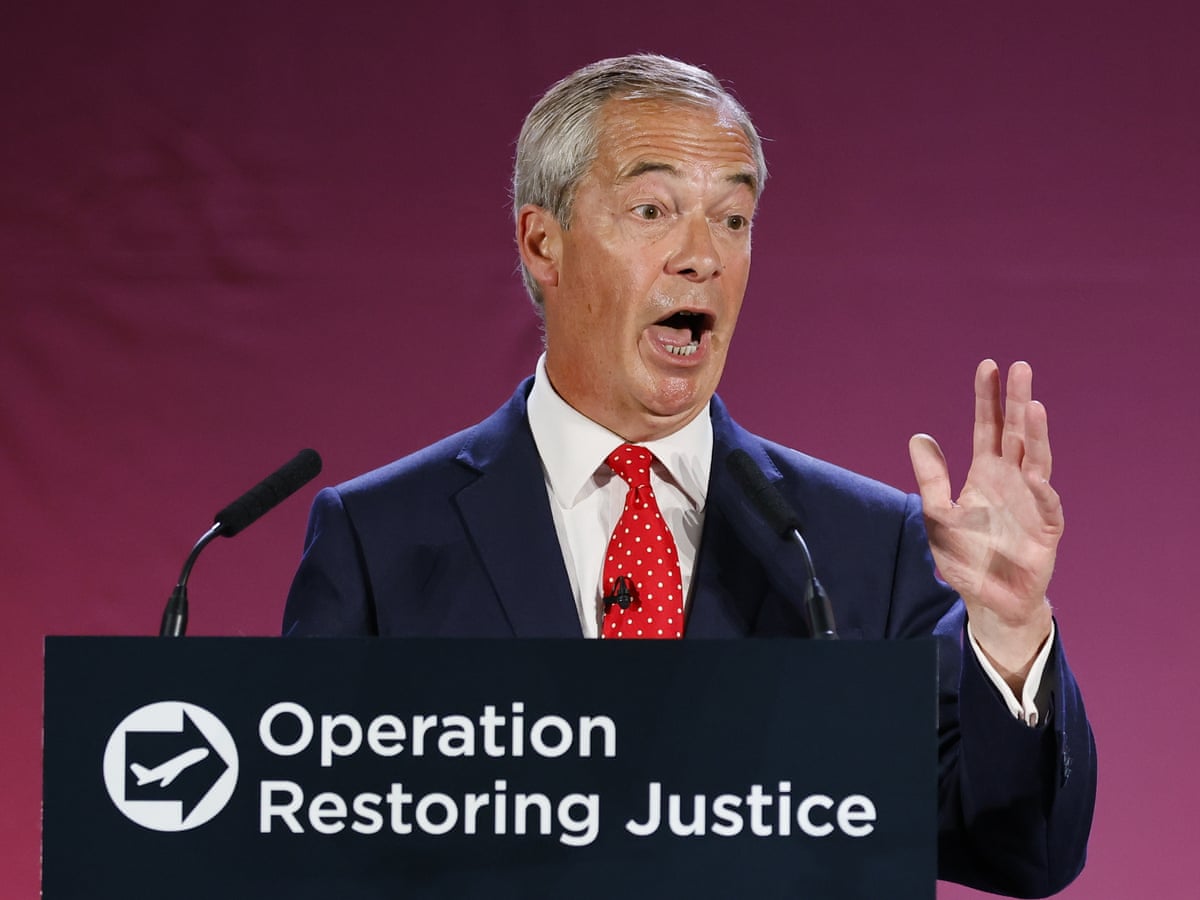
It represents what he sees as a fundamental test of whether Britain is genuinely in control of its borders.
His message is uncompromising: countries that refuse to take back their nationals should expect Britain to push back.
And Farage has made clear that he is prepared for a political fight.
The immediate controversy follows reports concerning Pakistan’s refusal to accept the return of a convicted offender linked to the Rochdale grooming gangs scandal.
The case has generated intense anger because it involves an individual who has already been convicted of serious crimes in Britain.
For critics of the current system, the question is obvious.
If someone has been convicted of a serious offence, served or begun serving their sentence, and has no right to remain in Britain, why should another country be able to prevent their return?
That question goes directly to the heart of Farage’s political argument.
He believes Britain has been too willing to negotiate from a position of weakness.
For decades, successive governments have promised stronger immigration enforcement.
Yet practical obstacles have repeatedly prevented removals.
Countries may refuse to issue travel documents.
Governments may dispute an individual’s nationality.
Legal challenges may delay deportation.
Human rights considerations can complicate removal.
And diplomatic relationships can become strained.
Farage’s answer is to change the balance of power.
Instead of repeatedly asking foreign governments to cooperate, he wants Britain to use its own leverage.
That could include restrictions on visas, diplomatic pressure and tougher conditions for countries that refuse to accept their nationals.
The argument is simple.
If a government wants its citizens to travel freely to Britain, Britain should expect that government to cooperate when those citizens lose their legal right to remain.
That approach has considerable political appeal among voters who believe immigration enforcement has been too weak.
But it is also highly controversial.
Foreign policy cannot always be reduced to a straightforward exchange.
Countries have their own laws, political pressures and constitutional arrangements.
A government may object to a deportation for reasons that have nothing to do with Britain.
It may dispute the legal basis for the removal.
It may demand documentation.
It may insist that the individual has a right to remain under its own laws.
Or it may simply resist pressure from another government.
That means Farage’s proposed approach would inevitably create diplomatic confrontation.
The Reform leader appears ready to accept that.
His promise to “give them a fight” reflects a broader philosophy that Britain needs to be more assertive internationally.
For years, British governments have been accused by their critics of prioritising diplomatic niceties over immigration enforcement.
Farage wants to reverse that perception.
He wants foreign governments to understand that Britain is prepared to impose consequences when cooperation fails.
The question is whether that strategy would actually work.
Visa restrictions could create pressure.
If citizens of a country face more difficult access to Britain, its government may reconsider its position.
But such measures can also affect legitimate travellers.
Students could be affected.
Businesspeople could be affected.
Families could be affected.
Tourists could be affected.
That creates a difficult political calculation.
How much pressure is enough to persuade a foreign government without unnecessarily harming ordinary people?
Farage’s supporters would argue that such pressure is precisely what is missing.
They believe governments respond when there are consequences.
If refusing deportations has no cost, why would a foreign government change its position?
This argument has become increasingly prominent across Europe.
Countries are struggling with the practical difficulty of removing people who have no legal right to remain.
The problem is especially severe when countries of origin are reluctant to cooperate.
Britain is not unique.
European governments have repeatedly sought stronger return agreements with countries from which migrants originate.
But enforcement remains difficult.
This is why the Pakistan dispute has become politically significant.
Pakistan is an important international partner for Britain.
There are deep historical, economic and social connections between the two countries.
Millions of people in Britain have Pakistani heritage.
There are extensive family links.
There are educational connections.
There are significant trade and diplomatic relationships.
Any confrontation therefore needs to be handled carefully.
Farage’s approach is to put immigration enforcement at the centre of the relationship.
That could be politically popular but diplomatically uncomfortable.
Critics will accuse him of using foreign policy as a political weapon.
Supporters will argue that the government has spent too long being polite while the deportation system fails.
The debate ultimately comes down to sovereignty.
What does it mean for Britain to control its borders?
If a British court orders that an individual should be removed, the government needs the practical ability to carry out that decision.
Otherwise, the authority of the legal system is weakened.
This is particularly important in serious criminal cases.
Victims and their families expect justice to have consequences.
They may find it deeply frustrating if an offender remains in Britain because another country refuses to cooperate.
Farage understands the emotional power of that argument.
His political language is deliberately direct.
He does not talk about an abstract immigration system.
He talks about criminals, victims and borders.
That allows him to frame the issue in terms that many voters immediately understand.
But there is another side.
Deportation is not simply an administrative process.
It must operate within the law.
Britain has international obligations.
Individuals can have rights even when they have committed serious offences.
Courts may need to consider factors such as nationality, family circumstances and the risk of persecution.
That means no government can simply deport everyone it wants without following legal procedures.
Farage would undoubtedly argue that those procedures have been exploited for too long.
He has repeatedly called for major reforms to the immigration and human rights system.
Reform UK has proposed a much more aggressive deportation programme, including a dedicated deportation command and large-scale removals.
The party has also called for stronger action against countries that refuse to accept deportees.
The Pakistan dispute therefore fits neatly into the broader Reform strategy.
It is not an isolated issue.
It is part of a political programme built around deterrence, enforcement and national sovereignty.
Farage’s critics, however, argue that the approach risks turning complex international relationships into political confrontations.
They question whether threats and visa restrictions would actually increase cooperation.
They also warn that retaliatory measures could harm Britain’s interests.
Pakistan could respond with its own restrictions.
Diplomatic relations could become more difficult.
British businesses operating there could face complications.
And ordinary families with connections between the two countries could find themselves caught in the middle.
These concerns cannot simply be dismissed.
Effective immigration policy requires international cooperation.
Britain cannot remove someone to another country if that country refuses to accept them.
The government therefore needs both leverage and diplomacy.
Farage’s approach emphasises leverage.
The challenge is ensuring that leverage ultimately produces cooperation rather than confrontation for its own sake.
There is also a political calculation for the government.
If ministers appear weak in the face of a foreign government’s refusal, Reform will claim that the government has lost control.
If ministers impose aggressive restrictions, they may be accused of damaging Britain’s international relationships.
That is why the issue is so politically sensitive.
The government needs to demonstrate strength without becoming reckless.
For Farage, however, the political incentives are different.
Every deportation dispute gives him an opportunity to reinforce his central message.
Britain needs to take back control.
Borders must mean something.
Foreign criminals should not be allowed to remain indefinitely.
And foreign governments should not be able to dictate British immigration policy.
These themes have been central to Farage’s political career.
They also explain why Reform has continued to place immigration at the centre of its platform.
The party believes there is a large pool of voters who feel that successive governments have failed to deliver on promises to reduce migration and strengthen border enforcement.
Farage’s latest intervention is therefore designed to demonstrate that Reform would behave differently.
He wants voters to believe that a Reform government would be prepared to confront foreign governments when necessary.
That message could resonate strongly with people who have become frustrated by years of political promises.
But there is a major question hanging over the policy.
Can Britain actually enforce it?
Threatening visa restrictions is one thing.
Successfully persuading countries to accept deportees is another.
The effectiveness of the policy would depend on the credibility of the threat.
If Britain announces sanctions but rarely implements them, foreign governments may simply ignore the warnings.
If Britain implements them too aggressively, it may create unnecessary diplomatic damage.
The government would therefore need a carefully structured system.
Countries that cooperate could receive smoother arrangements.
Countries that refuse could face targeted restrictions.
That would create a clear incentive to work with Britain.
Such a policy would also need to distinguish between different situations.
There is an obvious difference between a country refusing to accept a convicted foreign criminal and a country disputing the identity or nationality of an asylum seeker.
Not every failed removal represents diplomatic obstruction.
Sometimes documentation problems are genuine.
Sometimes legal proceedings are ongoing.
Sometimes an individual’s circumstances have changed.
A serious policy must recognise those distinctions.
Farage’s political challenge is therefore to turn strong rhetoric into workable government policy.
That is much harder than making promises from opposition.
If Reform ever enters government, it will inherit the same legal and diplomatic constraints faced by previous administrations.
The difference will be whether it can manage those constraints more effectively.
The party’s supporters believe it can.
They argue that previous governments have lacked political courage.
Farage believes Britain has enough economic and diplomatic leverage to force greater cooperation.
His critics believe he underestimates the complexity of international relations.
The truth will ultimately be demonstrated by results.
If a tougher approach leads to more deportations, Farage will claim vindication.
If it produces diplomatic retaliation without increasing returns, critics will argue that the policy was reckless.
Either way, the Pakistan dispute has become a useful test case.
It demonstrates the practical difficulties involved in removing foreign nationals.
It highlights the importance of international cooperation.
And it raises the question of how much pressure Britain should be willing to exert.
There is also a wider lesson.
A country’s immigration policy is only as effective as its ability to enforce decisions.
A government can pass laws.
Courts can issue orders.
Officials can arrange deportations.
But if another country refuses to cooperate, the process can stop.
That is why return agreements are so important.
Britain needs reliable partnerships with countries of origin.
It needs fast documentation procedures.
It needs secure transport arrangements.
And it needs diplomatic mechanisms for resolving disputes.
Farage’s threat to “give them a fight” is therefore not simply about one individual.
It represents a demand for a fundamentally different relationship between immigration policy and foreign policy.
For years, the two areas have often been treated separately.
Farage wants immigration enforcement to become a central component of Britain’s dealings with other governments.
That would be a significant change.
It could also become one of the defining debates of the next election.
Should Britain use visas and diplomatic relationships as leverage to secure deportations?
Should countries refusing to accept their nationals face penalties?
How far should Britain go in defending its immigration system?
And where should the line be drawn between legitimate pressure and unnecessary confrontation?
These are difficult questions.
But they are no longer theoretical.
The Channel crisis, asylum backlogs and foreign criminal deportations have made them increasingly urgent.
Farage believes voters have already made their preference clear.
They want control.
They want enforcement.
And they want politicians who are willing to confront obstacles rather than explain why those obstacles cannot be overcome.
His promise to fight Pakistan is therefore entirely consistent with his wider political strategy.
He wants to turn frustration into action.
Whether voters believe that strategy would work is another matter.
The most important test will be practical.
Can more foreign criminals actually be removed?
Can Britain secure cooperation from countries that have previously resisted?
Can the government reduce the cost of detention and deportation?
Can it do all of this while remaining within domestic and international law?
If the answer is yes, Farage’s argument will become much stronger.
If the answer is no, his critics will have an obvious response.
Strong words may win headlines, but they do not automatically produce results.
For now, however, Farage has made his position unmistakably clear.
Britain should not accept a system in which foreign governments can simply refuse to cooperate with deportations indefinitely.
He wants consequences.
He wants leverage.
And he wants a government prepared to use Britain’s economic and diplomatic power.
That approach will undoubtedly generate controversy.
But it also reflects a growing frustration among voters who believe immigration enforcement has been too weak for too long.
The Pakistan dispute may therefore become more than another diplomatic disagreement.
It could become a test of Britain’s willingness to use its influence to enforce its own laws.
For Nigel Farage, the message is simple.
If Britain is serious about controlling its borders, it must be prepared to stand its ground.
And if foreign governments refuse to cooperate, Farage wants them to know that he will not simply walk away.
He promises to “give them a fight”.
Now the political question is whether that fight would actually deliver the results he promises.