
Rachel Reeves New Tax Plan Is Madness – One Group of Drivers Will Be Furious
Rachel Reeves has found yet another way to turn Britain’s already complicated motoring-tax system into a political minefield.
For years, motorists were encouraged to move away from petrol and diesel cars and embrace electric vehicles. The message from government was straightforward: cleaner cars were the future, and drivers who made the switch would help Britain cut emissions while reducing its dependence on fossil fuels.
Now the Treasury wants a slice of the money that electric-car drivers no longer pay through fuel duty.
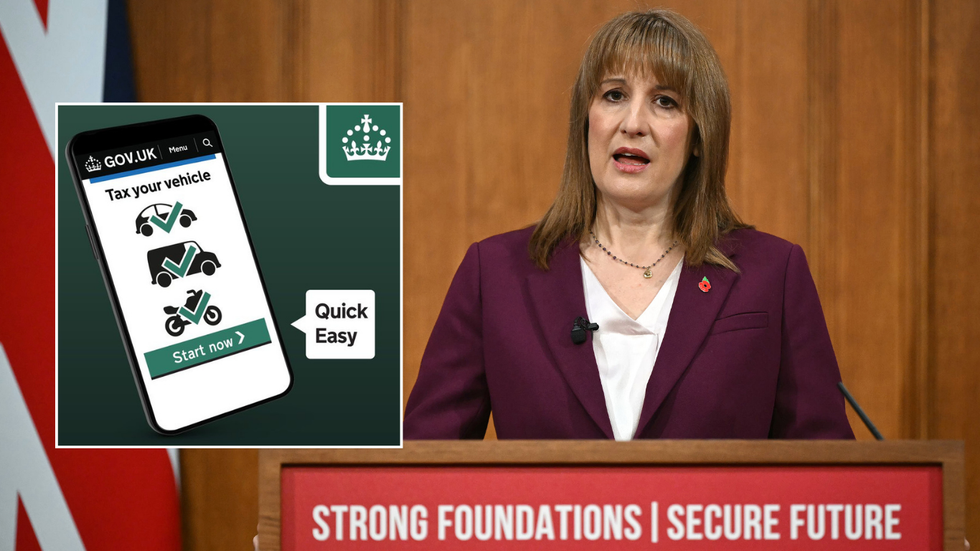
From April 2028, electric vehicles are due to face a new pay-per-mile charge, with battery-electric cars paying 3p per mile and plug-in hybrids paying 1.5p per mile.
And that is the part likely to make one particular group of motorists absolutely furious.
Electric-car owners who thought they were doing exactly what successive governments told them to do.
The great EV promise is beginning to look rather different
The transition to electric vehicles was never simply about buying a different car.
It was presented as a national project.
Governments wanted motorists to abandon petrol and diesel. Manufacturers invested billions in electric technology. Consumers were encouraged to accept higher upfront prices in exchange for lower running costs and the knowledge that they were contributing to Britain’s environmental targets.
For many drivers, the financial calculation was part of the attraction.
No petrol.
No diesel.
No traditional fuel-duty bill.
And, for a time, significant tax advantages.
But the Treasury has a problem.
As more motorists abandon petrol and diesel, the government loses billions in fuel-duty revenue.
That money has to be replaced somehow.
Reeves’s answer is increasingly clear: charge motorists according to how far they drive rather than simply according to how much fuel their vehicles consume.
The logic from the Treasury’s perspective is obvious.
The political logic is considerably more dangerous.
EV drivers could feel betrayed
Imagine being a driver who bought an electric car partly because the government repeatedly encouraged you to do so.
You may have paid more for the vehicle.
You may have installed a home charger.
You may have changed your driving habits.
You may have accepted the inconvenience of charging infrastructure.
And you may have believed that lower running costs were one of the rewards for making the environmentally responsible choice.
Then you discover that the government intends to introduce a mileage-based tax.
The official argument is that the system must evolve because fuel-duty revenue will decline as electric cars become more common.
That is economically understandable.
But from the driver’s perspective, it can feel like the rules have changed halfway through the game.
The government effectively said: go electric.
Drivers listened.
Now the government says: we need to tax electric driving instead.
That is where the anger comes from.
The charge could become a significant annual bill
The proposed rate for battery-electric cars is 3p per mile.
That sounds tiny.
But multiply it by thousands of miles and the number suddenly becomes much more noticeable.
A motorist covering 8,000 miles a year would face approximately £240 in the new charge.
Someone driving 10,000 miles would pay about £300.
A driver covering 12,000 miles would face around £360.
That is before considering the existing costs of insurance, servicing, tyres, depreciation and Vehicle Excise Duty.
Industry estimates have put the average annual impact at around £218 for an EV driver, depending on mileage and vehicle type.
For a wealthy household, that may be manageable.
For a commuter already struggling with household bills, it is another annual expense.
And that distinction matters enormously.
Rural drivers could be hit hardest
This is where the policy becomes particularly controversial.
Britain is not one uniform driving environment.
A London resident may travel relatively short distances and have access to public transport.
Someone living in rural Yorkshire, Devon, Cornwall or Cumbria may have no realistic alternative to the car.
The school run may require driving.
The commute may require driving.
Shopping may require driving.
Visiting elderly relatives may require driving.
A rural driver can therefore accumulate substantially more mileage simply because public transport is less available.
Critics have warned that a mileage-based EV tax could create what has been described as a “postcode penalty”, with rural motorists potentially paying more simply because of where they live and how far they have to travel.
That is an uncomfortable problem for Labour.
The party has traditionally presented itself as the champion of working people.
But a tax that disproportionately affects people who have no practical alternative to driving could quickly become politically toxic.
And hybrids are not escaping the system
There is another group that may be particularly unhappy.
Plug-in hybrid drivers will face a 1.5p-per-mile charge under the new system.
That means some motorists could effectively face two different forms of motoring taxation.
They may still use petrol.
They may therefore continue paying fuel duty.
And they will also face the new mileage charge.
The government’s argument is that plug-in hybrids produce lower emissions and should therefore have a lower rate than fully electric vehicles.
But from the driver’s perspective, the distinction could feel increasingly complicated.
The whole point of a hybrid was to provide flexibility.
Now the tax system risks making the financial calculation much harder.
The timing could not be worse
The new tax comes at a time when motorists are already facing a changing road-tax landscape.
Electric cars ceased to enjoy complete exemption from Vehicle Excise Duty in April 2025, and updated VED rates apply from April 2026. For many vehicles, the standard annual rate is now £200.
That means the old idea of the “tax-free electric car” has effectively disappeared.
And now comes the mileage charge.
For drivers who bought EVs expecting lower taxation over the lifetime of their vehicle, this creates a profound sense of uncertainty.
What will motorists be paying five years from now?
Will the 3p rate remain at 3p?
Could it increase?
Could petrol and diesel vehicles eventually face similar mileage charges?
Could the system eventually become the main way Britain taxes road use?
The government has not completely answered those questions.
That uncertainty itself can affect consumer behaviour.
The Treasury says it needs the money
To be fair to Reeves, there is a serious economic argument behind the policy.
Fuel duty is a major source of government revenue.
If the country successfully transitions away from petrol and diesel, that revenue stream inevitably shrinks.
The government cannot simply continue funding roads and public services with a tax base that is disappearing.
A mileage-based system therefore has an obvious long-term logic.
It could also arguably be fairer.
Someone driving 20,000 miles would pay more than someone driving 3,000, regardless of the type of vehicle they own.
The problem is not necessarily the principle.
It is the politics.
And the transition.
Britain’s EV revolution could be slowed
One of the biggest concerns is that the new charge could discourage people from buying electric cars.
That would be a strange outcome.
The government wants to accelerate the transition away from petrol and diesel.
But if prospective buyers begin calculating the new tax alongside the purchase price, insurance and charging costs, some may decide that a petrol or hybrid vehicle makes more financial sense.
There have already been warnings that the new system could damage EV demand.
Critics argue that the policy risks undermining confidence just when Britain needs consumers to embrace electric vehicles.
This is the central contradiction.
The government wants more electric cars on Britain’s roads.
But the more electric cars there are, the more revenue the Treasury loses from fuel duty.
So success in one policy creates a financial problem in another.
Reeves is now trying to solve that problem.
Unfortunately, motorists may be the ones who receive the bill.
The accusation of “double taxation” will not disappear
For some EV owners, the anger will be particularly strong because they already pay other taxes associated with owning a vehicle.
There is Vehicle Excise Duty.
There is insurance tax.
There are electricity costs.
And there are potentially higher electricity prices during periods of increased demand.
Then comes a charge based directly on how many miles they drive.
It is easy to understand why critics describe the policy as another tax on motorists.
The Treasury will insist that it is not a punishment for owning an electric car.
It is a replacement for lost fuel-duty revenue.
But politically, that distinction may not matter.
A driver looking at their annual expenses sees another bill.
The government’s challenge is to make the system feel fair
There is a way Reeves could make the policy more politically acceptable.
Transparency.
The government needs to explain precisely how the charge will work, how payments will be calculated, whether rates can rise and what protections will exist for people who have no practical alternative to driving.
It also needs to address rural households.
A mileage tax that looks reasonable in central London could look completely different in a remote village.
And there is an even bigger question.
If electric vehicles are being taxed by mileage because fuel duty is disappearing, will petrol and diesel drivers eventually be moved onto exactly the same system?
If so, the EV charge may simply be the beginning of a much larger transformation in British motoring taxation.
The bigger battle is over the future of driving
This is why the argument is bigger than 3p per mile.
Britain is effectively deciding what it wants road taxation to look like in an era when petrol pumps become less important.
The old system was relatively simple.
Buy fuel.
Pay tax on the fuel.
Drive as much as you like.
The new system could be very different.
Drive more.
Pay more.
It is a fundamental change in the relationship between motorists and the Treasury.
And that is why the political reaction could become intense.
People may accept paying tax.
What they dislike is uncertainty and the feeling that they have been encouraged into one choice only to discover that the financial rewards are being removed later.
Reeves has created a political headache of her own
Rachel Reeves can argue that the new system is necessary.
She can point to falling fuel-duty receipts.
She can say that electric vehicles must eventually contribute fairly to the cost of maintaining Britain’s roads.
All of those arguments have merit.
But the government also needs to recognise why some motorists feel betrayed.
They were told that electric vehicles were the future.
They invested accordingly.
Now the future comes with a tax meter attached.
That is a difficult political message to sell.
And the group most likely to feel the pain is not necessarily the wealthy motorist with a second car.
It is the high-mileage driver.
The commuter.
The rural household.
The person who depends on their car because there simply is no viable alternative.
That is why Reeves’s new plan is likely to generate such anger.
The Treasury may see a necessary replacement for lost fuel-duty revenue.
Motorists may see something else entirely.
A new tax on doing exactly what the government told them to do.
And once that perception takes hold, no amount of Treasury arithmetic will make the political problem disappear.