


Reform UK and the Crypto Revolution: Why Nigel Farage’s Digital Finance Ambitions Have Put Labour and the Conservatives on the Defensive
Reform UK has spent much of its political rise attacking the established parties for being too cautious, too slow and too unwilling to embrace fundamental change. Now the party is attempting to extend that argument into one of the fastest-moving areas of the modern economy: cryptocurrency and digital finance.
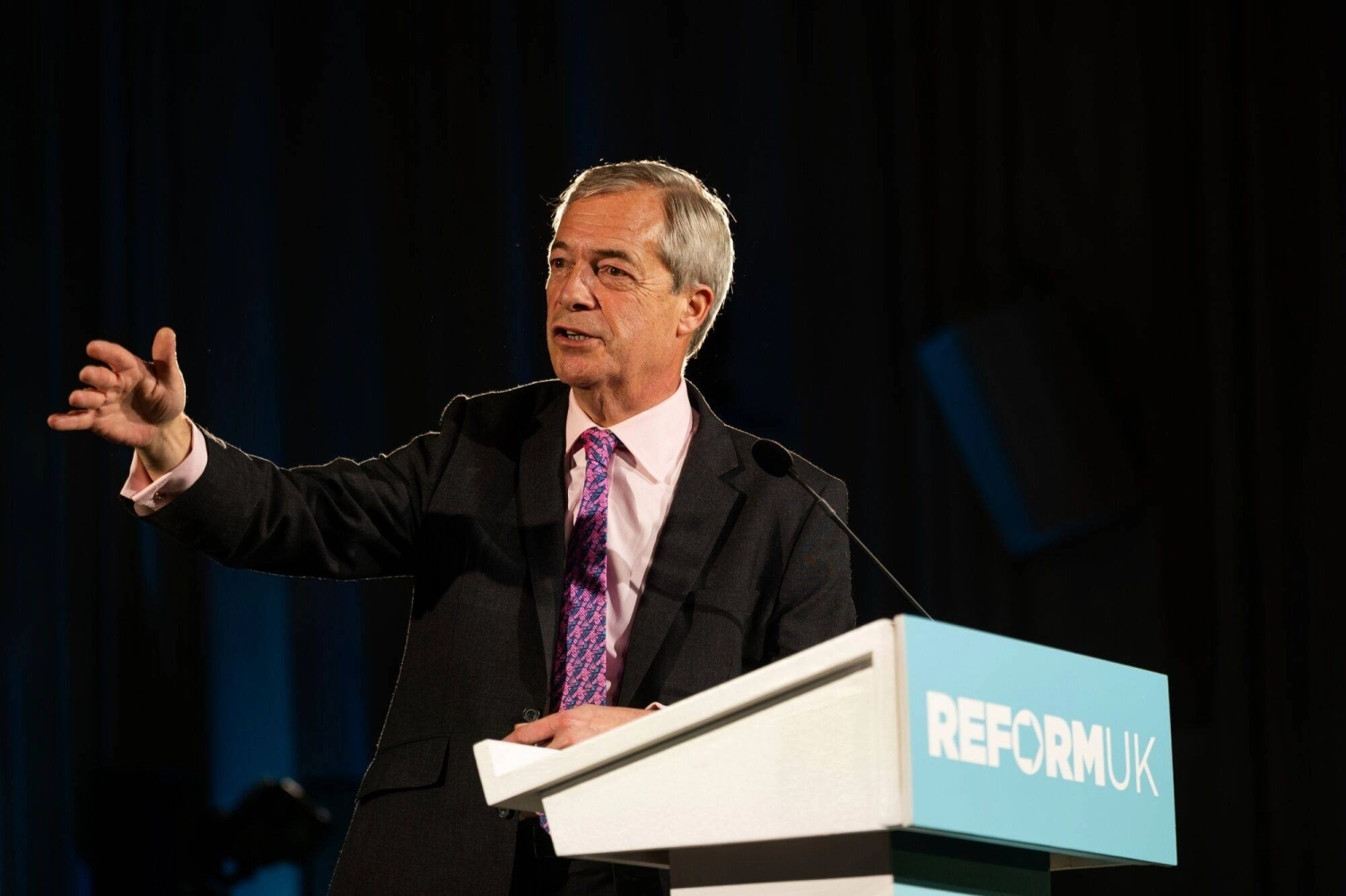
For Nigel Farage, cryptocurrency is not simply a technological issue. It fits neatly into his broader political philosophy of challenging established institutions, reducing regulation and presenting Britain as a country willing to compete aggressively in a changing global economy.
Reform has therefore sought to position itself as a champion of the cryptocurrency industry, while Labour politicians have called for tighter restrictions on political donations made through digital currencies. The Conservatives, meanwhile, face the difficult task of deciding how far they should compete with Reform for voters attracted to its pro-business and deregulatory message.
The result is another front in Britain’s increasingly bitter political battle.
Reform wants Britain to become a crypto leader
The basic Reform argument is straightforward.
Britain should not allow excessive regulation to drive innovative financial businesses overseas. Instead, the country should attempt to become one of the world’s most attractive destinations for cryptocurrency companies, investors and entrepreneurs.
This fits naturally with Reform’s wider economic philosophy.
The party has repeatedly argued that Britain is being held back by excessive bureaucracy, high taxation and an overly cautious political establishment. In that context, cryptocurrency becomes a symbol of something larger: the possibility of creating a new economy without allowing traditional institutions to dictate the pace of technological change.
Reform has already gone further than simply discussing the issue. In 2025, Farage promoted a proposed digital-finance framework at the Bitcoin conference in Las Vegas, presenting it as part of the party’s ambitions for government.
The party subsequently became the first British political party to accept cryptocurrency contributions, a decision that immediately attracted considerable political attention.
Supporters see this as evidence that Reform understands the future.
Critics see something very different.
They argue that the close relationship between Reform and wealthy cryptocurrency donors raises serious questions about whether political policy can be influenced by financial interests.
That controversy has become particularly important in 2026.
Reform received millions of pounds from cryptocurrency entrepreneurs during the first quarter of the year. According to reporting based on donation figures, the party raised around £9m during those three months, with a substantial proportion coming from crypto billionaires. That was more than twice the amount raised by Labour or the Conservatives during the same period.
From Reform’s perspective, wealthy supporters are simply choosing to back a political movement they believe will transform Britain.
From the perspective of its critics, the situation demands greater scrutiny.
And that debate has now moved directly into Parliament.
Labour wants tighter rules
Senior Labour MPs have called for political donations made through cryptocurrency to be banned.
Their concern is not necessarily that cryptocurrency itself is illegitimate. The problem is transparency.
Traditional political donations can be subject to established reporting requirements. Cryptocurrency transactions can introduce additional complexities concerning the origin of funds, ownership and the identity of donors.
Seven senior Labour MPs previously called for a ban on crypto political donations, warning that digital currencies could create risks for democratic institutions and potentially make it more difficult to establish the true source of political money.
More recently, Labour MPs have again demanded tougher measures in response to controversy surrounding Reform’s funding, including proposals for a ban on cryptocurrency donations and lower political spending limits.
This creates a fascinating political divide.
Reform argues that Britain should embrace technological innovation.
Labour is increasingly arguing that political institutions must protect themselves against the risks associated with that innovation.
Neither argument is inherently unreasonable.
The real question is where the line should be drawn.
Britain needs a financial system that can innovate. But it also needs a political system in which voters can understand who is funding political parties and whether wealthy individuals can obtain disproportionate influence.
That tension will become increasingly important as cryptocurrency becomes more integrated into mainstream finance.
Why the issue is bigger than Bitcoin
It would be a mistake to think of Reform’s crypto strategy simply as an obsession with Bitcoin.
The wider issue is financial technology.
Digital assets, blockchain systems, stablecoins and decentralised financial platforms could potentially change how money moves around the global economy. Governments are therefore faced with a difficult choice.
Regulate too heavily, and businesses may move to jurisdictions with more favourable rules.
Regulate too lightly, and consumers and financial systems may become exposed to greater risks.
Farage’s political instinct is clearly towards the first concern.
He wants Britain to be competitive.
That message could prove attractive to entrepreneurs and younger voters who believe traditional politicians do not understand the digital economy.
It also reinforces Reform’s broader identity as a party willing to challenge conventional thinking.
This is where Labour and the Conservatives face a strategic problem.
If they dismiss cryptocurrency completely, they risk appearing technologically backward.
If they embrace it too enthusiastically, they risk allowing Reform to claim that it has once again forced the political establishment to change direction.
Either way, Reform has succeeded in putting the issue on the political agenda.
The controversy surrounding Christopher Harborne
However, Reform’s crypto strategy has become considerably more complicated because of the party’s financial relationship with cryptocurrency billionaire Christopher Harborne.
Harborne has donated millions of pounds to Reform. Reporting in 2026 also revealed that Farage received a personal gift worth £5 million from Harborne, which has become the subject of political and parliamentary scrutiny. Farage has denied wrongdoing and has argued that he should be allowed to defend himself against the allegations.
The controversy is politically damaging because it makes it much harder for Reform to present its cryptocurrency policy as entirely separate from the interests of cryptocurrency wealth.
Opponents can reasonably ask a simple question:
Why has Reform become such a strong advocate for crypto at precisely the same time that cryptocurrency entrepreneurs have become major sources of funding for the party?
That question does not automatically prove that Reform’s policies are improper.
Correlation is not proof of causation.
But politics depends heavily on public trust.
Even the appearance of a conflict of interest can create serious difficulties.
This is why transparency matters.
If Reform believes cryptocurrency will transform Britain’s economy, it should be able to make that case independently of its donors.
If its proposals are genuinely good for the country, they should survive scrutiny regardless of who finances the party.
A potential revolution—or a political gamble?
There is another reason Reform’s crypto strategy deserves attention.
The party is trying to build an identity that extends beyond immigration and opposition to the established political order.
Immigration remains central to Reform’s appeal. But a party hoping eventually to form a government needs a much broader economic programme.
Crypto provides an opportunity to demonstrate that Reform is thinking about the future rather than simply attacking the past.
The party can argue that Britain should become a global centre for digital finance, attract investment and encourage entrepreneurship.
That is a much more ambitious message than simply demanding lower taxes.
But ambition also creates expectations.
If Reform wants to transform Britain into a crypto-friendly economy, voters will eventually ask how it would protect ordinary consumers.
What happens when digital assets collapse?
How would fraud be prevented?
How would money laundering be tackled?
What protections would investors have?
How would Britain prevent criminals from exploiting new financial technologies?
And how would the government distinguish legitimate innovation from speculative financial activity?
These are not minor questions.
A serious governing party must answer them.
The Conservatives face an uncomfortable choice
For the Conservatives, Reform’s crypto ambitions present another difficult strategic problem.
The Tory Party has traditionally positioned itself as the party of business, enterprise and financial markets.
Those principles could make the Conservatives natural allies of cryptocurrency entrepreneurs.
But Reform is increasingly occupying that political territory.
If the Conservatives move closer to Reform’s position, they risk strengthening Farage’s argument that Reform is the party setting the agenda.
If they reject Reform’s approach, they risk losing voters and business supporters who favour deregulation and technological innovation.
This is part of a much broader problem for the Conservatives.
Reform is challenging them not only on immigration but also on taxation, regulation, government spending and economic freedom.
The more successful Reform becomes, the harder it is for the Conservatives to maintain their traditional claim to be the natural home of the British right.
Labour faces a different dilemma
Labour’s problem is different.
The party needs to demonstrate that it can support technological innovation while protecting the public.
That means it cannot simply portray every cryptocurrency entrepreneur as a threat.
Digital finance is not going away.
The technology is already part of the global economy, and Britain cannot realistically isolate itself from it.
Labour therefore needs a credible alternative.
Rather than simply saying “no” to crypto, it could argue for responsible regulation that encourages legitimate businesses while preventing fraud, money laundering and political influence from becoming serious problems.
That would allow Labour to occupy the centre ground between Reform’s more aggressive deregulatory ambitions and outright hostility towards digital assets.
Whether the party can articulate such a position convincingly remains an open question.
Reform’s biggest strength may also be its biggest weakness
There is something revealing about the crypto controversy.
Reform has become extraordinarily effective at identifying political issues that the established parties would prefer to avoid.
That has been one of Farage’s greatest strengths throughout his career.
He identifies an issue.
He attacks the political establishment.
He presents himself as the politician prepared to say what others will not.
And eventually the mainstream parties are forced to respond.
Crypto fits that strategy perfectly.
But the same approach carries a serious risk.
Once Reform becomes a potential governing party, it cannot simply identify problems.
It must provide workable solutions.
It must explain how policies would function in practice.
It must demonstrate that its proposals would benefit ordinary voters rather than only wealthy investors.
And it must show that political funding does not influence policy.
That is a much higher standard than the one required of a protest movement.
A new political dividing line
The crypto debate could therefore become part of a much broader transformation in British politics.
The old political divide was primarily Labour versus Conservative.
The new divide is increasingly about something else:
Should Britain embrace radical economic and technological change, or should it proceed cautiously and prioritise regulation and institutional safeguards?
Reform is attempting to occupy the first position.
Labour is increasingly moving towards the second.
The Conservatives are caught between them.
That makes cryptocurrency politically fascinating.
The issue is still relatively new to many voters, but it touches on enormous questions about the future of money, privacy, technology, taxation and government power.
For Farage, it also provides another opportunity to portray Reform as the party of change.
But the current controversy surrounding crypto donations demonstrates why political reform and financial regulation cannot be separated entirely.
A modern economy requires innovation.
A modern democracy requires transparency.
Britain needs both.
The real test for Nigel Farage
The crypto revolution could ultimately become one of Reform’s most interesting policies—or one of its biggest political liabilities.
If Britain becomes a major global centre for digital finance while maintaining strong consumer protections, Farage will be able to argue that his instinct was correct.
If cryptocurrency becomes associated with financial scandals, political influence or inadequate regulation, Reform’s critics will argue that its approach was dangerously naive.
The outcome will depend on the details.
For now, however, one fact is impossible to ignore.
Reform has succeeded in forcing cryptocurrency into the centre of Britain’s political debate.
The party is raising more money than its traditional rivals, wealthy crypto figures have become significant donors, Labour MPs are demanding tougher rules, and Farage is attempting to turn digital finance into part of his broader vision for Britain’s economic future.
That is a remarkable position for a party that was once dismissed as a political protest vehicle.
But the next stage will be much harder.
Reform must prove that its crypto revolution is about Britain’s future—not simply about its own political finances.
If it can make that case, the party may have discovered another powerful weapon against Labour and the Conservatives.
If it cannot, the same issue could become a vulnerability that its opponents will exploit relentlessly.
The battle over cryptocurrency is therefore no longer merely about technology.
It is about who gets to shape Britain’s economic future—and who voters trust to do it.
Leave a Reply
You must be logged in to post a comment.