
Labour Accuses Reform UK of Sleaze Over Political Donations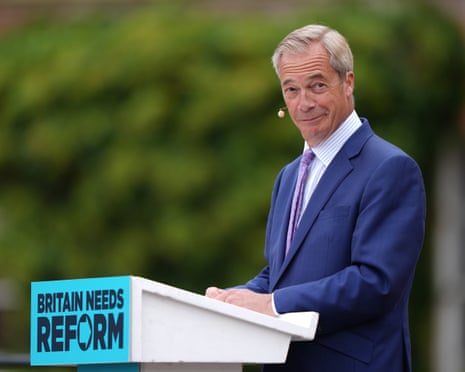
Political parties depend heavily on public trust, and few things can damage that trust more quickly than questions about where political money comes from. The recent controversy surrounding Reform UK and its donations has therefore created a serious political challenge for Nigel Farage and his party. Labour has accused Reform of being “up to its neck in sleaze” and has called for an urgent investigation into donations linked to Fiona Cottrell, the mother of convicted fraudster George Cottrell. The Electoral Commission has already referred the matter to the Metropolitan Police, which is examining whether donations may have been improperly sourced or disguised. Reform UK denies wrongdoing and insists that it has complied with electoral law.
The allegations are significant because political donations are not simply private gifts. In a democracy, money can influence political campaigns, advertising, organisation and ultimately elections. British law therefore places restrictions on who can donate to political parties and requires certain donations and financial interests to be properly reported. These rules exist to prevent wealthy individuals, foreign interests or other prohibited sources from secretly gaining political influence. When questions arise about the origin of a donation, an independent investigation is therefore essential.
The controversy centres on money transferred by George Cottrell to his mother, Fiona Cottrell. Reports stated that Cottrell transferred more than $2 million to his mother shortly before she made substantial donations to Reform UK and its fundraising organisation, Britain Means Business. The timing of these transactions has raised questions about whether Fiona Cottrell was genuinely the independent source of the donations or whether the money ultimately came from her son.
It is important, however, to distinguish between an allegation and a proven offence. The fact that money moved between family members before political donations were made does not automatically demonstrate that electoral law was broken. There may be explanations for the transactions that have not yet been established publicly. This is precisely why an investigation is necessary. Rather than allowing Labour, Reform or the media to determine the conclusion in advance, the relevant authorities should examine the evidence and establish what happened.
Labour’s political response is understandable. As the governing party, Labour has an interest in ensuring that Britain’s political system is transparent and trusted. Bridget Phillipson, Labour’s new chair, has called on the Electoral Commission to investigate whether the rules were broken. Labour has also argued that Reform needs to explain who was ultimately responsible for providing the money.
At the same time, there is an obvious political dimension to Labour’s criticism. Reform UK is one of Labour’s most significant potential rivals. The party has attracted voters who previously supported Conservatives, Labour and other political movements. Its strong position on immigration, national sovereignty and public spending has allowed it to challenge the established parties. Any financial scandal could therefore damage Reform’s credibility at an important political moment.
For Reform UK, the controversy is particularly uncomfortable because the party has built much of its identity around attacking the political establishment. Reform politicians frequently argue that established parties have failed to represent ordinary citizens and that the political system needs fundamental reform. This message depends heavily on the idea that Reform is different from traditional Westminster politics. If the party becomes associated with financial scandals, opaque donations or questions about political influence, its anti-establishment image could be weakened.
Transparency is therefore crucial. Reform’s strongest response would be to provide as much information as legally possible about the donations in question. If the party genuinely followed all electoral rules, detailed evidence could help demonstrate that. Simply dismissing the allegations as political attacks may satisfy existing supporters, but it is unlikely to persuade undecided voters who want clear answers.
The controversy also raises questions about George Cottrell himself. He has been associated with Nigel Farage and Reform’s political world, and his previous criminal conviction makes the allegations particularly sensitive. A convicted fraudster cannot simply be assumed to have illegally financed a political party, but his involvement naturally creates additional questions about financial relationships surrounding Reform. The public is entitled to know whether political organisations have accepted money from individuals who are legally prohibited from donating.
There is another important issue: the difference between legal compliance and political ethics. A donation can potentially be legal while still raising ethical questions. Political parties should not only ask whether they are technically allowed to accept money; they should also consider whether accepting it could undermine public confidence. The higher the political stakes, the more important transparency becomes.
This principle applies to every political party, not just Reform UK. Labour, Conservatives, Liberal Democrats, Greens and other parties have all faced questions about donations at different times. If Labour demands strict scrutiny of Reform, it must also be willing to accept the same standards when its own donors or financial arrangements are questioned. Otherwise, voters may conclude that the issue is partisan rather than genuinely about democratic integrity.
Independent institutions therefore have an essential role. The Electoral Commission exists to regulate political finance and electoral processes, while the police can investigate potential criminal offences. These institutions should be allowed to examine the evidence without political pressure. If the investigation establishes that the donations were lawful, Reform should be cleared of the relevant allegations. If wrongdoing is discovered, appropriate action should follow.
This approach is particularly important because accusations of corruption can become extremely powerful political weapons. A party can be seriously damaged simply by being associated with a scandal, even if the allegations are eventually disproved. Political opponents may have an incentive to use the strongest possible language, while supporters may automatically dismiss every allegation as an attack. Independent investigation provides a way out of this cycle.
The controversy also demonstrates how modern political parties depend on wealthy donors. Election campaigns can require substantial sums of money, particularly for advertising, digital communication and nationwide campaigning. Wealthy supporters can therefore have considerable influence. This does not necessarily mean that political donations are wrong. Donors are entitled to support political causes they believe in, provided that they comply with the law. The challenge is ensuring that financial contributions do not allow a small number of wealthy individuals to exercise disproportionate or hidden influence.
Some people may argue that Britain should introduce even stricter rules on political donations. One possibility would be stronger transparency requirements, allowing voters to see more clearly where political money originates and how it is transferred. Another approach could involve greater public funding for political parties, reducing their dependence on wealthy private donors. Both proposals have advantages and disadvantages, but the broader principle is clear: voters should be able to understand the financial forces influencing political campaigns.
For Nigel Farage, the timing of the controversy is especially difficult. His political career has been built around portraying himself as a politician willing to challenge powerful institutions. Yet he is now facing scrutiny from institutions responsible for investigating political finance and parliamentary standards. Recent reporting has also highlighted renewed scrutiny surrounding an undeclared £5 million gift and other financial benefits.
Farage has repeatedly portrayed some investigations as politically motivated. His supporters similarly argue that Reform is being targeted because established parties fear its electoral success. There may be political competition behind some criticism, but this does not mean that every investigation is illegitimate. A politician can be both politically targeted and legitimately subject to scrutiny. These two possibilities are not mutually exclusive.
The wider danger for Reform is that repeated financial controversies could distract from the issues on which the party has built its support. Immigration, the cost of living, public services and government spending are major concerns for many voters. If Reform is constantly required to defend itself against questions about donations, it may struggle to focus public attention on its policy agenda.
On the other hand, Reform could potentially turn the controversy into an opportunity. If it responds with complete transparency and cooperates fully with investigators, it could argue that the party has nothing to hide. Demonstrating confidence in independent scrutiny could strengthen rather than weaken its credibility. The worst outcome would be prolonged uncertainty in which allegations continue circulating without clear answers.
Ultimately, political parties should not fear investigation. Investigations are part of a healthy democracy. What matters is that they are conducted fairly, independently and according to evidence. Reform UK deserves the opportunity to respond to the allegations, but voters also deserve clear answers about the sources of political money.
In conclusion, Labour’s accusation that Reform UK is “up to its neck in sleaze” reflects the seriousness of the political controversy, but the language of politics should not replace the work of independent investigation. Reports about transfers from George Cottrell to his mother before donations to Reform have created legitimate questions, and the Electoral Commission’s referral to the Metropolitan Police makes the issue more than simply a partisan argument.
However, Reform should not be declared guilty before the evidence has been fully examined. The appropriate response is transparency, cooperation and independent scrutiny. If the donations were lawful, Reform should be able to demonstrate that clearly. If electoral rules were broken, the responsible individuals and organisations should face the appropriate consequences.
The controversy ultimately highlights a fundamental principle of democracy: political power should never depend on hidden financial influence. Reform UK has built its reputation by promising to challenge the political establishment. To maintain that reputation, it must now show that its own financial affairs can withstand the same level of scrutiny that it demands from everyone else. For Labour, the responsibility is equally clear: investigations should be driven by evidence rather than political opportunism. Only through consistent standards can public confidence in British democracy be protected.