Nuclear strikes on Russia’s 4 named UK targets have been mapped (Image: Getty)
Russia has threatened to bomb four UK cities it says are being used to build munitions for Ukraine – and these simulations show what would happen if Putin went nuclear on us.
The Kremlin has listed London, Leicester, Reading and Mildenhall in Suffolk where it claims drones and equipment for Ukraine are being made, as well as several locations across Europe.
Dmitry Medvedev, the head of Russia‘s Security Council, mocked European countries with a post on X, penning a worrying remark which said: “Sleep well, European partners!”
On Thursday, Russia hammered civilian areas of Ukraine with hundreds of drones and dozens of missiles in an attack that stretched for hours from daytime into the night, killing at least 16 people and injuring more than 100 others, officials said.
Russia launched nearly 700 drones and dozens of ballistic and cruise missiles, primarily targeting civilians, in its biggest aerial barrage in almost two weeks, authorities said.

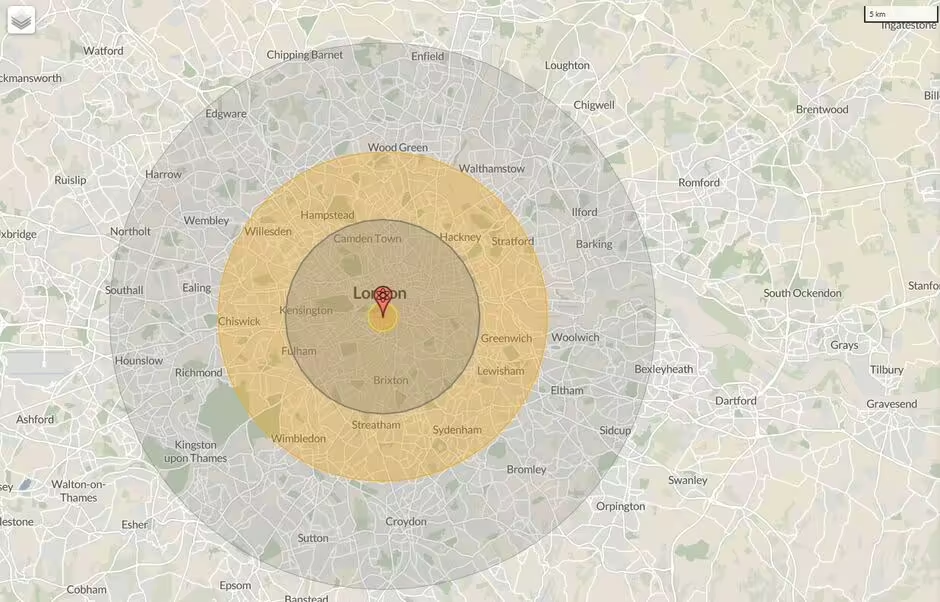
How London would fare if struck by a Russian nuke (Image: NuclearSecrecy.com)
Read more: Three airlines plunge into administration or liquidation – all flights cancelled
Read more: UK households issued ‘scary’ nuclear war warning – ‘time to be aware’
The Russian Defence Ministry said the operation was launched “in retaliation” for Ukrainian strikes deep inside Russia, where long-range drones and missiles have hit Russian oil refineries and war-related manufacturing plants.
The Russian barrage was aimed at facilities associated with the Ukrainian armed forces, the Defence Ministry claimed.
Although the chances of an unintercepted nuclear strike on the UK remain low, website Nuclear Secrecy has a tool which shows what Russia’s Topol (SS-25) 800kt nuclear missile would do to its four named UK targets.
The Nuke Map explains what happens in each of the four zones in each city.
For the impact area in the orange: “Maximum size of the nuclear fireball; relevance to damage on the ground depends on the height of detonation. If it touches the ground, the amount of radioactive fallout is significantly increased. Anything inside the fireball is effectively vapourised.”
The next zone is the ‘moderate blast damage radius’. This would collapse buildings and start fires. The map states: “At 5 psi overpressure, most residential buildings collapse, injuries are universal, fatalities are widespread. The chances of a fire starting in commercial [buildings] and residential damage are high, and buildings so damaged are at high risk of spreading fire.”

How Leicester would cope if nuked by Russia (Image: NuclearSecrecy.com)
The third zone, further from the point of impact, in yellow, would fare little better. The map states: “Third degree burns extend throughout the layers of skin, and are often painless because they destroy the pain nerves. They can cause severe scarring or disablement, and can require amputation.”
Finally, the last zone around the edge would see the least damage. The map says about this area: “At around 1 psi overpressure, glass windows can be expected to break. This can cause many injuries in a surrounding population who come to a window after seeing the flash of a nuclear explosion (which travels faster than the pressure wave).”
The UK government stresses that its nuclear deterrent would theoretically avoid such a hypothetical catastrophe.
It says via gov.uk: “The UK’s independent nuclear deterrent has existed for over 60 years to deter the most extreme threats to our national security and way of life, helping to guarantee our safety, and that of our NATO allies.

What Reading would look like if nuked by Russia (Image: NuclearSecrecy.com)
“The risk of nuclear conflict remains remote, but the threats the UK faces are increasing in scale, diversity and complexity. That is why we must be able to deter the most extreme acts of aggression against us and our NATO allies.
“The UK has taken a consistent and leading approach on nuclear disarmament but not all states have followed. Some are significantly increasing and diversifying their nuclear capabilities. We must ensure they can never use their nuclear weapons to threaten us, constrain our decision making, or sponsor nuclear terrorism.
“It may sometimes feel that these threats are far removed from our daily lives, but the UK must have the capability to protect itself and our NATO allies. Deterrence plays a key role in keeping the public safe, and to abandon our nuclear deterrent would put us all at greater risk.
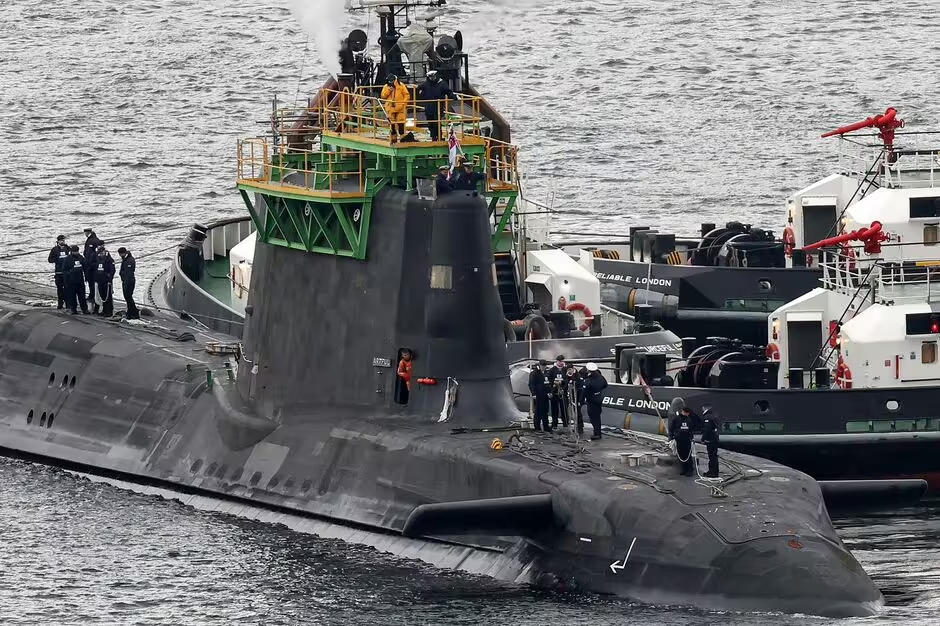
“Since April 1969, the Royal Navy has maintained continuous at sea deterrence, with at least one nuclear-armed ballistic missile submarine patrolling the seas undetected at all times, ready to respond to the most extreme threats to the UK. Their fundamental purpose is to preserve peace, prevent coercion, and deter aggression.
“This continuous at sea deterrent (CASD) is the most capable, resilient, and cost-effective platform on which to deploy our independent nuclear deterrent.”

Mildhenhall in Suffolk, home of an RAF base, if struck by a Russian nuke (Image: NuclearSecrecy.com)