British banks will be given access in the next week to a powerful AI tool that was deemed too dangerous to be released to the public, as a series of senior finance figures warned over its impact.
Anthropic, which has so far limited the release of the new model to a small clutch of primarily US businesses, including Amazon, Apple and Microsoft, said it would expand that to UK financial institutions in the coming days.
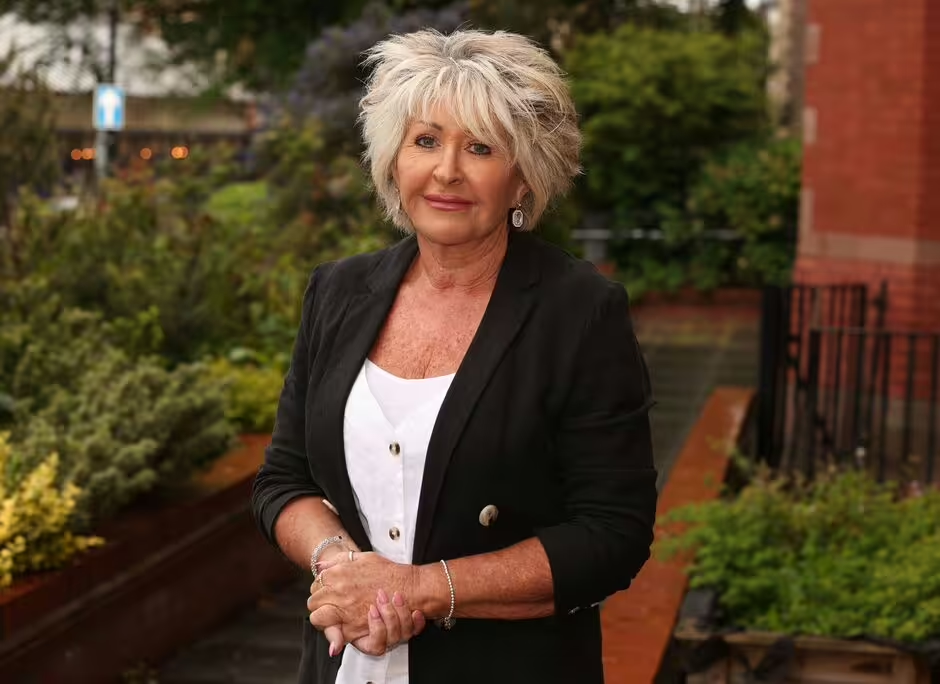
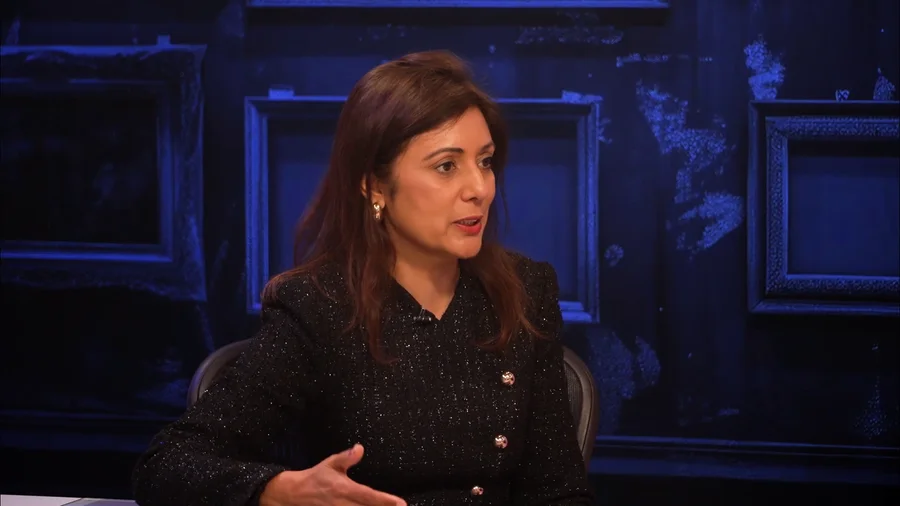
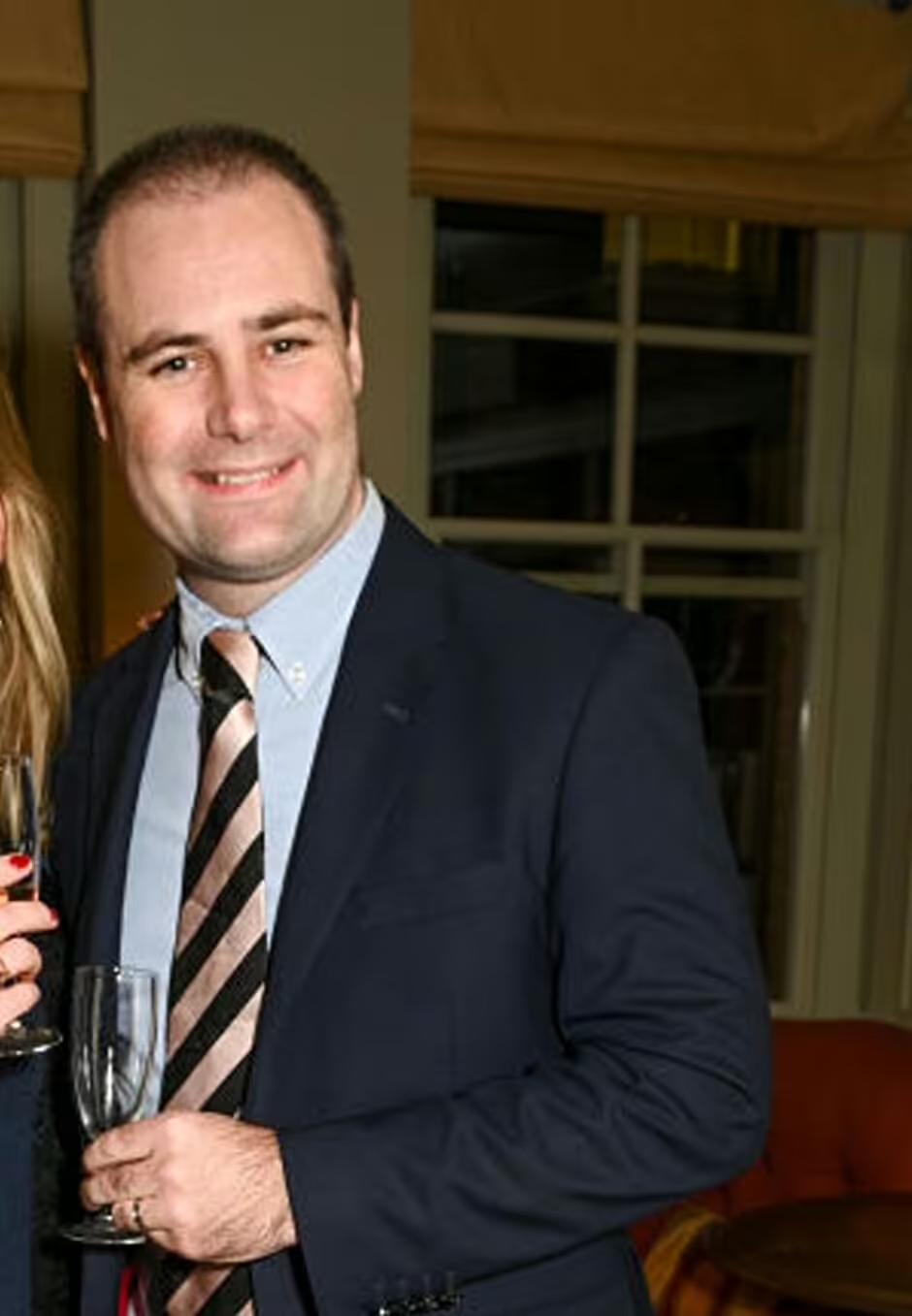
“That is in the very near term, in the next week,” Pip White, Anthropic’s head of UK, Ireland and northern Europe operations, said in a Bloomberg TV interview. “As you would expect, the engagement I have had from UK CEOs in the last week has been significant.”
Anthropic, which is the company behind the Claude family of AI tools, has said that its latest model, Mythos, poses an unprecedented risk because of its ability to expose flaws in IT systems.
“AI models have reached a level of coding capability where they can surpass all but the most skilled humans at finding and exploiting software vulnerabilities,” Anthropic said in a blogpost earlier this month. “The fallout – for economies, public safety, and national security – could be severe.”
Finance ministers, executives and regulators have discussed the potential threats as they gathered in Washington this week for the IMF and World Bank spring meetings, while also handling concerns over the global ramifications spilling over from the US-Israeli war with Iran.
The Canadian finance minister, François-Philippe Champagne, told the BBC: “Certainly it is serious enough to warrant the attention of all the finance ministers … The difference with the strait of Hormuz is that we know where it is and we know how large it is.
“The issue that we’re facing with Anthropic is that it’s an unknown unknown. It requires a lot of attention so that we have safeguards, and we have processes in place to make sure that we ensure the resiliency of our financial system.”
Andrew Bailey, the governor of the Bank of England who also chairs the Financial Stability Board of global regulators, said: “It is a very serious challenge for all of us. It reminds us how fast the AI world moves.”
However, he said regulators were having to consider whether, and how hard, to clamp down on the technology, as governments seek to reap AI’s economic rewards. “What is the optimum moment to frame the rules of the road?” Bailey asked. “If you go too early you a) risk missing the target and b) you risk distorting the evolution, and if you go too late things can get out of control.”
The European Central Bank’s president, Christine Lagarde, said: “The development we’ve seen with Anthropic and Mythos is a good example of a responsible company that is suddenly thinking: ‘Ah, that could be really good’ – but if it falls in the wrong hands, it could be really bad.
“Everybody is keen to have a framework within which to operate,” Lagarde told Bloomberg TV. But she added: “I don’t think there is a governance framework that is there to actually mind those things. We need to work on that.”